About this place
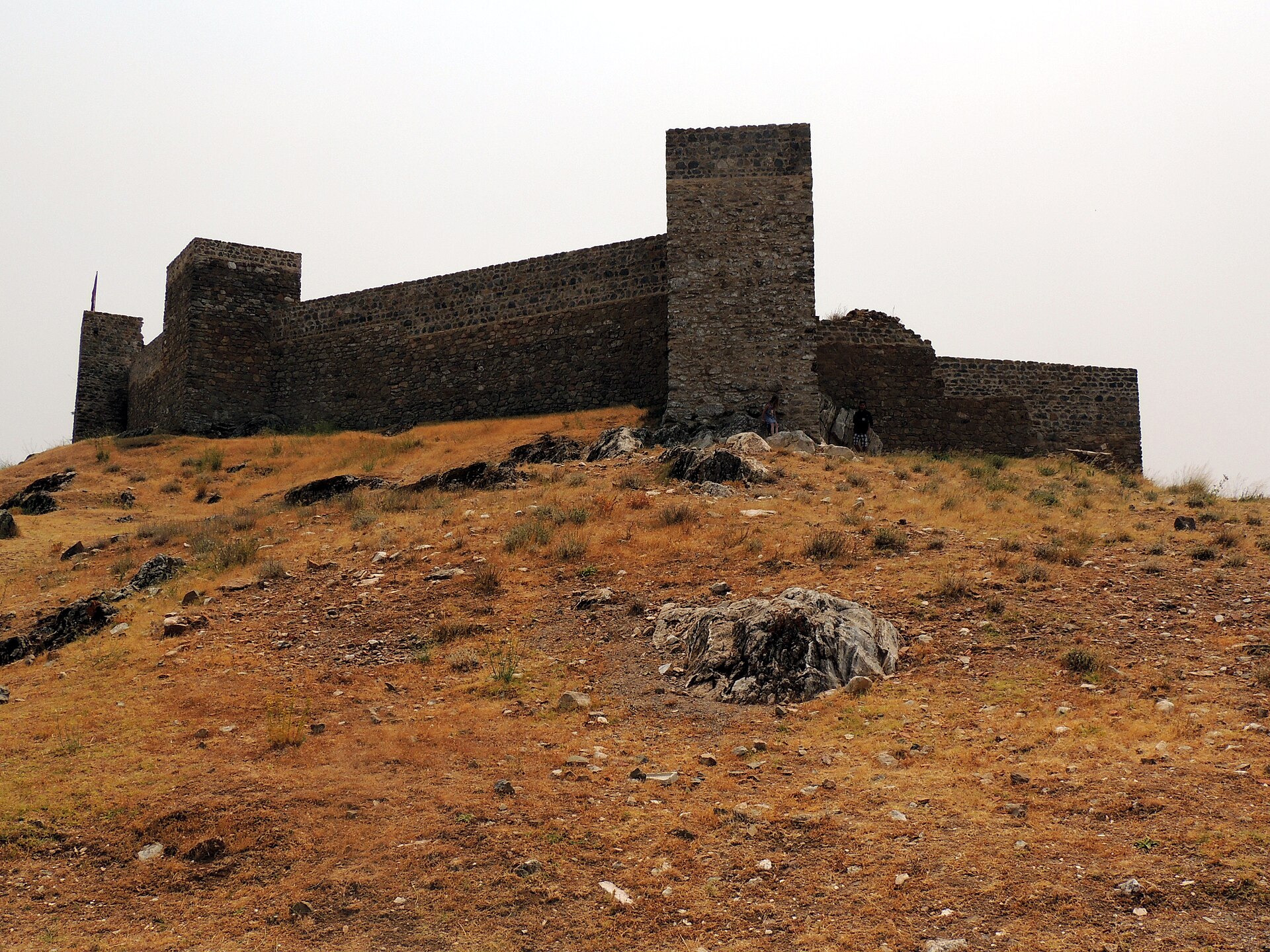
Castillo is the medieval fortress overlooking El Real de la Jara, a small town of roughly 1,500 residents perched right on the border between the Seville and Extremadura regions. The ruined walls rise above the rooftops and come into view long before you reach the town, as the road winds through the hills of the Sierra Morena.
What's the story behind the castle?
The fortress was built in the late 14th century as a Christian border stronghold, at a time when this stretch of the Sierra Morena marked the frontier between the Kingdom of Castile and territories previously under Muslim control. Builders raised it in the Mudéjar style — the Iberian blend of Christian and Islamic construction techniques — with walls built mainly from rubble masonry. According to local legend, a deer led Christian troops to a weak section of the fortifications, allowing them to take the stronghold from its Moorish defenders — a story locals still tell today.
In 1949, a nationwide decree protecting every castle in Spain regardless of its state of preservation granted the site status as a Bien de Interés Cultural, Spain's equivalent of a listed historic monument.
What can you actually see there today?
What survives is mainly the base of the complete defensive wall, recently restored, tracing the full perimeter of the original enclosure. The castle itself remains a ruin, but that rawness — bare stone foundations, the outline of former towers, and sweeping views over the surrounding countryside — is exactly what makes a visit worthwhile. In recent years the site has also been used as an open-air venue for cultural events and performances. Entry to the ruins is free.
How do you get there, and when's the best time to go?
El Real de la Jara sits about 72 km north of Seville, at an elevation of 465 metres, right inside the Sierra Norte de Sevilla Natural Park, part of the wider Sierra Morena range. Driving is the most practical option, taking you through pastureland and holm-oak dehesa scenery on the way in. Spring and autumn are the best seasons to visit, since temperatures in this part of Andalusia are far more comfortable than in the height of summer, and the surrounding hiking trails look their best.
What else is worth doing nearby?
Once you've seen the castle, it's worth sticking around — the area is known for its Iberian black pig products, including the local specialty "guarrino frito" (fried suckling pig) and game meat. The region also has a tradition of artisanal cheeses, honey, and local pastries called "virutas realeñas." Active travellers will find hiking routes, horseback riding, and cheese-making workshops run out of local rural tourism farms.
Frequently Asked Questions
Is there an entry fee for the castle? No, the ruins are open to the public free of charge.
How old is the castle? It was built in the late 14th century as a Christian defensive fortress in the Mudéjar style.
How long does a visit take? Given the modest size of the ruins, a visit typically takes 30–45 minutes, though it's worth setting aside extra time to walk the surrounding hills.
What's the best way to get there from Seville? Driving is most convenient — it's about a 72 km trip through the Sierra Norte de Sevilla Natural Park.
Nearby places

Earn badges for the places you visit
Download NextOnTrip, discover new places and check off your trails.