About this place
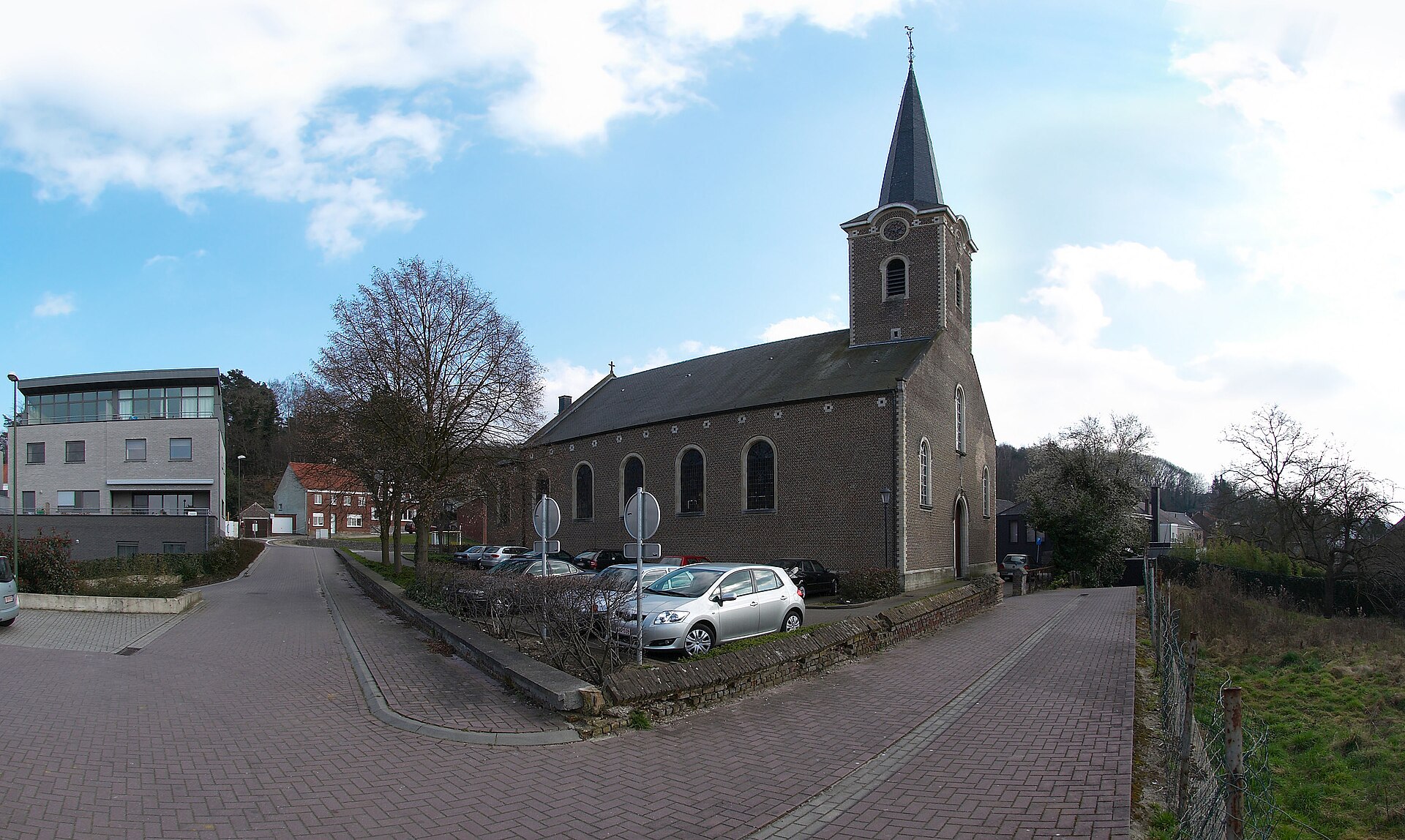
Église Sainte-Waudru is a modest parish church standing in the village of Nodebais, part of the municipality of Beauvechain in the province of Walloon Brabant. The church is dedicated to Saint Waudru, patron saint of the city of Mons, even though Nodebais itself lies many kilometres to the north, amid a landscape of gentle fields and small stream valleys.
When was the church in Nodebais built?
The present building dates from 1837 and is attributed to the architect Antoine Moreau. It replaced an earlier church and has since served as the main place of worship for the village, today linked administratively with the parishes that make up the Beauvechain Pastoral Unit.
What materials was the church built from?
The walls are built of brick, while the foundations, corner quoins and window and door surrounds were executed in Gobertange stone — a local sandstone quarried in the Walloon Brabant area since the Middle Ages and widely used in regional religious architecture. The contrast between the dark brick and the pale, sandy stone gives the building a calm appearance typical of churches in this part of Brabant.
What makes the tower distinctive?
The building is topped by a square tower crowned with a dome-shaped bell turret, a form that echoes the tower of the church in nearby Hamme-Mille. This type of tower crown is one of the recognisable features of religious architecture across this part of the Brabant region.
What can be found inside?
The interior preserves paintings worth noting, and the organ gallery holds an instrument that originally belonged to the former university college of Haute-Colline in Louvain (Leuven) — it was moved to Nodebais in 1857. An organ with such a provenance ties this small village church to the history of the old university of Leuven.
How has the church changed over time?
The building underwent several rounds of restoration work: a first major renovation took place in 1862, another in 1928, and the sanctuary itself was refurbished in 1968. This points to the parish's ongoing care for the building over nearly two centuries since its construction.
What is the earlier history of the site?
Although the current church dates from the 19th century, the history of a religious presence at Nodebais reaches much further back. Around the year 1000, the abbey of Hastière obtained substantial landholdings at Nodebais through the grace of Alpaide, the last countess of Brugeron — an episode that links the village to the early medieval ecclesiastical structures of the region. The presbytery standing beside the church, meanwhile, has a core dating from 1695, rebuilt after a fire caused by troops of the King of Spain, a reminder of the turbulent wars fought across the Southern Netherlands.
Frequently asked questions
Where exactly is the church located? In the village of Nodebais, part of the municipality of Beauvechain in the province of Walloon Brabant, close to the border with Flemish Brabant.
Who is the church dedicated to? Saint Waudru, the seventh-century patron saint of the city of Mons, even though the church itself lies far from Hainaut.
Is the tower worth a closer look? Yes — its dome-shaped bell turret recalls the tower of the church in Hamme-Mille, making Nodebais a useful reference point for comparing local architectural solutions in the region.
Where does the organ come from? It was moved in 1857 from the former university college of Haute-Colline in Louvain.
The Église Sainte-Waudru in Nodebais remains an active parish church today, and stands as a record of the local building and ecclesiastical history of the Beauvechain area.
Nearby places

Earn badges for the places you visit
Download NextOnTrip, discover new places and check off your trails.