About this place
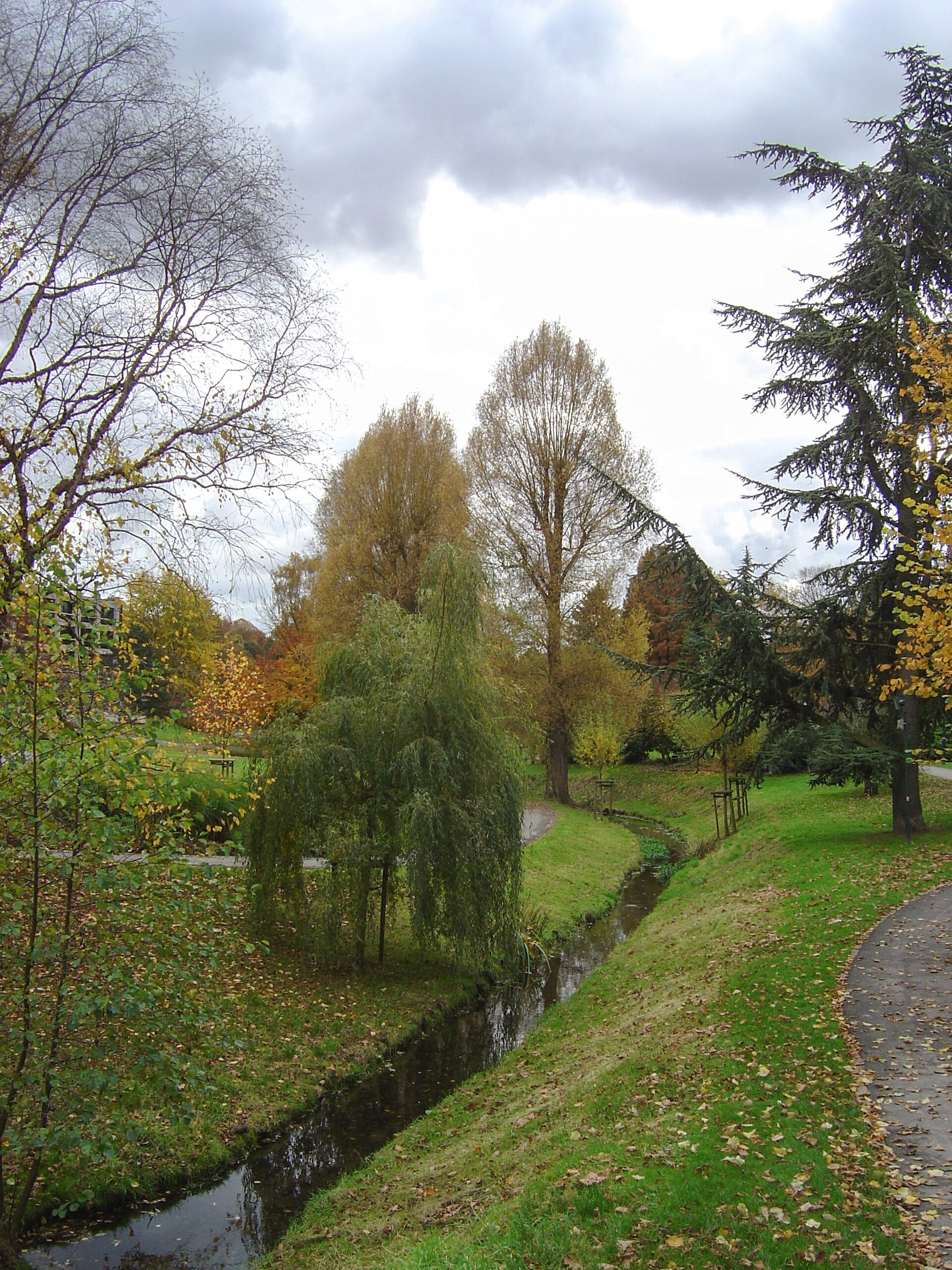
Domaine Solvay is a vast landscaped park in La Hulpe, in the Belgian province of Walloon Brabant, ranked among Wallonia's most valuable historic estates. Spread across roughly 227 hectares of woodland, meadows and ponds, it is one of the region's favourite places for a long walk, and is sometimes nicknamed the "park of a thousand rhododendrons."
Where does the estate's name come from?
The name comes from Ernest Solvay, the Belgian industrialist who founded the Solvay & Co chemical company. He bought the property in 1893 to use as a summer residence, and it was under his ownership that the park took on the shape and scale it is known for today.
How did the castle and park come to be?
The site's history predates the Solvay family. In 1833, Marquis Maximilien de Béthune decided to lay out a park on forested land he had just acquired, adding gamekeepers' houses, farm buildings and a castle. The castle itself, known as Château de la Hulpe, was built in 1842, modelled on the Renaissance-style châteaux of France's Loire Valley — hence its four towers and turrets, faced in red brick with natural stone detailing.
When Ernest Solvay acquired the estate in 1893, he commissioned Victor Horta, one of the leading figures of Belgian Art Nouveau, to redesign the château's interiors. Horta's work included a glazed veranda supported on cast-iron columns and a distinctive water pump structure that still stands in the park today. Solvay also reshaped the grounds around the castle, adding a French formal garden in front of the façade, and expanded the estate considerably — by 1920 it covered as much as 490 hectares.
What can visitors see in the park today?
Domaine Solvay today is above all a large green space of woods, lawns and ponds, home to more than 450 species of wild plants. A defining feature is its extensive plantings of rhododendrons and azaleas, which draw particularly large numbers of visitors during the flowering season. Among the park's landmarks are an obelisk dedicated to Ernest Solvay and the aforementioned water pump designed by Victor Horta — a small but distinctive piece of architecture set within the landscape.
The estate's former farm buildings now house a bistro called "L'Homme Bleu," while the old barns have, since 1999, hosted the Folon Foundation, displaying more than 300 works by the Belgian artist Jean-Michel Folon.
When did the park open to the public?
Ernest-John Solvay, grandson of the family's founder, bequeathed the entire estate to the Belgian state on the condition that it remain intact and be made available for cultural and community purposes. After his death in 1972, the estate passed into the care of the Solvay Cultural Foundation, and the park opened to the public in 1975.
Frequently asked questions
How large is Domaine Solvay? The park currently covers about 227 hectares, though at its peak under Ernest Solvay the estate extended to as much as 490 hectares.
Who redesigned the château's interiors? Ernest Solvay commissioned Victor Horta, a leading figure of Belgian Art Nouveau, to redesign the interiors of Château de la Hulpe.
What now occupies the former farm buildings? They house the bistro "L'Homme Bleu" and the Folon Foundation, which displays works by artist Jean-Michel Folon in the former barns.
Since when has the park been open to visitors? The estate has been open to the public since 1975, after being transferred to the Belgian state per the wishes of Ernest-John Solvay.
Nearby places

Earn badges for the places you visit
Download NextOnTrip, discover new places and check off your trails.