About this place
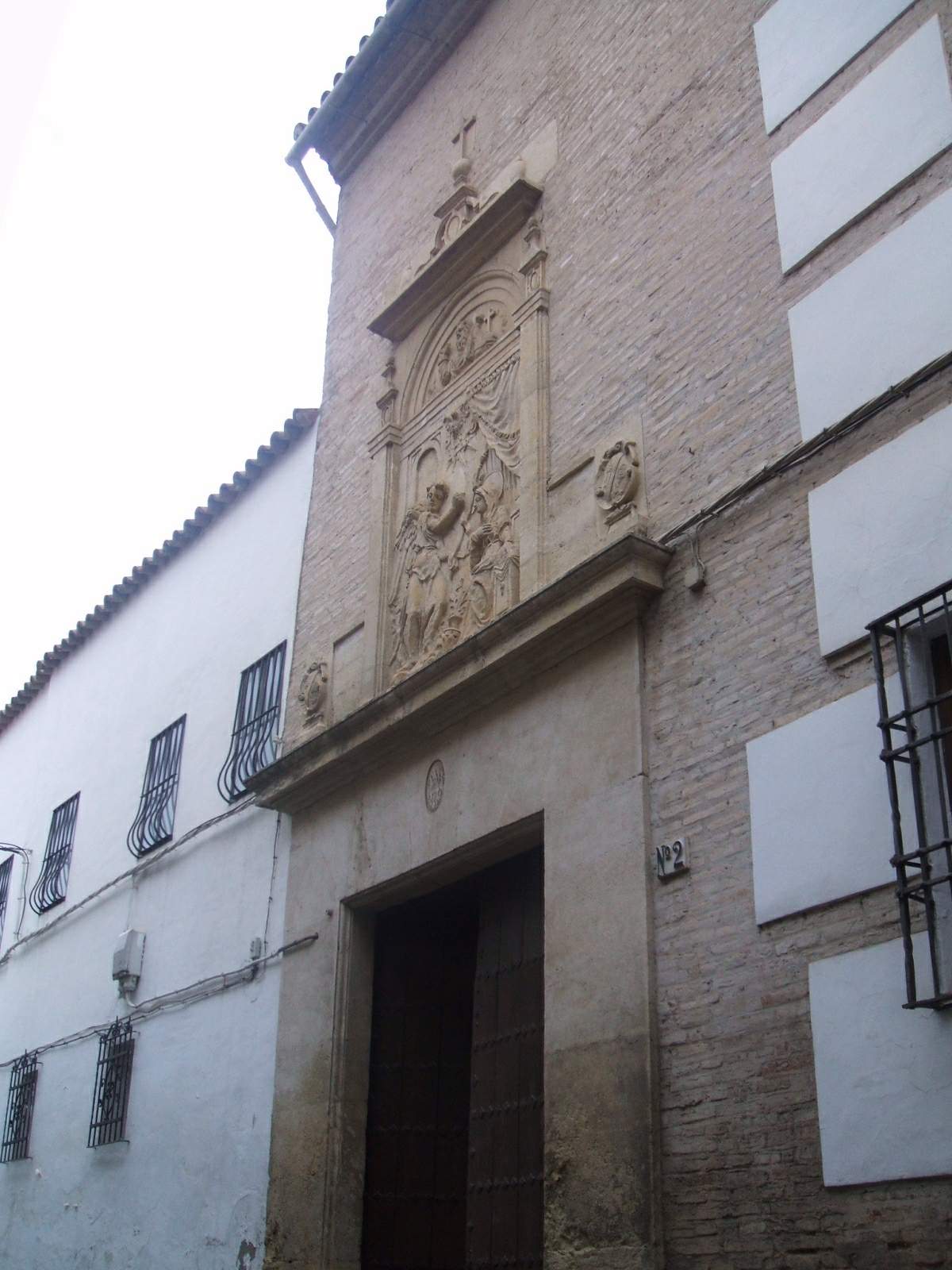
Convento de la Encarnación is an enclosed convent complex in Córdoba, tucked right against the corner of the Mezquita on the street that shares its name. Most visitors walking toward the famous mosque-cathedral pass right by it, unaware that the building holds over five centuries of monastic history.
Where did the convent come from?
The foundation dates back to the early 16th century. In 1503, canon Antón Ruiz de Morales left his house in his will for the creation of a beaterio — a religious community intended to be led by his niece, Juana González de Morales. The papal bull formally approving its transformation into a full convent was issued on 11 July 1509. Since then the site has belonged to the Cistercian order and remains an enclosed religious community to this day.
What will you see there?
The complex is arranged around a series of internal courtyards, a layout typical of Córdoba's religious and residential architecture. The convent church has a single nave covered by a barrel vault, giving the interior a plain but monumental feel. The decorative elements span two eras: the oldest parts, including the portals, are Renaissance in style and attributed to Hernán Ruiz III, an architect also linked to work on the nearby cathedral. Later renovations carried out during the 17th and 18th centuries added Baroque touches, still visible today in the ornamentation and parts of the façade.
Because it remains an active enclosed community, access to the interior is limited — this is not a museum piece in the usual sense but a living convent. Even so, the building's silhouette and its position right beside the Mezquita make it a worthwhile stop on a walk through the historic center.
How do you get there?
Convento de la Encarnación sits in the heart of historic Córdoba, just a few minutes on foot from the Mezquita-Catedral. The location makes it easy to combine with other sights in the surrounding district — narrow lanes, courtyards, and the old town's historic buildings. The simplest way to reach it is on foot, walking from the main mosque toward the adjoining streets of the old quarter.
When should you visit?
Spring (March to May) and autumn (October to November) are the best times to explore the area, since temperatures in Córdoba are far milder than during the scorching summer months. Keep in mind that, as an active enclosed convent, Convento de la Encarnación does not operate on the typical opening hours of a tourist attraction — its appeal for visitors lies mainly in its exterior architecture and historical context.
Why is it worth a stop?
The convent church was officially declared a Bien de Interés Cultural (the Spanish equivalent of a protected historic monument) on 2 April 1982, confirming its architectural and historical value within Córdoba's heritage. It's one of those buildings easy to overlook while rushing toward the city's headline sights, yet it rounds out the picture of old Córdoba's religious and architectural identity.
Frequently asked questions
Can you visit the inside of the convent? It is an active enclosed community, so access to the interior is heavily restricted. Visits focus mainly on the exterior architecture.
How far is it from the Mezquita? Very close — the convent sits right at the corner of the mosque-cathedral complex, within a few minutes' walk.
Who designed the original building? The oldest, Renaissance-era elements are attributed to Hernán Ruiz III, an architect active in Córdoba in the 16th century.
What protection status does the site hold? The convent church was declared a Bien de Interés Cultural on 2 April 1982.
Nearby places

Earn badges for the places you visit
Download NextOnTrip, discover new places and check off your trails.