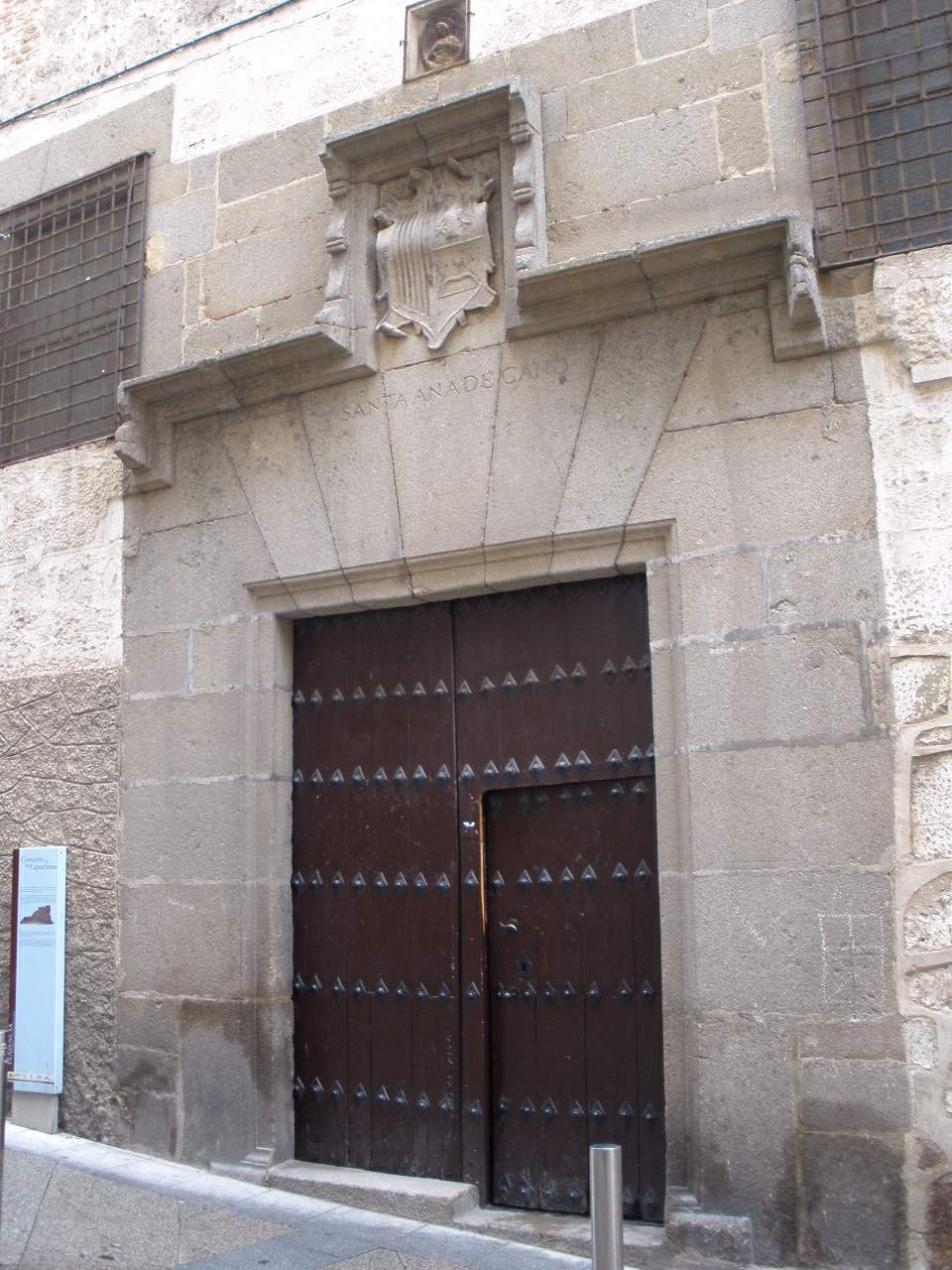
About this place
The Convent of Capuchinas is an enclosed convent in the historic center of Plasencia, Extremadura, occupying an entire block of the old town between the former Berrozanas gate and the Church of San Martín.
Where does this convent come from?
Construction began at the end of the 16th century, funded through the will of city alderman Juan Rodríguez Cano and his wife, Beatriz de Contreras. Rodríguez Cano had made his fortune as an indiano — a Spaniard who returned home wealthy after years in the Americas. Local tradition holds that on his voyage back to Spain his ship was caught in a violent storm, and he survived thanks to an image of the Virgin of Copacabana he was carrying with him. In gratitude, he pledged to build a church where that image could be permanently housed.
The founder died before the project was finished, leaving underage heirs, so the building could not be handed over to any religious order for decades. It was only in 1635 that his grandson, Juan de Nebrija y Cano, completed the necessary arrangements. The convent was then entrusted to the Order of Capuchin Poor Clares, and in 1636 the first eight cloistered nuns arrived from the order's sister convent in Madrid.
What should you know before visiting?
This remains one of only three communities of nuns still active in Plasencia, though its future has looked uncertain at times. In September 2015 the nuns left the convent for Granada due to a shortage of new vocations, only to return to Plasencia in February 2016. Because the community lives under strict enclosure, the interior is not open to visitors — the appeal here is the building itself and its setting within the dense fabric of the old town, right next to the Church of San Martín.
How do you get there?
The convent sits inside the old walled quarter of Plasencia, an easy walk from Plaza Mayor and the cathedral. The narrow streets of the historic district are best explored on foot; cars struggle to navigate this part of town, and parking is available just outside the walls.
What else is nearby?
The immediate surroundings include the Church of San Martín and a maze of medieval and Renaissance-era streets. It's worth pairing a walk through this quarter with a visit to the cathedral and the old city walls — this is one of Plasencia's best-preserved historic areas, where convent walls and stone façades create a quiet, cohesive scene away from the busiest tourist routes.
When is the best time to visit?
Given the enclosed nature of the community, daytime hours are the natural time to walk this part of town, when the old streets are lively and well used by locals. Spring and autumn are the most comfortable seasons in Extremadura, avoiding the harsh summer heat that Plasencia can experience.
Frequently asked questions
Can you go inside the convent? No — it's a living community of enclosed Capuchin Poor Clare nuns, so the interior is not open to the public.
When was the convent built? Construction began at the end of the 16th century, but it wasn't formally handed to the religious order and settled by nuns until 1635–1636.
Why is it linked to the Virgin of Copacabana? Founder Juan Rodríguez Cano credited that image with saving him from a storm at sea and built the convent in gratitude.
Is the convent still active today? Yes, although the community briefly relocated to Granada between 2015 and 2016 due to a lack of new vocations before returning to Plasencia.
Nearby places

Earn badges for the places you visit
Download NextOnTrip, discover new places and check off your trails.