About this place
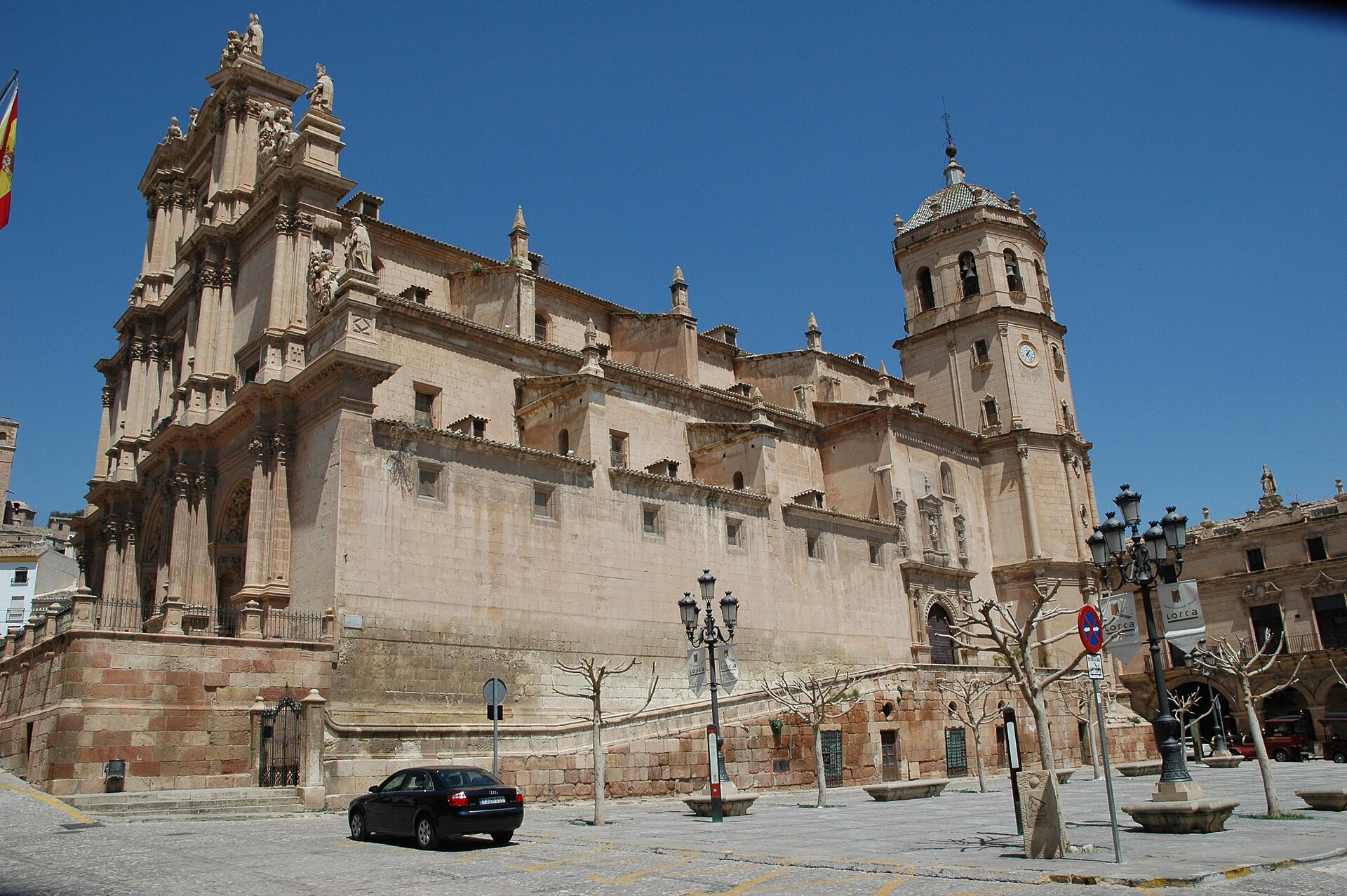
Colegiata de San Patricio de Lorca
Colegiata de San Patricio stands in the Spanish town of Lorca, in the Region of Murcia, and ranks among the most significant religious monuments in the area. It was built on a scale rivaling a cathedral, even though it never formally held that rank — the ambition behind it was to give the town an independent bishopric, separate from the diocese of Cartagena.
Why is a church in Spain dedicated to an Irish saint?
Visitors are often puzzled by the choice of patron, but the reasoning is rooted in a specific historical event. On March 17, 1452 — Saint Patrick's feast day — the people of Lorca, together with other forces from the old Kingdom of Murcia, fought the Battle of Los Alporchones against Muslim troops from Granada that had just ravaged the Cartagena area. The victory was credited to the saint whose day it happened to be, and that link became the reason for naming the future collegiate church after him.
How long did it take to build?
The project moved slowly by any standard. Before construction could even start, papal bulls were required — granted in 1533 by Pope Clement VII at the request of Sebastián Clavijo, dean of the Murcia cathedral. Building work itself began around 1536 and stretched across roughly two and a half centuries, with the final stage — capping the tower — completed only in 1780. That long timeline explains why the structure blends architectural styles, moving from Renaissance foundations into later Baroque additions.
Why was it meant to become a bishop's seat?
The plans behind the collegiate church went well beyond raising a large place of worship. Lorca had held its own episcopal seat in earlier centuries, and the project aimed to restore that status, with a bishopric independent from Cartagena. The plan was never fully realized, but it explains why the building was designed with cathedral-like proportions, far exceeding what a standard parish church would need.
Where does it stand, and what surrounds it?
The church sits on Plaza de España, the heart of Lorca, alongside other landmark buildings: the town hall, the Palacio del Corregidor, and the Salas Capitulares. Together they form one of the most notable historic squares in the region, with the collegiate church as its visual and historical centerpiece.
What heritage status does it hold?
Given its architectural and historical weight, the building was declared a National Historical-Artistic Monument by decree on January 27, 1941 — official recognition of its importance not just to Lorca, but to the wider heritage of the Region of Murcia.
Frequently Asked Questions
Why is this Spanish collegiate church dedicated to Saint Patrick? Because the victorious Battle of Los Alporchones, which repelled an invasion from Granada, took place on March 17, 1452 — Saint Patrick's feast day.
How long did construction take? About 250 years in total, from the start of building around 1536 to the completion of the tower in 1780.
Was the Colegiata de San Patricio ever an actual cathedral? Not formally, but it was designed with the ambition of becoming an independent bishop's seat, which is why it has such cathedral-like proportions.
What else is worth seeing near the collegiate church? It stands on Plaza de España, surrounded by the town hall, the Palacio del Corregidor, and the Salas Capitulares — Lorca's main historic ensemble.
Nearby places

Earn badges for the places you visit
Download NextOnTrip, discover new places and check off your trails.