About this place
The Church of St. Peter and St. Paul stands on Place Peter Benoit in Neder-Over-Heembeek, a former Brabant municipality absorbed into the City of Brussels in 1921 and today one of its northern districts. Although the present building only dates to 1935, its roots stretch back to the medieval splitting of a single village into two separate parishes.
How did one village end up with two churches?
Heembeek began as a small settlement on the edge of medieval Brussels, gathered around a modest church. Over time a second hamlet grew up to the north with its own church, and the community eventually split into the parishes of Over-Heembeek and Neder-Heembeek. Both came under the authority of Dieleghem Abbey, in 1155 and 1112 respectively. This division persisted for centuries until 1814, when Upper and Lower Heembeek were finally merged back into a single parish.
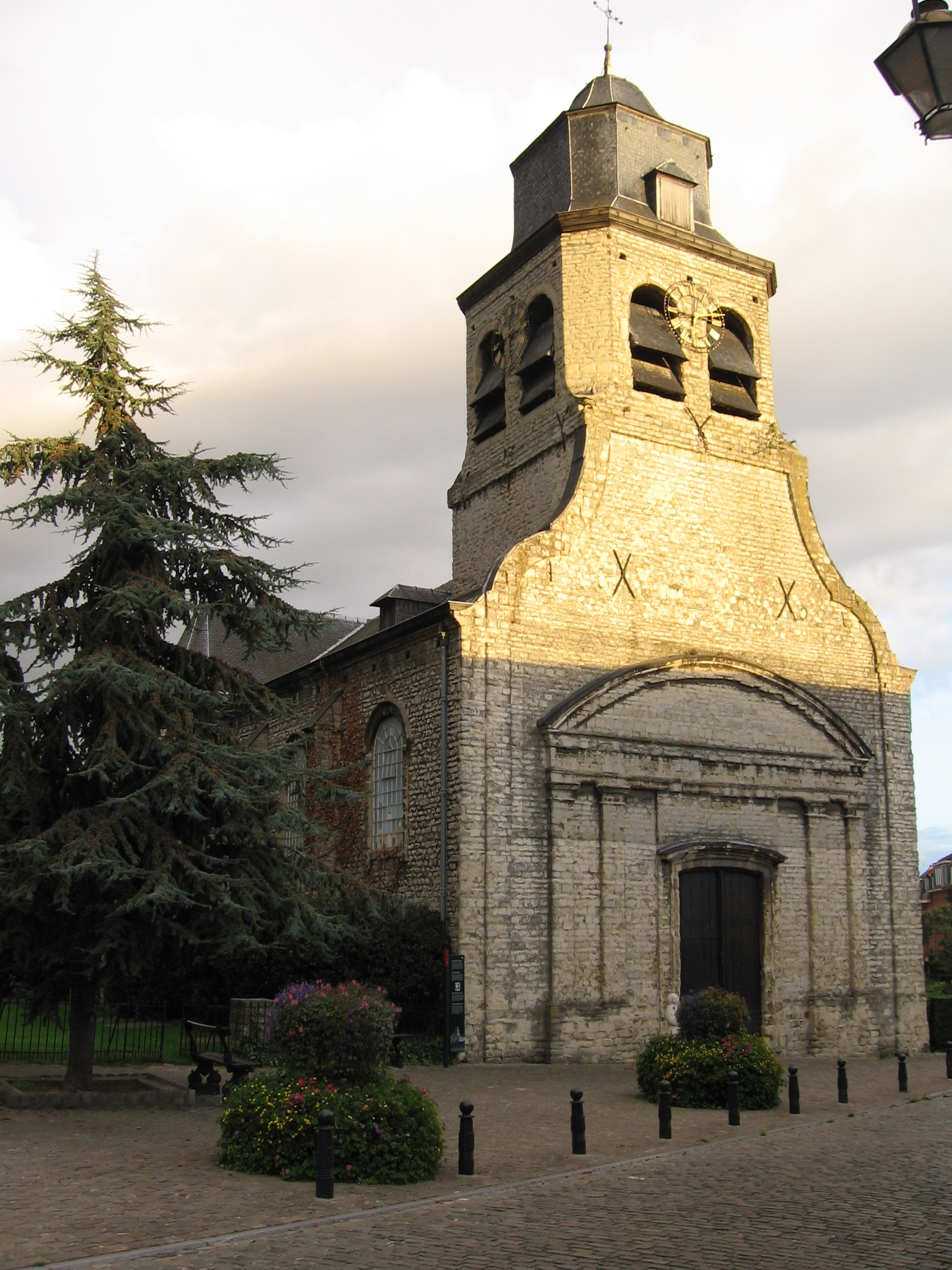
Even after that administrative reunification, two separate church buildings continued to serve the combined parish for over a century. The first calls for a new, unified church date back to 1911, but a concrete plan — one that also envisioned a new public square, Place Peter Benoit, as part of the district's urban development — was only approved by the municipal council in 1927. The decisive push came unexpectedly: in 1932 a fire destroyed the old Saint-Pierre church of Neder-Heembeek, of which only the Romanesque bell tower survives today. The fire accelerated construction of the new shared church.
Architecture built to symbolize a merger
Construction was completed in 1935 to a design by architect Julien De Ridder, who created a monumental, rationalist building with regionalist touches, executed in an Art Deco idiom. Its most distinctive feature is a pair of massive brick towers — and their presence was no accident. The archdiocese specifically required twin towers as a deliberate symbol of the two former parish churches, Neder- and Over-Heembeek, that the new building was replacing.
The interior is not entirely new construction, however: artworks from both decommissioned churches were transferred into the new building. Among them are images of saints dating from the 16th to 18th centuries and several 17th-century paintings, including a Holy Family attributed to Théodore van Loon and a Descent from the Cross attributed to Peter Paul Rubens.
Frequently asked questions
Is this the oldest church in Neder-Over-Heembeek? No — the building itself dates only to 1935. It replaced two much older parish churches, one of which (Neder-Heembeek) burned down in 1932, leaving only its Romanesque bell tower standing.
Why does the church have two towers? The twin brick towers were required by the archdiocese as a deliberate symbol of the two former parishes, Neder-Heembeek and Over-Heembeek, that the new church united.
What historic artworks can visitors see inside? The interior preserves paintings and sculptures carried over from the two earlier churches, including 17th-century canvases attributed to Théodore van Loon and Peter Paul Rubens.
Who designed the building? The 1935 design is the work of architect Julien De Ridder, who gave the church a monumental, rationalist Art Deco character with regionalist elements.
Nearby places

Earn badges for the places you visit
Download NextOnTrip, discover new places and check off your trails.