Save this place and discover nearby attractions with NextOnTrip
In the app you can add it to your favorites, see what else is worth visiting nearby on the map, and earn a badge for your visit.
The app is available for iPhone and Android.
About this place
Church of St Michael and All Angels is a medieval parish church at the western end of Colwinston, a small village in the Vale of Glamorgan, South Wales. It is a Grade I listed building, a category reserved for structures of exceptional national interest, and one of the more rewarding stops for anyone exploring the rural heritage of the region.
Where is the church and how do you get there?
Colwinston lies in the Vale of Glamorgan, an area of gentle farmland and small villages between Cardiff and the Bridgend coast. The church stands on the western edge of the village, so you can easily combine a visit with a walk through the village lanes. Having a car makes the area much simpler to explore, as villages here are spread out and public transport is limited. Check opening arrangements locally before you travel, as small parish churches are not always open on set hours.
What is the history of the church?
Sources agree that the church dates from the 12th century, although the exact founding date is disputed. Some local sources mention 1111, while the better documented date is 1141, when Maurice de Londres confirmed a donation of the church. In that year it was granted to the Abbey of St Peter in Gloucester, and it later became part of the endowments of Ewenny Priory, a dependent house of Benedictine monks nearby. For centuries the building was therefore tied to monastic life in the wider region.
What does the architecture look like?
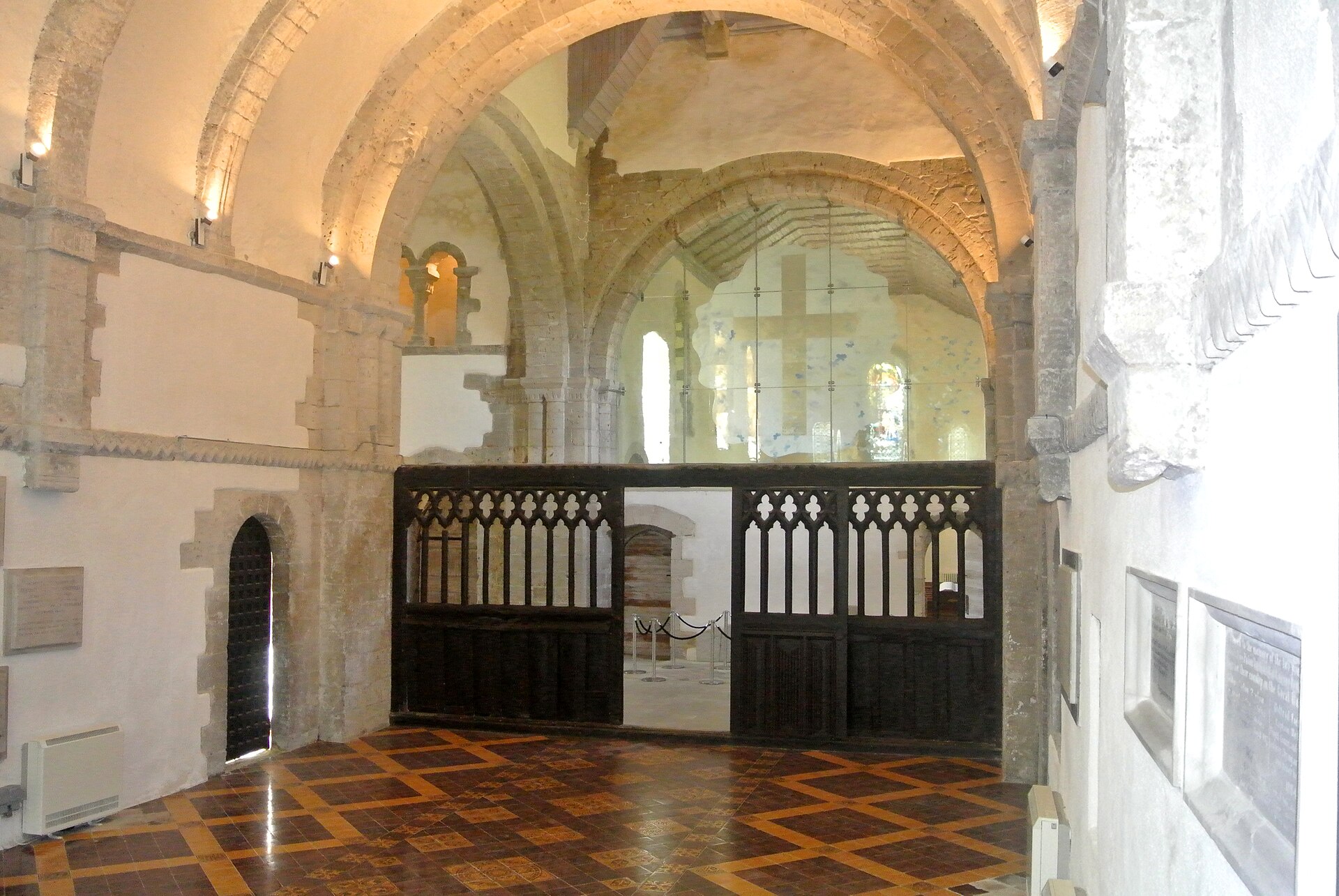
The oldest part is a rectangular Romanesque nave. A chancel was added in the 13th century, and in the late 15th or early 16th century a square tower was built at the western end of the nave. The font and the chancel arch are thought to be Norman work from the 12th century.
The chancel arch is especially interesting: it preserves remains of a medieval wall painting arranged in two registers and showing scenes from the Life of St Nicholas. Surviving medieval wall paintings are rare in Wales, so this detail is worth looking for inside.
Outside, the walls are entirely rendered and limewashed, giving the church a light, uniform appearance typical of many Welsh parish churches.
How has the church changed over time?
The church was restored in 1879 by H. J. Williams of Bristol, in the Victorian period when many medieval churches across Britain were repaired. A fire in 1971 caused damage and led to further renovation work. More recently, with grant aid from the Heritage Lottery Fund, Cadw and the Historic Churches Preservation Trust, architects were appointed to repair the exterior, install a new heating system and extend the building, so that the ancient church could continue to serve the community.
What else is protected here?
The churchyard cross and the churchyard wall are each listed separately at Grade II. Take a few minutes to walk around the grounds, look at the cross and consider how the medieval layout of the site survives next to modern additions.
Frequently asked questions
Is the church old? Yes. It dates from the 12th century, with a documented link to 1141, and later additions from the 13th and the late 15th or early 16th century.
What is the listing status? Grade I for the church, Grade II for the churchyard cross and the churchyard wall.
What is the main feature inside? The remains of a medieval wall painting on the chancel arch, showing the Life of St Nicholas, as well as the Norman font.
Was the church damaged? A fire in 1971 led to renovation work, and the building had earlier been restored in 1879.
Who owned the church in the Middle Ages? It was granted to the Abbey of St Peter in Gloucester and later formed part of the endowments of Ewenny Priory.
Is it worth a visit? If you enjoy medieval architecture, Norman details and quiet village settings, yes. It suits a short stop during a wider trip through the Vale of Glamorgan.
Nearby places

Earn badges for the places you visit
Download NextOnTrip, discover new places and check off your trails.