Save this place and discover nearby attractions with NextOnTrip
In the app you can add it to your favorites, see what else is worth visiting nearby on the map, and earn a badge for your visit.
The app is available for iPhone and Android.
About this place
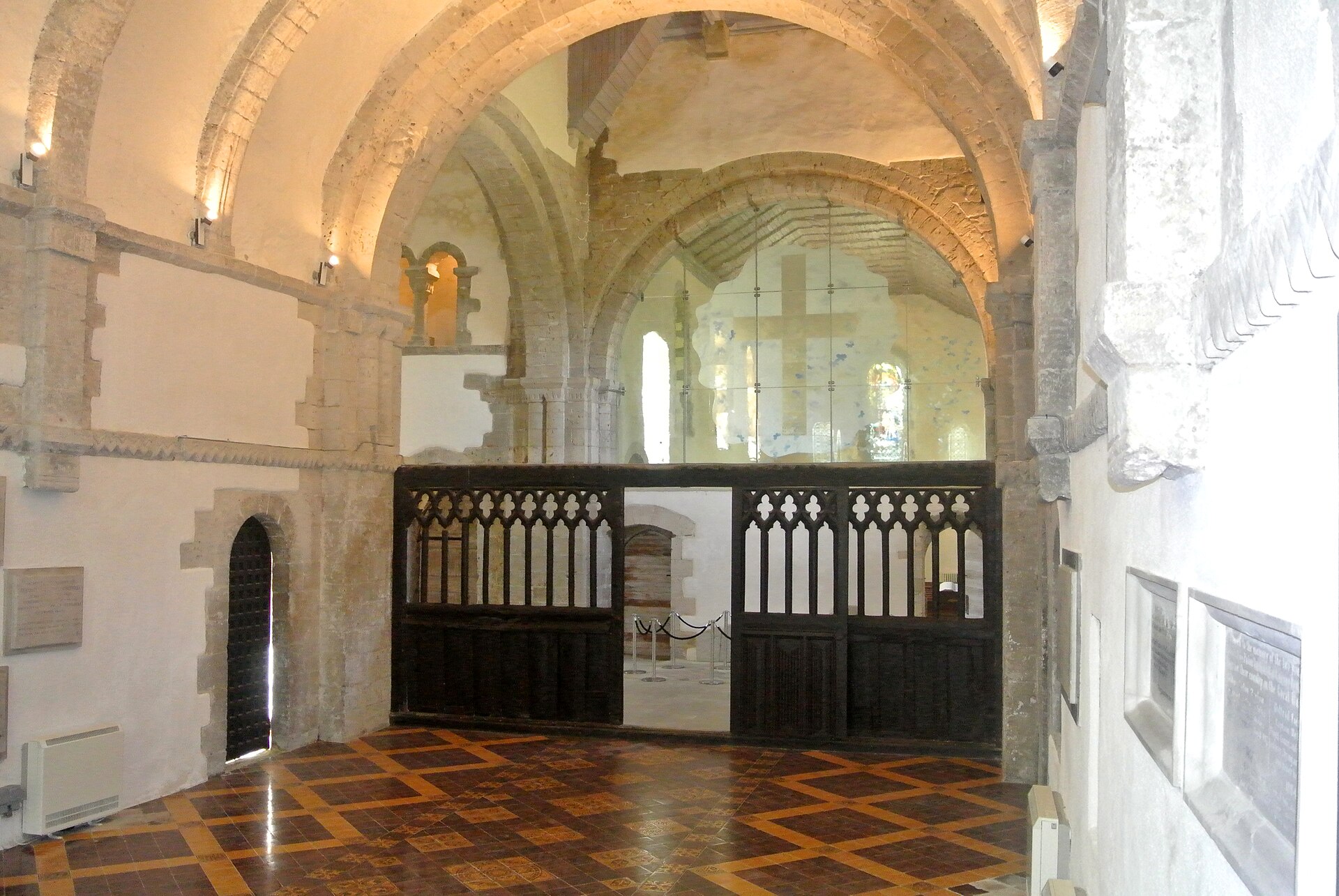
Ewenny Priory is a former Benedictine monastery in the village of Ewenny, in the Vale of Glamorgan, Wales. Founded in the 12th century, it is best known for two things that rarely appear together: an exceptionally well-preserved Norman church and a ring of defensive walls built to protect the monks.
What makes Ewenny Priory special?
Most medieval monasteries were stripped, ruined or rebuilt after the Dissolution. Ewenny largely escaped that fate. The architectural historian John Newman called it "the most complete and impressive Norman ecclesiastical building in Glamorgan", and Cadw, the Welsh heritage agency, regards the church as the finest example of Norman Romanesque architecture in this part of Wales. The building is a Grade I listed monument.
Its second distinctive feature is the military character of the site. Monasteries are usually thought of as peaceful places, but Ewenny stood in a border landscape where Welsh raids were a real threat. A gatehouse, a tower and fortified walls were first raised in the 12th century and extended in the late 13th century. The church tower also served as a look-out post. Together they give the priory the look of a small fortress rather than a quiet cloister.
How did the priory begin?
Accounts of the founding differ in detail. The church is linked to William de Londres, lord of Ogmore, and was dedicated to St Michael in the first half of the 12th century, during the time of Bishop Urban of Llandaff. His son Maurice de Londres gave the church to St Peter's Abbey in Gloucester in 1141, which established the priory as a daughter house of that abbey.
Some pre-Norman memorial stones found on the site are now displayed in the south transept. They indicate that an older, native Welsh church stood here before the Benedictines arrived.
What happened after the Dissolution?
The priory was dissolved in 1536 and leased in the same year to Sir Edward Carne, a lawyer and diplomat. He bought it in 1545. Parts of the priory buildings were converted into a private house. That Elizabethan house was demolished between 1803 and 1805 and replaced by a Georgian mansion, Ewenny Priory House, which is still owned by the Turbervill family, descendants of Carne.
Can you visit Ewenny Priory?
Access is partial. The priory grounds are mostly not open to the public in the usual way. The western part of the building, the Church of St Michael, still serves as the parish church of the village, so it remains a living place of worship. The presbytery and transepts are in the care of Cadw, while the nave belongs to the Church in Wales. Before planning a trip, check current opening arrangements with Cadw or the parish.
Frequently asked questions
Where is Ewenny Priory? In the village of Ewenny, in the Vale of Glamorgan, South Wales.
Who looks after it? Cadw cares for the priory's historic fabric, and the Church in Wales owns the nave, which is used as the parish church.
Why are there defensive walls around a monastery? The priory stood in a region exposed to Welsh raids, so its builders added a gatehouse, tower and walls to protect the monks.
Is the priory still in private hands? The adjoining house, Ewenny Priory House, is still owned by the Turbervill family, descendants of Sir Edward Carne.
Nearby places

Earn badges for the places you visit
Download NextOnTrip, discover new places and check off your trails.