About this place
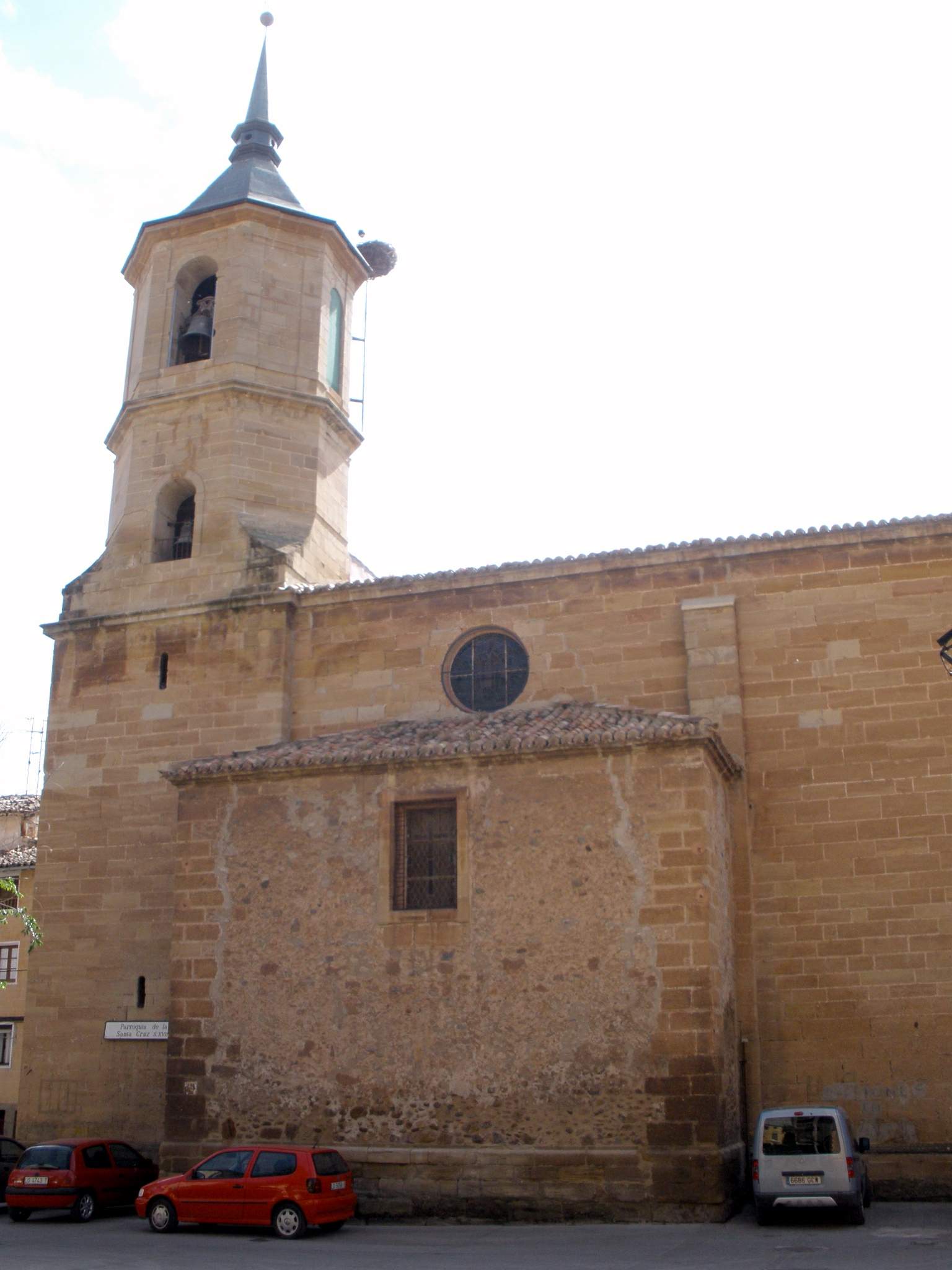
The Church of Santa María de la Asunción sits at the highest point of the old town of Navarrete, a small municipality in La Rioja on the Camino de Santiago. This Renaissance parish church rises above the surrounding streets and has watched over pilgrims passing through the town for centuries.
When was the church built?
Construction was set in motion by Bishop Alonso de Castilla, who granted permission in 1523 to erect a new parish church. An earlier church of the same dedication had stood elsewhere in town, closer to the local castle; it was demolished and some of its material was reused at the new site. The building itself took nearly a century to complete, with work running from 1553 to 1645. Budget shortfalls and repeated changes in the master builders overseeing the project stretched the timeline considerably. Stonemasons from Burgos, Juan Vallejo and Hernando de Minenza, were contracted to work on the chancel, and their craftsmanship is still visible in the stonework of that section. The tower was added later, in the seventeenth century, once the main body of the church was finished.
What does the interior look like?
The floor plan follows a three-nave layout, typical of large parish churches built in the region during this period. The most striking feature inside is the high altar, executed in the Baroque style. Its altarpiece was carved between 1694 and 1698 by Fernando de la Peña, then reworked in 1713 by José de San Juan y Martín. The result is often ranked among the most spectacular examples of Riojan Baroque, its dense gilding and ornamentation standing in sharp contrast to the restraint that Enlightenment-era taste was beginning to favor at the time.
Why is Navarrete worth a stop?
The church stands within the historic center of Navarrete, in its highest quarter, with views opening out over the surrounding valley and hills. Navarrete has long been a stage on the Camino Francés, so the building has greeted generations of walkers heading toward Santiago de Compostela. The structure itself tells that story in stone: a Renaissance body capped by a Baroque-era tower, a combination that reflects just how long — and through how many hands — the project actually took to finish.
What else should visitors know before going?
Because of its Baroque altarpiece, the interior is often cited as a reason to visit Navarrete on its own merits, separate from the pilgrimage route. As an active parish church, it may be closed outside service hours, and access for visitors depends on the local schedule — it's worth checking locally or at the town's tourist information point before planning a visit around it.
Frequently Asked Questions
How long did it take to build the church in Navarrete? Construction spanned roughly a century, from the bishop's authorization in 1523 to the completion of the main works in 1645, with delays caused by funding problems.
What is the most valuable feature inside? The Baroque high altar, whose altarpiece was carved by Fernando de la Peña between 1694 and 1698 — considered one of the most striking in all of La Rioja.
Is the church on the Camino de Santiago route? Yes. Navarrete is a stage on the Camino Francés, and the church stands in the highest part of the historic center, directly along the pilgrims' path.
When was the tower added? The tower dates from the seventeenth century and was built after the main body of the church had already been completed.
Nearby places

Earn badges for the places you visit
Download NextOnTrip, discover new places and check off your trails.