About this place
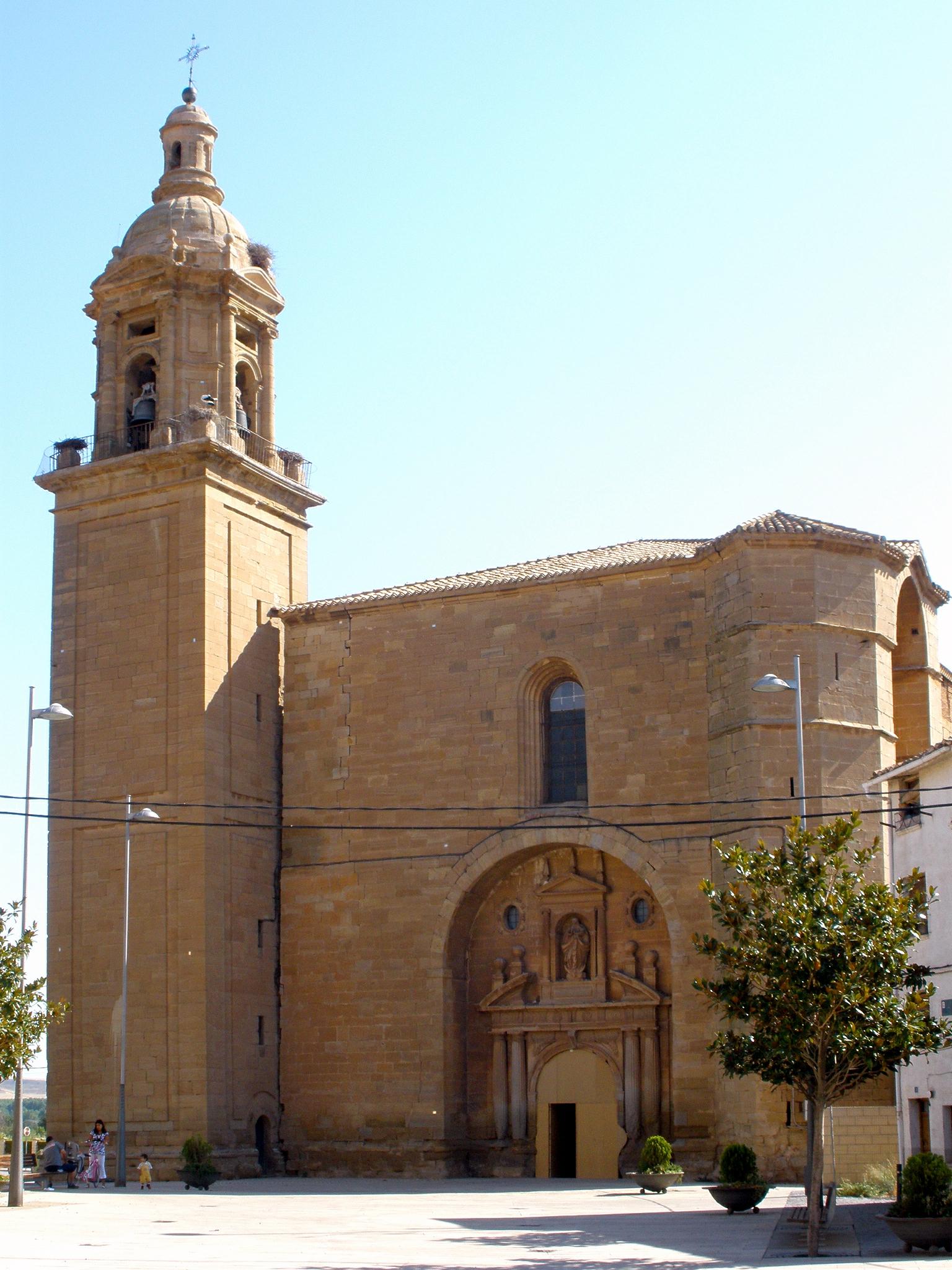
The Co-cathedral of Santa María de la Redonda stands in the old town of Logroño, capital of La Rioja, and is the city's most recognizable landmark. Locals simply call it "La Redonda," and it shares co-cathedral status with the cathedrals of Calahorra and Santo Domingo de la Calzada — an unusual arrangement in which a single diocese has three cathedral seats instead of one.
Why is it called "La Redonda" if it isn't round?
The nickname goes back to the original medieval church that stood on this spot, which had a round or octagonal layout, comparable to Romanesque pilgrim churches found along the Camino de Santiago in Navarre, such as Eunate or Torres del Río. In 1435 that church merged with the collegiate church of San Martín de Albelda, gaining collegiate rank and setting off a major rebuilding campaign. Through the 16th century the round floor plan was replaced by a three-nave, late-Gothic structure covered with star-ribbed vaults, its tall side chapels doubling as buttresses. The building changed shape entirely, but the old name stuck.
What's the story behind the twin towers?
The two slender towers that dominate Logroño's skyline were built by Juan Bautista de Arbaiza and completed after his death by Martín de Beratúa and Francisco Gorbea. The north tower, dedicated to Saint Peter, is slightly shorter than its southern twin, dedicated to Saint Paul — which is why they're sometimes referred to individually by those names. Their design borrows from the tower of the church of Santo Tomás in Haro, a model repeated elsewhere in La Rioja and Álava, including Santo Domingo de la Calzada, Briones, Oyón, and Labraza. Work on the façade and towers continued into the 18th century, giving the exterior a distinctly Baroque appearance even though the church's core dates to the Gothic period.
What is inside worth seeing?
Inside, three naves of equal height are covered by star-shaped ribbed vaults resting on tall columns. Among the pieces most often pointed out are the choir stalls carved by Arnao de Bruselas and the 17th-century main altarpiece, centered on the theme of the Tree of Jesse with the Virgin. The chancel was enlarged in the 17th century, and further additions followed in the 18th century, including the Chapel of the Angels and the western portal.
When did it become a cathedral?
Despite its medieval origins, the building only gained cathedral rank — shared with the two other churches of the diocese — in 1959. Before that, it had served for centuries as Logroño's collegiate church and principal place of worship, long before formally joining La Rioja's group of cathedrals.
Frequently Asked Questions
Is the Co-cathedral of Santa María de la Redonda actually round? No. The current building has a rectangular, three-nave layout. The name comes from an earlier medieval church with a roughly circular plan that once stood on the same site, before the present Gothic structure was raised in the 16th century.
Why are the towers called "twin towers" if one is taller? The term refers to their matching, symmetrical placement on either side of the façade and their similar design, not to identical height — the southern tower (San Pablo) is slightly taller than the northern one (San Pedro).
Since when has the building been a cathedral? It received co-cathedral status in 1959, sharing it with the cathedrals of Calahorra and Santo Domingo de la Calzada within the same diocese.
What's the main highlight inside? Visitors most often mention the Renaissance choir stalls by Arnao de Bruselas and the Baroque main altarpiece depicting the Tree of Jesse.
Nearby places

Earn badges for the places you visit
Download NextOnTrip, discover new places and check off your trails.