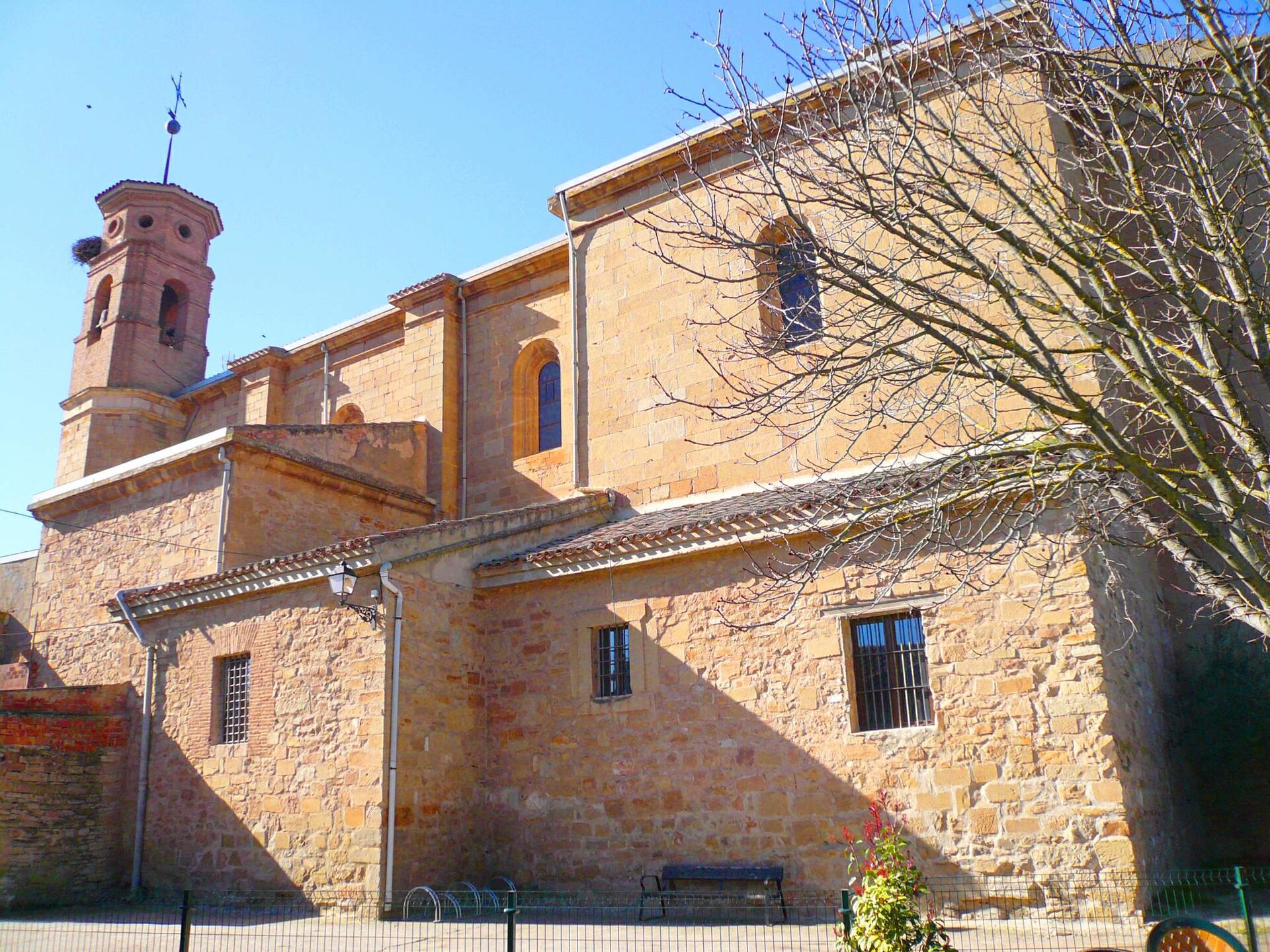
About this place
The Church of Santa María de la Asunción in Alcanadre is one of the oldest Baroque churches in the whole of La Rioja, and its roots go back to the era of the medieval military orders. The building stands at the heart of this small town on the Ebro river, a short drive from Logroño, and has been under formal heritage protection proceedings for decades.
What is the history behind the church?
The story of this site begins well before the building visitors see today. On 5 July 1155, Rodrigo de Azagra donated the village of Alcanadre to the Knights Templar, a grant confirmed that same September by King Sancho III of Castile. For roughly the next hundred and eighty years, the Templar order shaped the settlement and its religious institutions. The parish church standing today grew out of that Templar-era tradition, even though its current appearance is the result of a later Baroque rebuilding.
What makes the architecture stand out?
The church is regarded as the oldest Baroque temple in the entire La Rioja region, which gives it an unusual place among the area's religious architecture, where Romanesque and Gothic styles are far more common. This pioneering role in bringing the Baroque style to the region is the main reason art historians and architecture enthusiasts pay attention to the building.
Is the church a protected heritage site?
Yes. Since 27 October 1982, proceedings have been underway to formally register the church as a Bien de Interés Cultural (Asset of Cultural Interest) in the Monument category, the highest tier of heritage protection under Spanish law. This status reflects the building's recognized historical and architectural value and shapes how it is conserved and made accessible to visitors.
How do you get to Alcanadre?
Alcanadre sits in the province of La Rioja, south of the Ebro river, a short distance from Logroño, the regional capital that is easiest to reach by car or train from Spain's larger cities. A local road connects Logroño to Alcanadre, and the drive typically takes around half an hour. The village itself is compact, so the church, which stands in the central part of town, is easy to find on foot from the main square.
What should visitors look out for?
Beyond the architecture itself, a stop at the church is a good starting point for learning about the region's Templar history, a chapter of La Rioja's past that is not often presented so clearly elsewhere in the area. The village, set within the Ebro valley landscape, is a quiet place where the church remains the natural focal point of public life.
When is the best time to visit?
La Rioja has a continental climate, with warm summers and cold winters, so spring and autumn generally offer the most comfortable conditions for sightseeing. Those seasons also make it easy to combine a stop in Alcanadre with visits to nearby vineyards and towns, since the region is best known internationally for its wine production.
Frequently asked questions
Can visitors go inside the church in Alcanadre? As an active parish church, access to the interior generally depends on locally set service and opening hours, so it is worth checking with the parish or on site before visiting.
Why is this church considered special within La Rioja? It is regarded as the oldest surviving example of Baroque architecture in the region, which is unusual given that Romanesque and Gothic styles dominate elsewhere in La Rioja.
What is the church's connection to the Knights Templar? The village of Alcanadre itself was granted to the Templar order in 1155 and remained under its influence for close to 180 years, shaping the local religious tradition from which today's parish church emerged.
Does the site have official heritage protection? Yes, proceedings to register it as a Bien de Interés Cultural in the Monument category have been underway since 1982.
Nearby places

Earn badges for the places you visit
Download NextOnTrip, discover new places and check off your trails.