- Sacred Monuments
- Churches
Church of Santa Cecilia, Espinosa de los Monteros
About this place
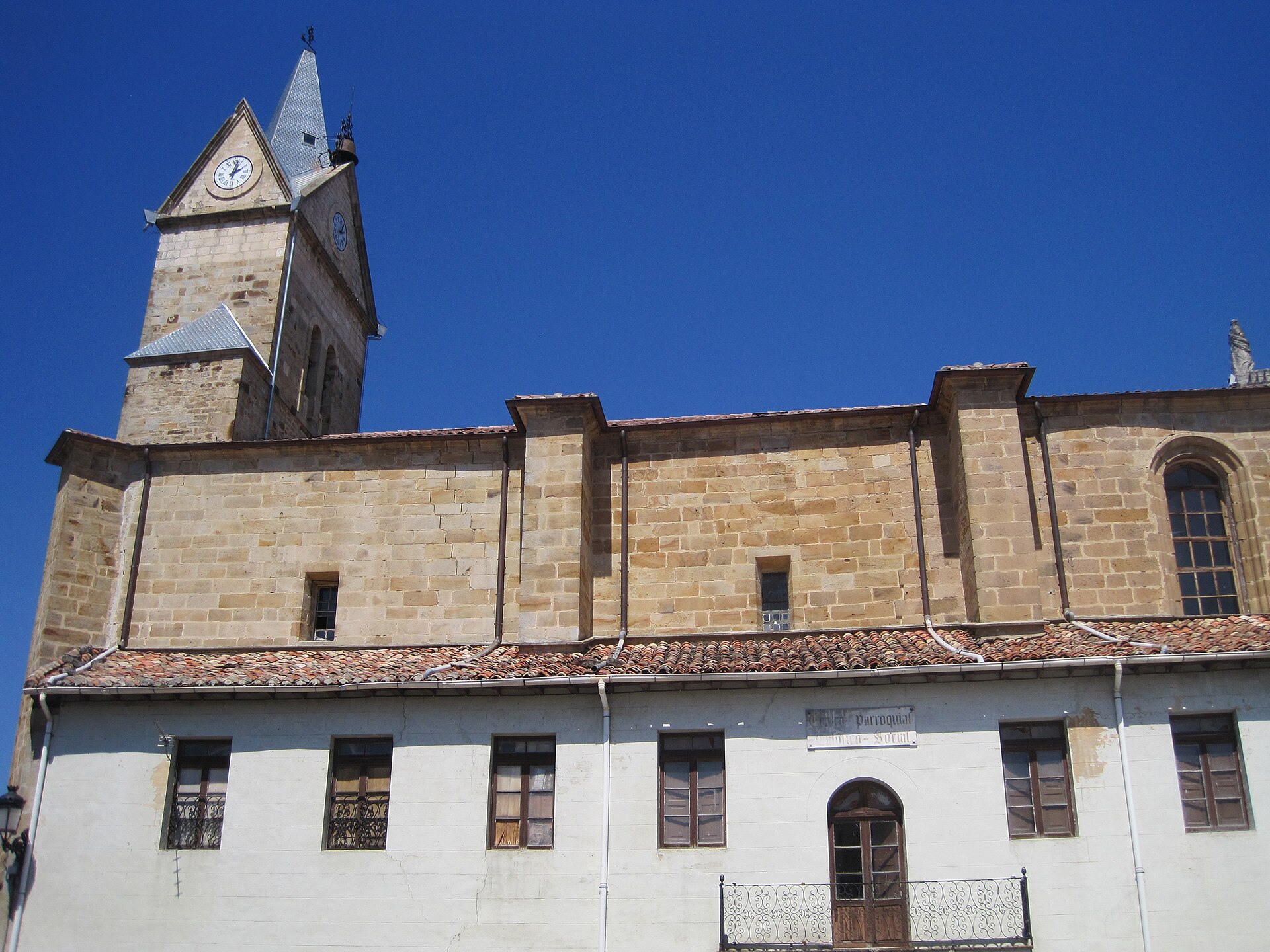
The Church of Santa Cecilia is the main parish church of Espinosa de los Monteros, a small town in the province of Burgos, in the Las Merindades region of northern Castile and León. The building stands at one end of Plaza Sancho García, though the entrance to the interior is on the opposite side of the square — worth keeping in mind when looking for the door.
What does the Church of Santa Cecilia look like?
The church is predominantly Renaissance in style, though several Gothic features remain visible in its structure. The interior follows a three-nave, hall-church layout, with the naves rising to roughly equal height — an arrangement that gives the space an unusually open, spacious feel for a small-town church in this region. The walls are built of ashlar stone, and the vaulting is formed by star-patterned ribs with curved lines, a combination typical of late Gothic and Renaissance religious architecture in northern Spain.
When was the current building constructed?
Work on today's church began in 1527. It was not, however, the first church on this site — an earlier Romanesque building once stood here, and a single column from that structure survives, built into the south wall of the present church. It is one of the few physical traces left of the site's earliest history.
What can visitors see inside?
The interior has a monumental character. The main altarpiece is executed in a classical style, surrounded by several additional Baroque altarpieces distributed through the church. One particularly interesting feature is a niche that once held documents recording the privileges of the Monteros de la Villa, the local royal guard from which the town takes its name. Today the same niche holds a replica of the Black Madonna and Child of Montserrat, a nod to the famous Catalan sanctuary.
What role did the church play in the town's history?
The church witnessed dramatic events during the Battle of Espinosa in 1808, during the Peninsular War. French troops spent several days there, systematically devastating the interior of the temple, looting and destroying furnishings. Traces of these events, though softened by later restoration, remain part of the site's history and of local memory regarding the Napoleonic period in the region.
What makes the church stand out?
The building's most recognizable feature is its 35-metre tower, which dominates the skyline over the entire Espinosa valley and is visible from many points in the surrounding landscape. For visitors exploring Las Merindades, the tower of the Church of Santa Cecilia serves as a natural landmark on approach to the town.
Why is the Church of Santa Cecilia worth visiting?
Espinosa de los Monteros carries a strong historical identity, tied to the tradition of the Monteros de la Villa, an elite palace guard that served the Spanish monarchs. As the town's central parish church, Santa Cecilia gathers that history in one place: from its Romanesque roots, through its Renaissance rebuilding, to an episode from the Napoleonic era. It is not a grand cathedral, but a church with a distinct, local character, well worth a short stop while travelling through the Las Merindades region.
Frequently Asked Questions
Where is the Church of Santa Cecilia located? It stands in Espinosa de los Monteros, in the province of Burgos, at one end of Plaza Sancho García. The entrance to the interior is on the opposite side of the square.
In what style was the church built? Mainly Renaissance, with Gothic elements — visible especially in the star-ribbed vaulting with curved lines and in the three-nave hall-church layout.
Are there remains of an earlier building? Yes — beneath the current church, begun in 1527, stood an earlier Romanesque church. A single column from that period survives, built into the south wall.
What does the niche inside the church represent? It once held documents recording the privileges of the Monteros de la Villa. Today it holds a replica of the Black Madonna of Montserrat.
Nearby places

Earn badges for the places you visit
Download NextOnTrip, discover new places and check off your trails.