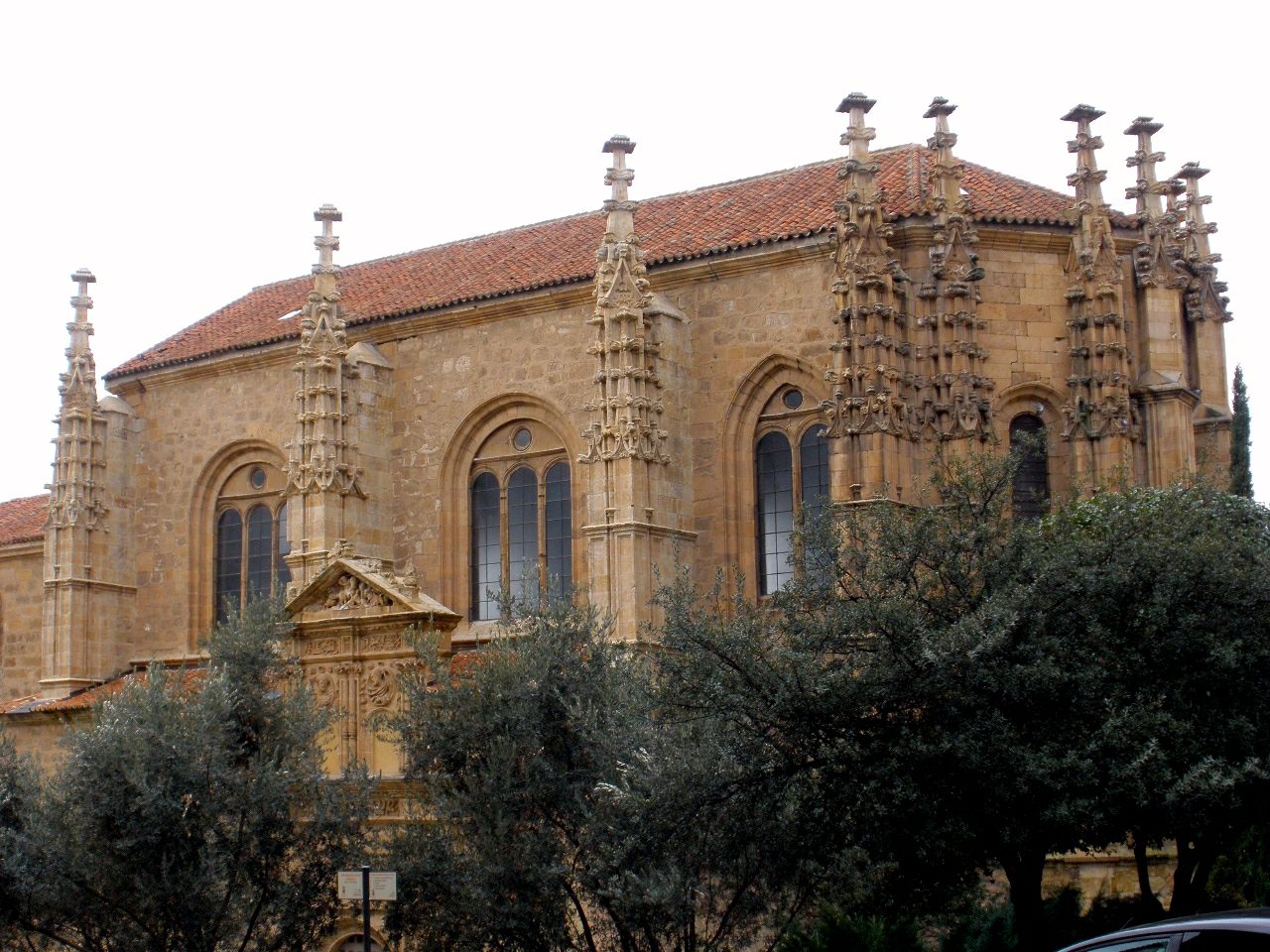
About this place
The Church of Sancti Spiritus stands in Salamanca, the Spanish city famous for one of Europe's oldest universities and a historic center listed as a UNESCO World Heritage Site. The building was declared a Bien de Interés Cultural (BIC) back in 1888 — Spain's highest category of heritage protection, reserved for sites of outstanding historical and architectural significance. That single fact tells a lot: the church has been formally protected for well over a century, long before heritage conservation became a European standard practice.
Where exactly is the church located?
The building sits within Salamanca's old town, a dense network of narrow streets where stone façades, convents, and churches crowd close together. This layout is typical of the historic center — while walking between headline sights like the Plaza Mayor or the cathedrals, visitors regularly stumble upon smaller, less publicized churches that capture the city's character just as well. The Church of Sancti Spiritus falls into that category: not a headline stop on the tourist circuit, but a meaningful piece of the local religious architecture.
What should you know before visiting?
Salamanca is often called the "golden city" because of the honey-colored sandstone used in most of its historic buildings — at sunset, the stone takes on a warm, golden glow. Churches such as Sancti Spiritus belong to the same building tradition as the city's more famous landmarks. Its BIC status means the structure is subject to strict conservation rules: any restoration work or changes to its surroundings require approval from heritage authorities, which helps preserve the site's authentic character over time.
How do you get there?
Salamanca's old town is compact and best explored on foot. From the Plaza Mayor — the city's central square and the natural starting point for most walking routes — the main sights of the historic quarter are reachable within a short walk. It's worth planning your route so that, on the way to major landmarks like the cathedral, the university, or the San Esteban convent, you also pass by smaller churches tucked into the surrounding streets.
When is the best time to visit?
Spring and early autumn offer the most comfortable conditions for exploring Salamanca, with mild temperatures suited to long walks through the historic center. Summers can get hot, though the city stays lively thanks to its student population and numerous cultural festivals. Keep in mind that smaller churches in the city often have limited or irregular opening hours, so it's worth checking current information locally or at a tourist information point before visiting.
Frequently asked questions
What does Bien de Interés Cultural status mean? It is Spain's highest category of cultural heritage protection, granted to sites of exceptional historical, artistic, or architectural value. The Church of Sancti Spiritus received this status in 1888.
Is the church close to other landmarks in Salamanca? Yes, it lies within the city's historic center, near other heritage churches and convents, within walking distance of the Plaza Mayor and the cathedral.
Is it worth visiting Salamanca just for this church? The church works best as a complement to a broader visit to the city. Salamanca offers far more to see, and Sancti Spiritus is best included as an additional stop while exploring the old town.
What's the best way to plan a visit to the area? Start at the Plaza Mayor and explore the historic center's streets on foot from there, combining major landmarks with lesser-known sites like this church along the way.
Nearby places

Earn badges for the places you visit
Download NextOnTrip, discover new places and check off your trails.