About this place
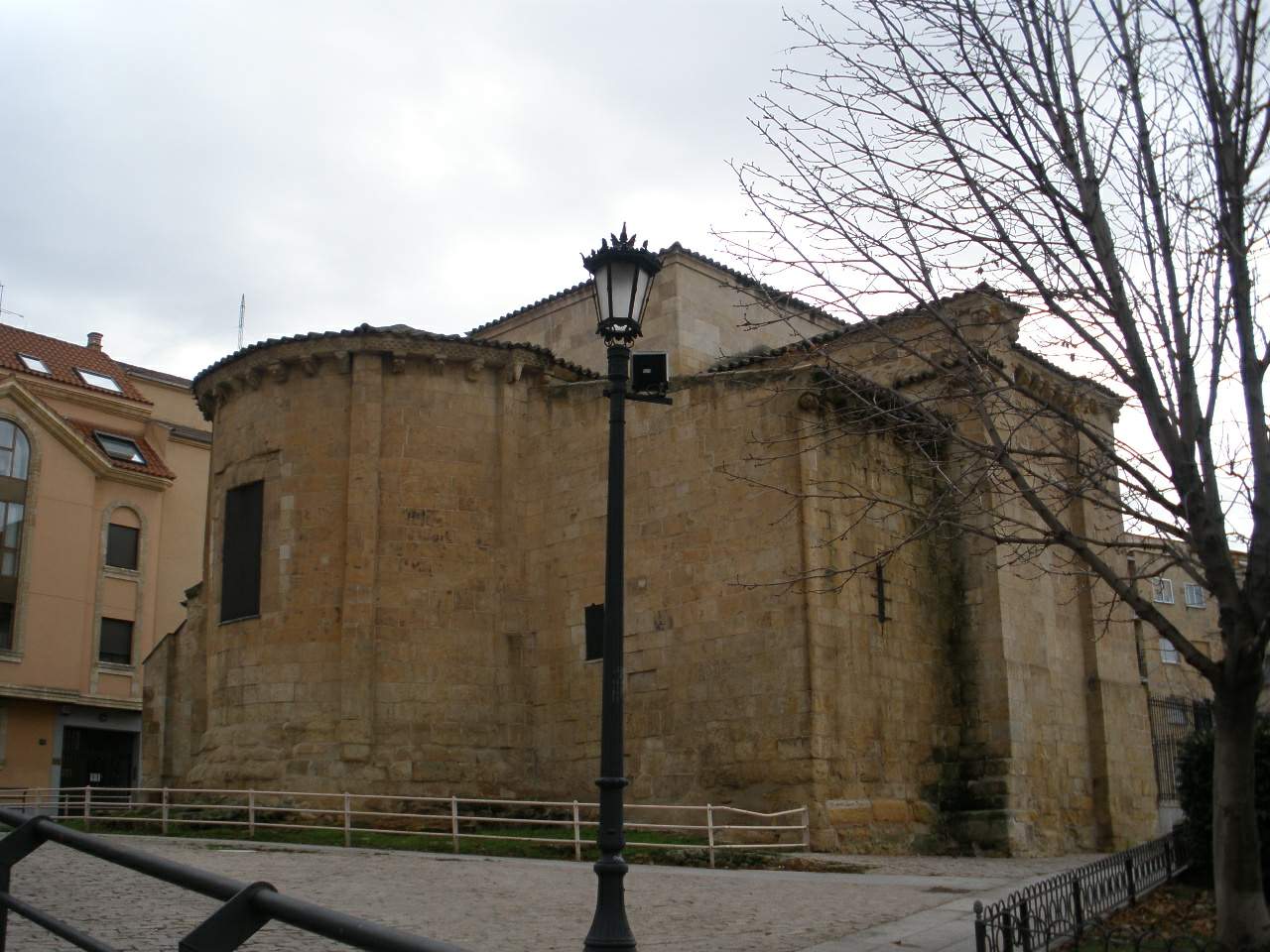
The Church of Saint Julian and Saint Basilissa is one of Salamanca's oldest surviving churches, built in 1107 during the medieval repopulation of the city ordered by King Alfonso VI of León. Although it now stands in the very heart of the historic center, it originally lay outside the city walls — it was only later, as the fortifications expanded and Salamanca grew, that the church became part of the urban core.
How to get there?
The church sits on Plaza del Mercado, right next to Plaza Mayor and close to the parish of San Martín — placing it firmly in the center of old Salamanca. It is only a short walk from the main square, making it easy to combine with a visit to the cathedral, the university, or the other landmarks of the old town. Given its central location, no public transport is really needed; the most practical way to reach it is simply on foot, following the walking routes through the historic center.
What will you see?
Only the northern part of the original early 12th-century Romanesque church has survived: a stone portal and the lower section of the bell tower. This is where the building's Romanesque character is most visible — a semicircular arch and two archivolts decorated with carved corbels (canecillos) featuring figurative and vegetal motifs, typical of the stonework of the period.
The rest of the structure reflects successive rebuilding campaigns carried out between the 16th and 18th centuries. The interior was almost entirely reworked in Baroque style, while the vaulting dates from a later Gothic-influenced remodeling. The tower itself keeps its Romanesque base, but its upper section was only added in the 17th century. The result is a layered architectural record — from raw Romanesque stonework, through a Gothic vault, to a Baroque interior.
For anyone interested in Romanesque architecture, the surviving portal is the main draw: it is one of the few well-preserved elements of the original 12th-century building phase still standing in this part of the city.
When to visit?
Salamanca has a moderate continental climate, so the most pleasant times to explore it are spring (April–June) and early autumn (September–October), when temperatures are mild and the summer heat has not yet set in. Summers can get very hot, which can make longer walks through the old town uncomfortable. It is also worth knowing that, thanks to the university, the historic center stays lively year-round — even outside the peak tourist season, the city is far from empty.
The church is best viewed during daylight hours, when sunlight brings out the carved detail of the portal and the stone facade.
Why is it worth visiting?
The Church of Saint Julian and Saint Basilissa is not Salamanca's largest or most dramatic church, but its value lies elsewhere — in the authenticity of the surviving early 12th-century Romanesque fragment, a rare witness to the city's earliest phase of expansion after the Reconquista. It is a good stop for visitors who want to see Salamanca beyond the monumental cathedral and university, discovering the smaller, more intimate landmarks that make up the fabric of the historic center.
The building has been officially protected as a Bien de Interés Cultural (Cultural Interest Asset) with Monument status, a designation published in Spain's official state gazette (BOE) on 15 August 1983, confirming its historical and architectural significance at a national level.
Frequently asked questions
When was the church built? The original building dates to 1107, built during the medieval repopulation of Salamanca under King Alfonso VI. Only the northern part survives from this original phase.
What exactly remains of the Romanesque church? A portal with a semicircular arch and two archivolts decorated with carved corbels, along with the lower section of the bell tower.
Is the interior Romanesque? No — the interior was rebuilt in Baroque style between the 16th and 18th centuries, and the vaulting dates from a later Gothic-influenced remodeling.
Is the church close to other Salamanca landmarks? Yes, it stands on Plaza del Mercado, right next to Plaza Mayor, making it easy to combine with a visit to the historic center.
Nearby places

Earn badges for the places you visit
Download NextOnTrip, discover new places and check off your trails.