About this place
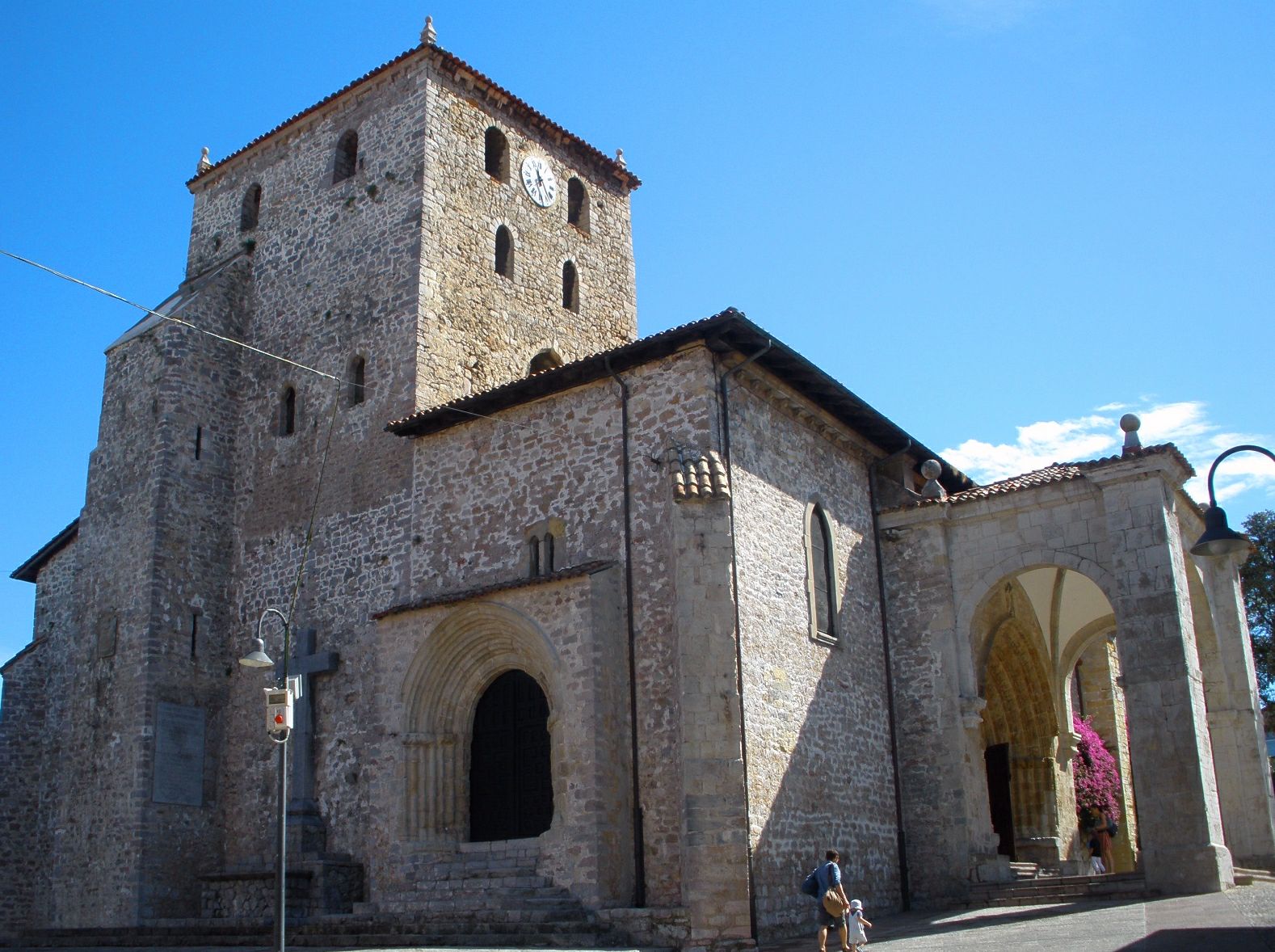
Church of San Pedro de Plecín is a ruined former Roman Catholic church standing near Alles, the main town of the municipality of Peñamellera Alta, in eastern Asturias, close to the border with Cantabria. Although unroofed and overgrown today, the building preserves some of the finest Romanesque stone carving in this part of northern Spain.
Where exactly is the church located?
The church sits within the parish of San Pedro, inside the administrative boundaries of Peñamellera Alta, a short distance from the centre of Alles. Its coordinates place it at roughly 43.33°N, 4.70°W, in the limestone hill country typical of eastern Asturias.
How old is the building, and how has it changed?
A Romanesque church for a different saint
Construction dates to the last quarter of the 12th century, in the late Romanesque style then current in the region. The original dedication was not to Saint Peter but to San Salvador, the Holy Saviour. A century later, in the 13th century, the western end of the building was extended, giving the congregation more room. Only in the 14th or 15th century did the church acquire the dedication it carries today, San Pedro — the reason for the change is not recorded. A further renovation in the 15th century added a porch at the entrance.
A family chapel, then abandonment
In the 16th century a funerary chapel was built onto the north side of the church, financed by the Mier family, whose patronage kept the building maintained for generations. That support ended in 1778. Nine years later, in 1787, a new parish church was raised in the centre of Alles, and the old church of San Pedro de Plecín lost its liturgical role, left to the elements ever since.
What can visitors still see of the original architecture?
The church has a single nave closed by a straight-walled chancel, which replaced an earlier semicircular apse. The chancel itself is built of dressed sandstone blocks, while the nave walls are limestone masonry. Inside, a barrel vault once carried a timber ceiling over the nave.
The carved south doorway
The most striking surviving feature is the south portal, framed by four slightly pointed archivolts decorated with a honeycomb, or chequered, pattern. The capitals supporting them display a rich Romanesque repertoire: plant motifs alongside human figures, mermaids, griffins and centaurs. Next to the doorway, a small window sits inside a chequered frame, topped by a five-lobed archivolt.
The Mier family chapel
The funerary chapel added in the 16th century is square in plan and covered by a ribbed vault resting on scalloped corbels, a design noticeably later in style than the Romanesque core of the church, reflecting its Renaissance-era origin.
What condition is the church in today?
More than two centuries of abandonment have left the church roofless, with vegetation growing through the nave and its walls weathered and partly collapsed. Recent conservation work has cleared the undergrowth and stabilised parts of the structure, aimed at halting further decay while the ruin remains open to the elements.
Frequently Asked Questions
Is the Church of San Pedro de Plecín still used for worship? No. It was abandoned in 1787 after a new parish church was built in central Alles, and no services have been held there since.
Why did the dedication change from San Salvador to San Pedro? The change took place in the 14th or 15th century; the historical record does not explain why, though re-dedications of rural churches were not unusual in the region over the centuries.
Can visitors go inside the building? The church is a roofless ruin, so a visit mainly means viewing it from outside, focusing on the carved south portal and the attached funerary chapel, rather than entering an intact interior.
How do you get to the church? It stands near Alles, the chief town of Peñamellera Alta, reached by local roads connecting eastern Asturias with the neighbouring region of Cantabria.
Nearby places

Earn badges for the places you visit
Download NextOnTrip, discover new places and check off your trails.