About this place
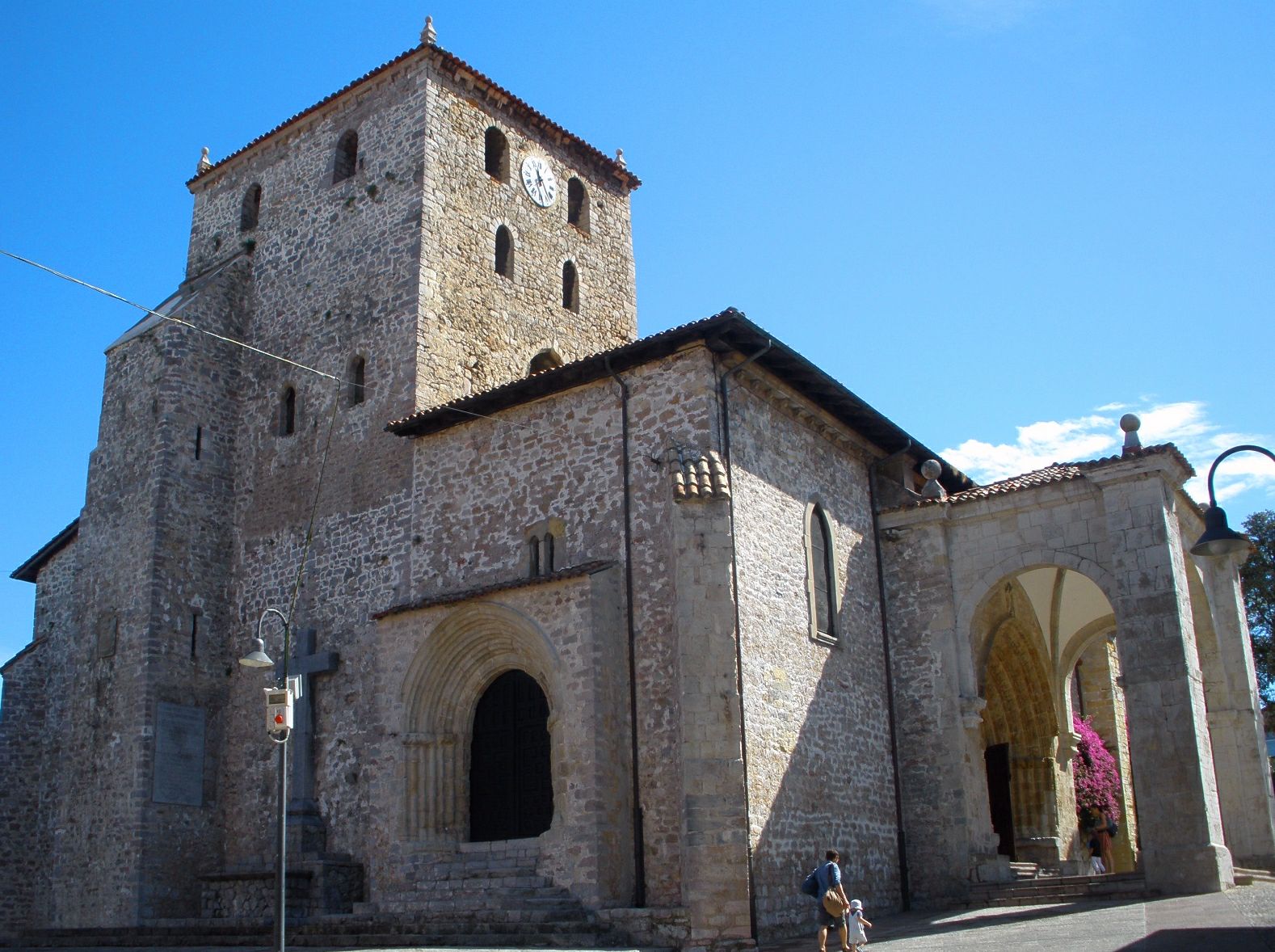
The Basilica of the Assumption of Our Lady (also known as Santa María del Concejo) stands at the heart of Llanes, a coastal town in Asturias on the Bay of Biscay, on Plaza de Cristo Rey within the line of the old medieval walls. It is the town's main church and one of the finest examples of Gothic architecture in Asturias.
When was the basilica in Llanes built?
Local residents financed the construction starting around 1240, and the work continued in stages through the 14th century, with some accounts pointing to finishing touches as late as the 15th century. That long, interrupted building process explains why the church blends two eras — earlier Romanesque elements alongside a dominant, later Gothic design. Rather than rising in a single campaign, the building grew over generations as artistic tastes shifted. In 1973 the church was granted the rank of minor basilica, following its earlier recognition as a site of cultural interest.
What do the facades and portals show?
The south facade carries the building's most striking feature: a monumental Gothic portal whose archivolts are carved with rows of figures — animals, kings, monks, winged angels, and a knight resembling a Templar. It is a richly decorated entrance that draws the eye from the square outside. Near the bell tower sits an older, plainer portal with Romanesque traits, and beside it another Gothic doorway sheltered under a portico, likewise decorated with figurative archivolts. The tower itself, modest in form, anchors the church's silhouette and serves as a landmark within the old town.
What is inside the basilica?
Inside, the church follows a basilical plan with three naves closing in three apses. The side naves are covered by cross vaults, while the central nave carries a striking star vault typical of late Gothic design. Among the furnishings, a plateresque altarpiece with Flemish influence stands out, attributed to the goldsmith León Picardo and dated to 1517. It is worth pausing in front of — the combination of carved woodwork and gilding impresses even visitors with no particular interest in religious art.
How should visitors plan a visit?
Entry to the basilica is free, and visitors are only asked for a voluntary donation. The church stays open for most of the day, though it closes during religious services, so it is worth timing a visit around that. Because it remains an active parish church, a quieter visit is easier to arrange outside mass hours.
Frequently Asked Questions
Is the basilica known by another name? Yes — the church is referred to both as the Basílica de Santa María de la Asunción and as Santa María del Concejo (or Conceyu in the Asturian form), with both names used for the same building in Llanes.
Why does the basilica mix Romanesque and Gothic styles? Construction started around 1240 and stretched across several centuries, so different building phases followed the architectural fashions of their time — leaving older Romanesque sections alongside the dominant Gothic work.
What is the most notable feature inside? Visitors are drawn to the 16th-century plateresque altarpiece with Flemish influence, attributed to the goldsmith León Picardo, as well as the star-vaulted ceiling of the central nave.
Is there an entrance fee? No, entry is free — only voluntary donations are collected, and the basilica may be closed to visitors during religious services.
Nearby places

Earn badges for the places you visit
Download NextOnTrip, discover new places and check off your trails.