About this place
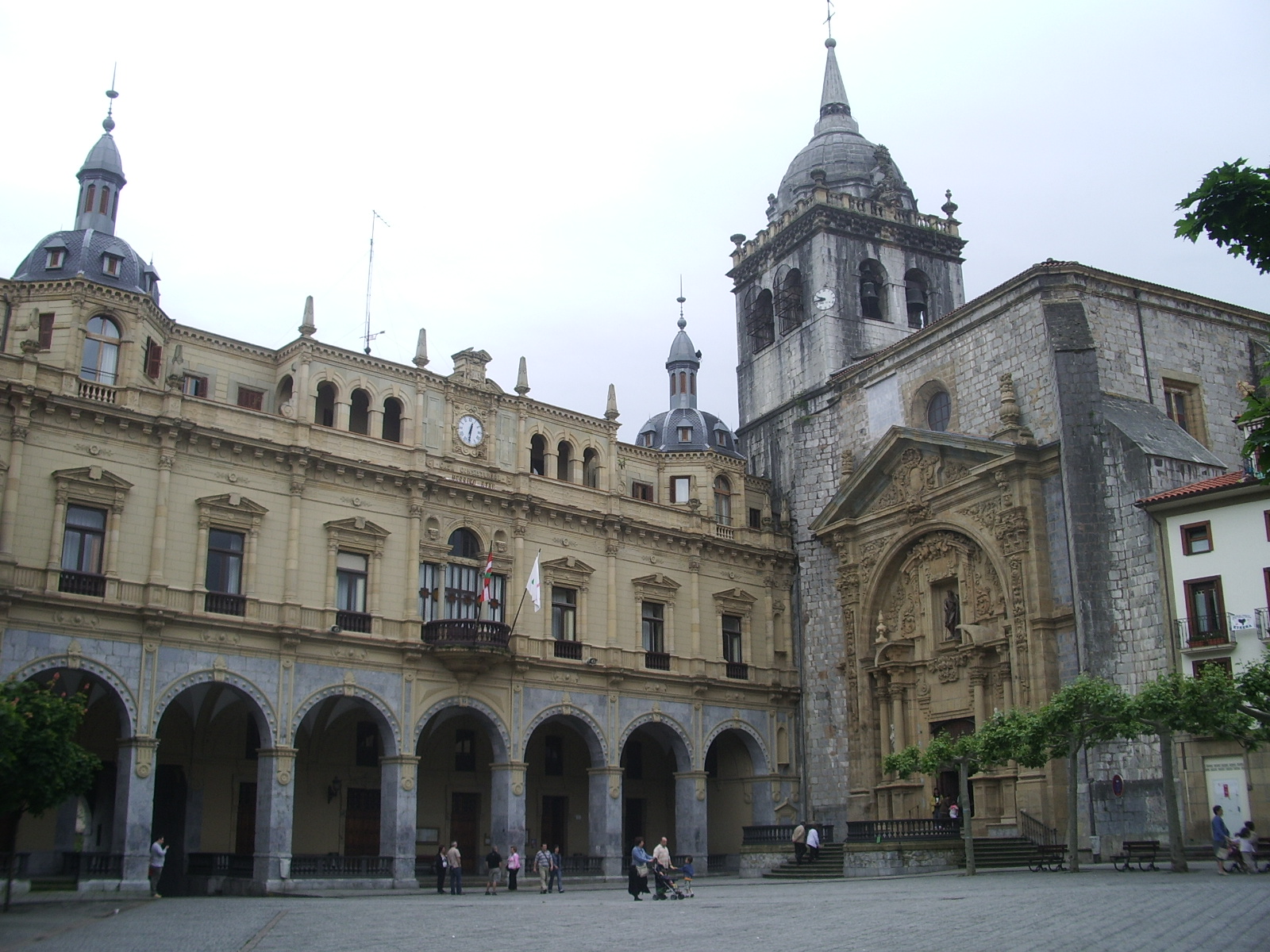
The Church of San Juan Bautista in Hernani is the main parish church of this Basque town in Gipuzkoa, standing right at the heart of the old center, on the square known as Gudarien Enparantza.
How old is this church?
The parish itself predates the building you see today. An earlier church under the same dedication once stood elsewhere in town, and the only surviving piece of it is a doorway showing a transitional Romanesque-to-Gothic style, now absorbed into a later convent building. In the 16th century, the parish was moved inside the town walls to its present site. Two forces drove that decision: the need for better defense, and Hernani's growing population, fueled at the time by wealth from a thriving local iron industry that was pulling in new residents faster than the old church could serve them.
The relocation wasn't purely a municipal matter. Patronage rights over the church belonged to the Alcega family, who had received them from the Catholic Monarchs at the close of the 15th century. Moving the building therefore required an agreement between the town council and the Alcega family, plus royal approval, since the Crown formally retained rights over the temple itself. That overlap of town, noble family, and monarchy shows how deeply parish churches were woven into the political fabric of Basque towns in the early modern period — this was never just a religious building, it was a piece of local governance.
What's worth seeing inside and out?
The church has a single nave laid out on a Latin-cross plan, a straightforward but monumental format common to Basque parish churches of the era. What tends to catch visitors' attention first is the entrance porch: a Baroque structure in warm chestnut-toned wood that stands out sharply against the grey stone walls surrounding it. That contrast between warm timber and cold stone is one of the building's most recognizable features from the outside.
Inside, attention centers on the main altar, home to a tabernacle crafted by Ambrosio de Bengoechea, and a retable by Bernabé Cordero. Together, these two pieces represent the kind of religious craftsmanship typical of churches across the region and form the most valuable part of the interior decoration.
Where exactly is the church located?
The church sits in Hernani's historic center, on the square known locally as Gudarien Enparantza. That placement is typical of Basque parish churches — right in the middle of the old town, surrounded by the buildings that once made up the town's commercial and administrative core.
Frequently Asked Questions
Is the current Church of San Juan Bautista the original building of the parish? No. The original church stood on a different site, and only its doorway — built in a transitional Romanesque-Gothic style — survives, now part of a later convent. The present building dates from after the parish was relocated in the 16th century.
Why was the church moved in the 16th century? Mainly for security, since the new site sat within the town walls, and to accommodate a growing population driven by the wealth generated by the local iron industry.
Who held patronage rights over the parish? The Alcega family held patronage rights, granted by the Catholic Monarchs at the end of the 15th century. Any change to the church also required approval from the Crown, which retained formal rights over the building.
What are the most distinctive architectural features of the church? The Baroque entrance porch in chestnut-colored wood, standing out against grey stone walls, and inside, the tabernacle by Ambrosio de Bengoechea and the retable by Bernabé Cordero on the main altar.
Nearby places

Earn badges for the places you visit
Download NextOnTrip, discover new places and check off your trails.