About this place
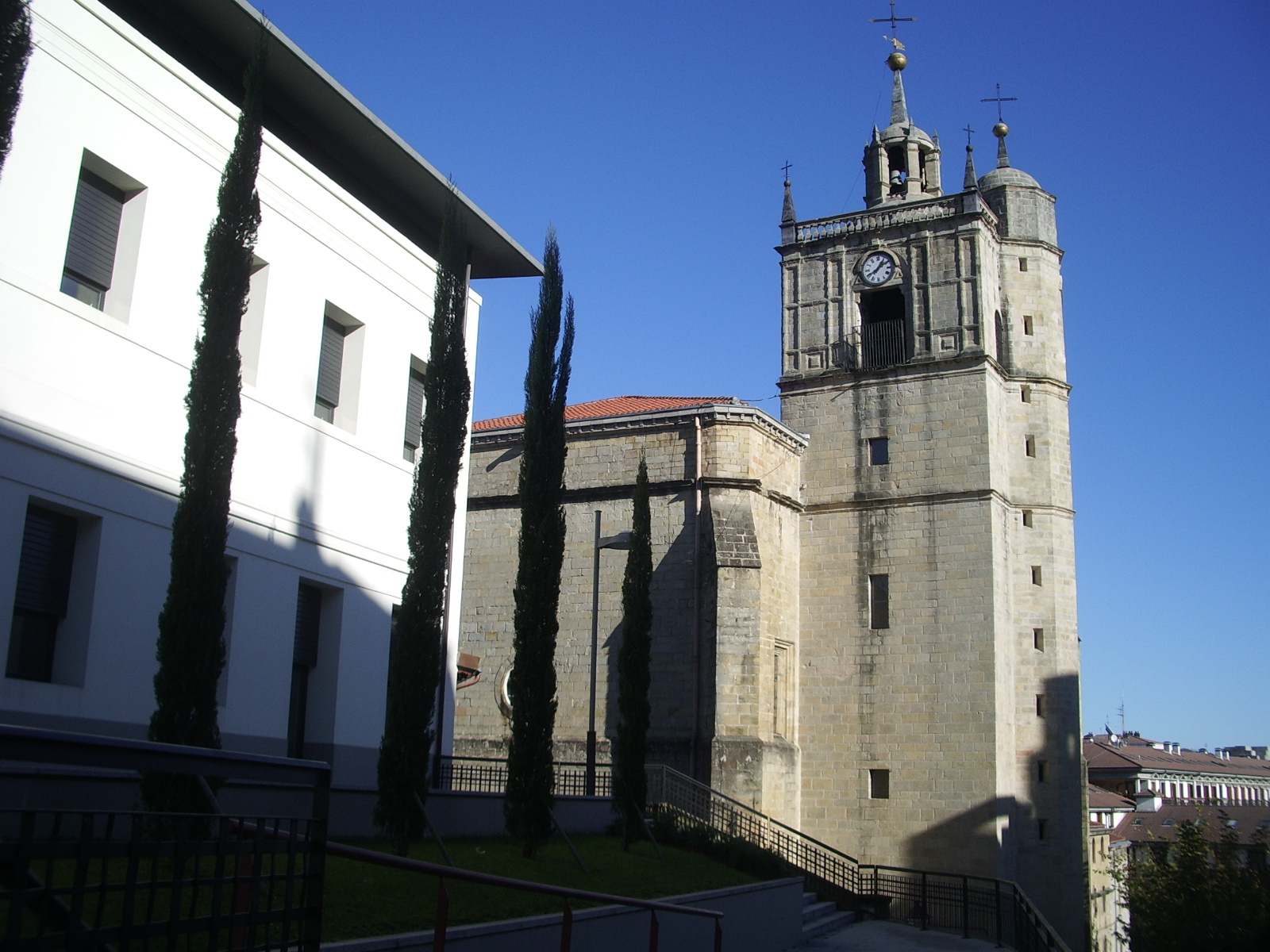
Church of Nuestra Señora del Juncal in Irun is the town's main parish church, standing in the Basque Country close to the French border, along the route the Camino de Santiago follows as pilgrims cross into Spain through Irun. The building has served as the town's religious and architectural focal point for centuries.
Where does the church's name come from?
The name "Juncal" comes from a legend dating to 1400, when a carved wooden image of the Virgin Mary was said to have been found among the reeds (juncales in Spanish) growing along the banks of the estuary running through Irun. The image quickly became an object of local devotion, and eventually gave its name to the entire church. Over the centuries the building has also been known under other names — Nuestra Señora del Buen Seguro, del Buen Consejo, and Santa María de Irun — all referring to the same Marian figure at the heart of the local cult.
How was the current building constructed?
The church stands on the site of an earlier hermitage or chapel. Construction of the present building began in 1508, but the work dragged on for more than a century: only in 1606 was the weathervane finally fitted to the tower, marking the symbolic close of the building phase. The long timeline was no accident. Both the neighboring town of Hondarribia and the Viceroy of Navarre objected to the church's size and location, fearing that such a large, sturdy structure could be turned into a defensive stronghold by an enemy in the event of a border conflict. The dispute is a reminder of how strategically sensitive Irun's position near the French border already was in the sixteenth century.
What architectural style does the church represent?
The building blends older Gothic elements — visible in its gargoyles and in column bases that support the vaults — with the Renaissance Gothic style typical of Basque church architecture from this period. The interior follows a hall-church layout, with a single apse and three naves of similar height, a plan found in many Basque churches of the era. A massive tower rises at the entrance, forming one of the recognizable landmarks on Irun's skyline.
What is worth seeing inside?
Inside, the church houses a Cavaillé-Coll organ more than 130 years old, one of the region's notable historic organ instruments. The devotional centerpiece remains the carved image of the Virgin, considered the oldest Marian carving preserved in the province of Guipuzcoa (Gipuzkoa). According to legend found among the reeds of the estuary, this image is the reason the entire church exists and carries its name.
Frequently Asked Questions
Where does the name "del Juncal" come from? It comes from a legend about a carved image of the Virgin Mary found in 1400 among the reeds (juncales) on the bank of the estuary in Irun.
When was the current church built? Construction began in 1508 and finished in 1606, when the tower's weathervane was installed — the work took more than a hundred years.
What architectural style does the building represent? It combines older Gothic elements, such as gargoyles and column bases, with the Renaissance Gothic style typical of Basque architecture, following a hall-church plan with one apse and three naves.
What is the oldest item inside the church? The oldest item is the carved image of the Virgin, regarded as the oldest Marian carving preserved in Guipuzcoa (Gipuzkoa).
Nearby places

Earn badges for the places you visit
Download NextOnTrip, discover new places and check off your trails.