About this place
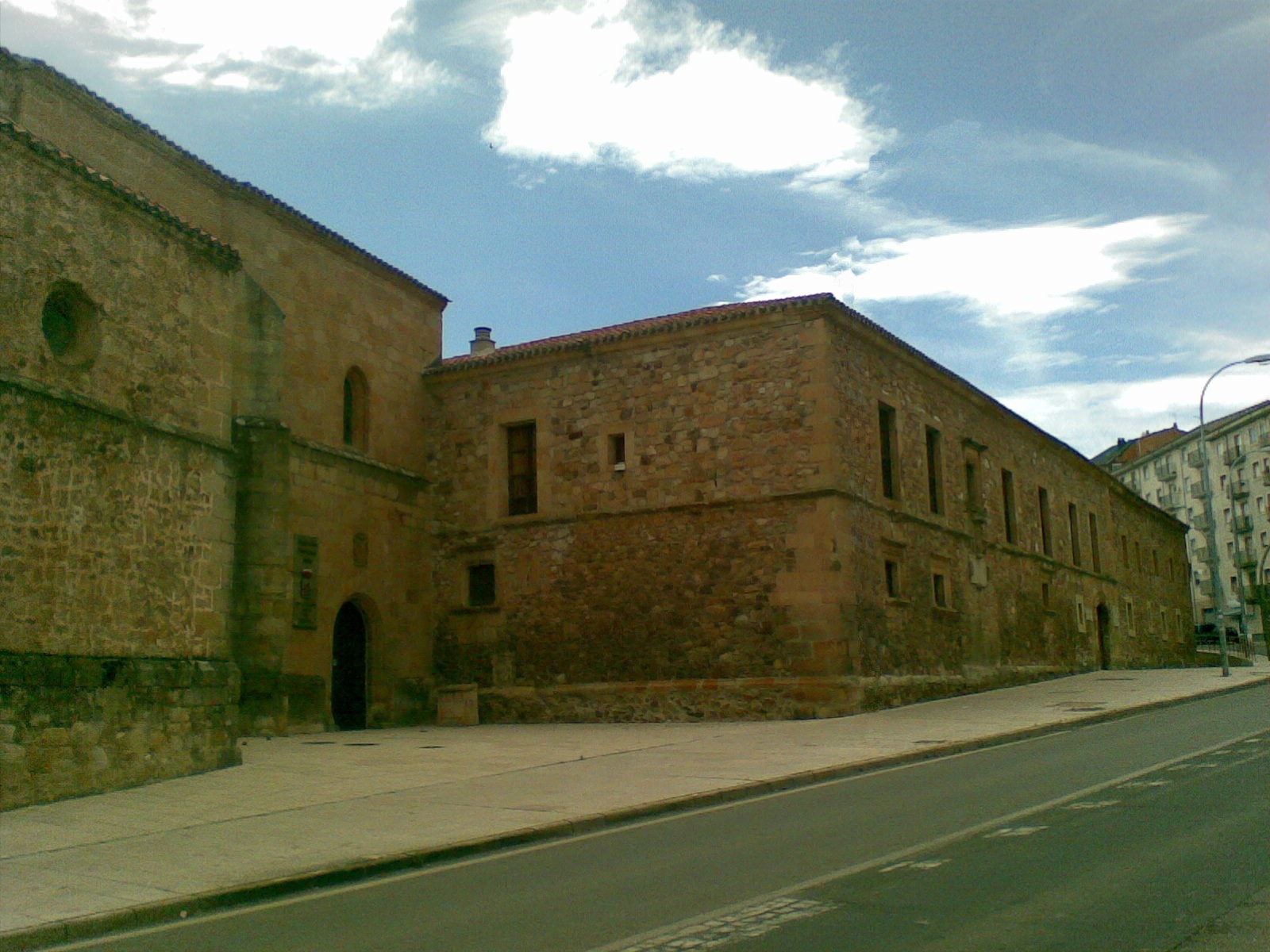
Church of Nuestra Señora del Espino stands in Soria, Spain, close to the old castle hill (Cerro del Castillo) and the city cemetery, marking one of the most significant religious buildings in this Castilian city.
How old is this church, really?
The site's story stretches back to the early days of the Reconquista, when Soria was resettled after being taken back from Moorish rule. It already appears in a 1270 census ordered by King Alfonso X — though not under the name Espino. Back then the area was known as Coballieda, and several Romanesque churches stood nearby, including those of Santiago, San Martín de la Cuesta, and Santa María de Covaleda. It was on the site of that last one that, around the mid-14th century, builders raised the structure that would eventually grow into today's church.
What changed during the 16th century?
The building underwent a major overhaul in the 1500s. Side chapels were added, functioning as transverse aisles, and the church took on the plateresque style — a Spanish take on Renaissance ornament layered over a Gothic frame, heavy with detailed stone carving. That renovation is largely what gives the church its current silhouette and sets it apart from a plain Gothic parish building.
Why is the Virgen del Espino so important to Soria?
In 1690, the Marian image venerated here — the Virgen del Espino — was declared patron saint of Soria. From that point on, the church became the city's principal center of Marian devotion, and its religious weight grew alongside its architectural one. Local traditions and celebrations tied to the city's patroness still revolve around this building, making it as much a living civic landmark as a historic monument.
Did the church have a role during the Napoleonic occupation?
Spain's turbulent 19th century left its mark here too. During the French occupation, Napoleonic troops took over the church interior and used it as their headquarters — a striking example of how sacred buildings across the country were repurposed for military ends in wartime. It's a less glorious chapter, but a telling one: for a period, the building lost its religious function entirely.
What makes the architecture worth seeing?
Nuestra Señora del Espino is regarded as the second most important church in Soria, ranking only behind the co-cathedral of San Pedro. Its plateresque additions from the 16th century — the side chapels and their stone ornamentation — sit on top of a medieval core dating to the 1300s, giving the building a layered history visible in its own stonework. The result is a church that reads as Gothic in structure but Renaissance in decoration.
Where exactly is it, and what's nearby?
The church sits on what was historically the edge of Soria, next to the Cerro del Castillo and the municipal cemetery — away from the city's main commercial core. That proximity to the castle hill makes it easy to pair a visit here with a walk up to the hilltop, which overlooks the Duero valley and the wider city.
Frequently Asked Questions
Why is it called "del Espino"? The current dedication comes from the Virgen del Espino, declared patron saint of Soria in 1690. Before that, in the Middle Ages, the site went by a different name — Coballieda — and an earlier Marian title, Santa María de Covaleda.
Was there an earlier Romanesque church on this spot? Yes. The present building was erected around the mid-14th century on the site of an earlier Romanesque church dedicated to Santa María de Covaleda, one of several churches that stood in this part of Soria at the time.
How important is this church to Soria today? It's considered the second most important church in the city after the co-cathedral of San Pedro, and it remains the main center of devotion to the city's patron saint, the Virgen del Espino.
Can I combine a visit with other nearby sights? Yes — its location next to the Cerro del Castillo makes it easy to combine a visit with a short walk up the hill, which offers views over the city and the Duero valley.
Nearby places

Earn badges for the places you visit
Download NextOnTrip, discover new places and check off your trails.