About this place
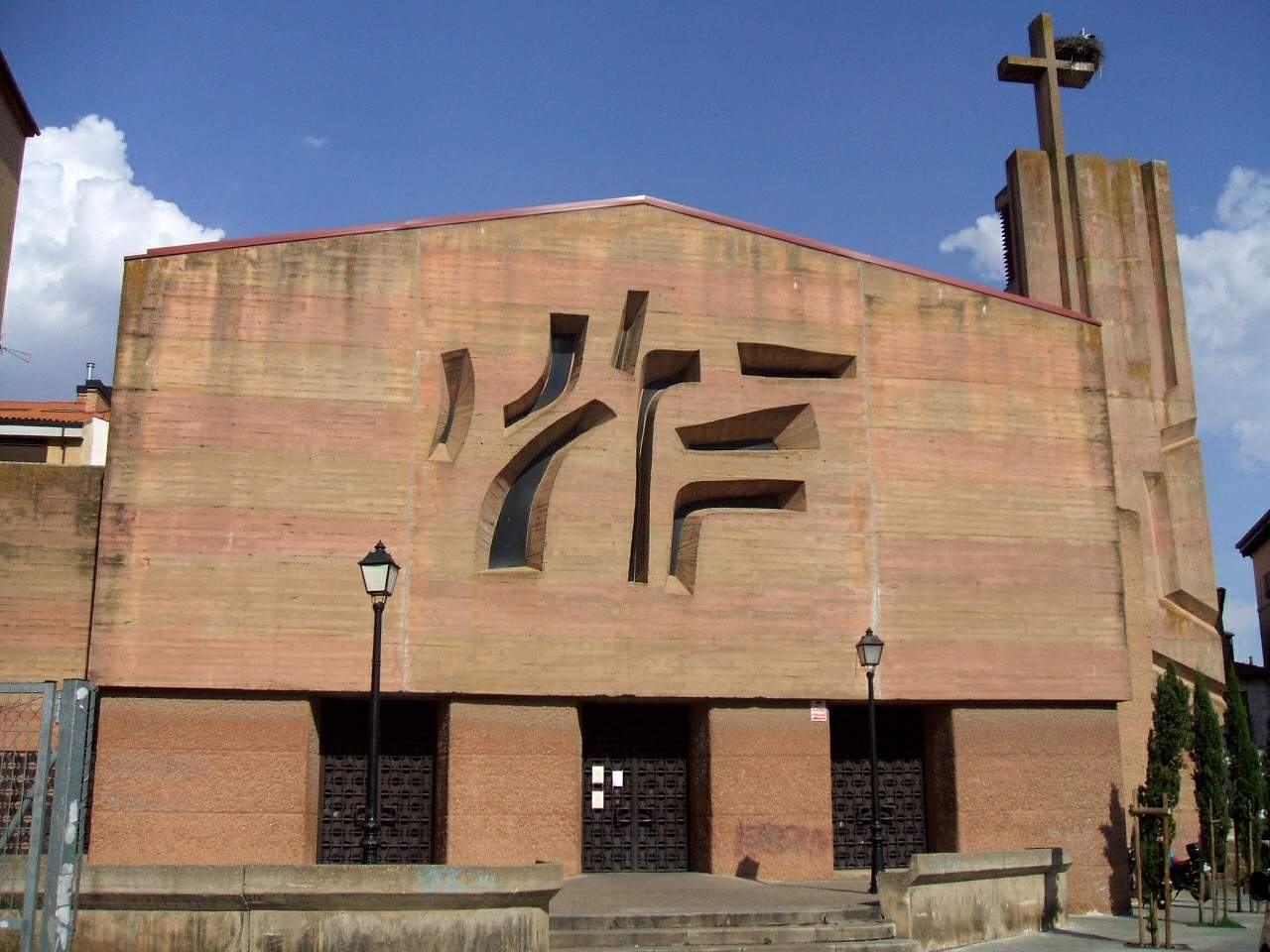
Church of El Salvador in Soria is one of the oldest traces of settlement outside the walls of the medieval city, even though the building standing today has little in common with the original Romanesque structure.
Who founded the church, and when?
The church was most likely founded by a grandson of Fortún López, one of the settlers who repopulated Soria in the 12th century after the city was reclaimed during the Reconquista. In 1169 it was granted to the military Order of Calatrava as an encomienda — a territorial grant combining land rights with duties of defense and local administration. That places El Salvador among the region's oldest ecclesiastical foundations, born in a period when new settlement structures were being organized across the reconquered territory.
Why was the church built outside the city walls?
In the Middle Ages the church stood in the extramuros zone, outside Soria's fortifications — an area later absorbed into the city's built-up core, but which at the time meant a peripheral position relative to the centers of power and trade. That location had a concrete administrative consequence: the church does not appear in the census ordered by King Alfonso X in 1270, since it lay beyond the defensive walls and fell outside the count covering churches inside the city proper.
How did control of the church change hands over time?
The Order of Calatrava lost its rights over El Salvador in 1322. Historical records confirm that the area remained under the Order's lordship until 1434, when a property exchange transferred it to Diego González de Toledo. In 1441 he attached it to a mayorazgo — an indivisible hereditary estate — which tied the church's fortunes to a single noble family for generations, rather than to a religious institution or order.
What happened to the parish status over the centuries?
The church's administrative history was far from stable: in 1896 it lost its status as a parish, and this was not restored until 1947, when Soria's urban growth extended in that direction again and the area needed its own parish community. It shows how the fate of a small church can be tied as much to a city's expansion as to any purely religious decision.
What does the church look like today?
The building visible today dates from 1967 — essentially a new construction, raised at a time when the growing parish needed a larger, more functional space. Even so, fragments of considerable historical value survive from the original Romanesque church: a semicircular apse and a presbytery covered by a pointed barrel vault. These elements still let visitors read the character of centuries-old architecture, even though most of the current building is much more recent.
What is worth seeing when visiting the Church of El Salvador?
For anyone exploring Soria, the most striking feature is precisely this contrast: a modern, 20th-century church shell wrapped around surviving Romanesque relics — the apse and presbytery. It's a rare chance to see physical evidence of more than 800 years of history in a single spot, spanning the church's founding during the Reconquista, its time under the Order of Calatrava and later a noble mayorazgo, and its rebuilding in the modern era.
Frequently Asked Questions
Is the Church of El Salvador located in central Soria? Historically it stood outside the city walls (extramuros), but as Soria expanded, that area became part of the built-up city, so today the church sits within the urban fabric.
Does the original Romanesque building still exist? Only partly — a semicircular apse and a presbytery with a pointed barrel vault survive from the original Romanesque church, while the rest of the current structure dates from a 1967 rebuild.
Who administered the church during the Middle Ages? From 1169 to 1322 the church was an encomienda of the Order of Calatrava, and it remained under the Order's lordship until 1434, when it passed to Diego González de Toledo's family.
Has the church always functioned as a parish? No — it lost parish status in 1896 and only regained it in 1947, as the city's growth extended into that area again.
Nearby places

Earn badges for the places you visit
Download NextOnTrip, discover new places and check off your trails.