About this place
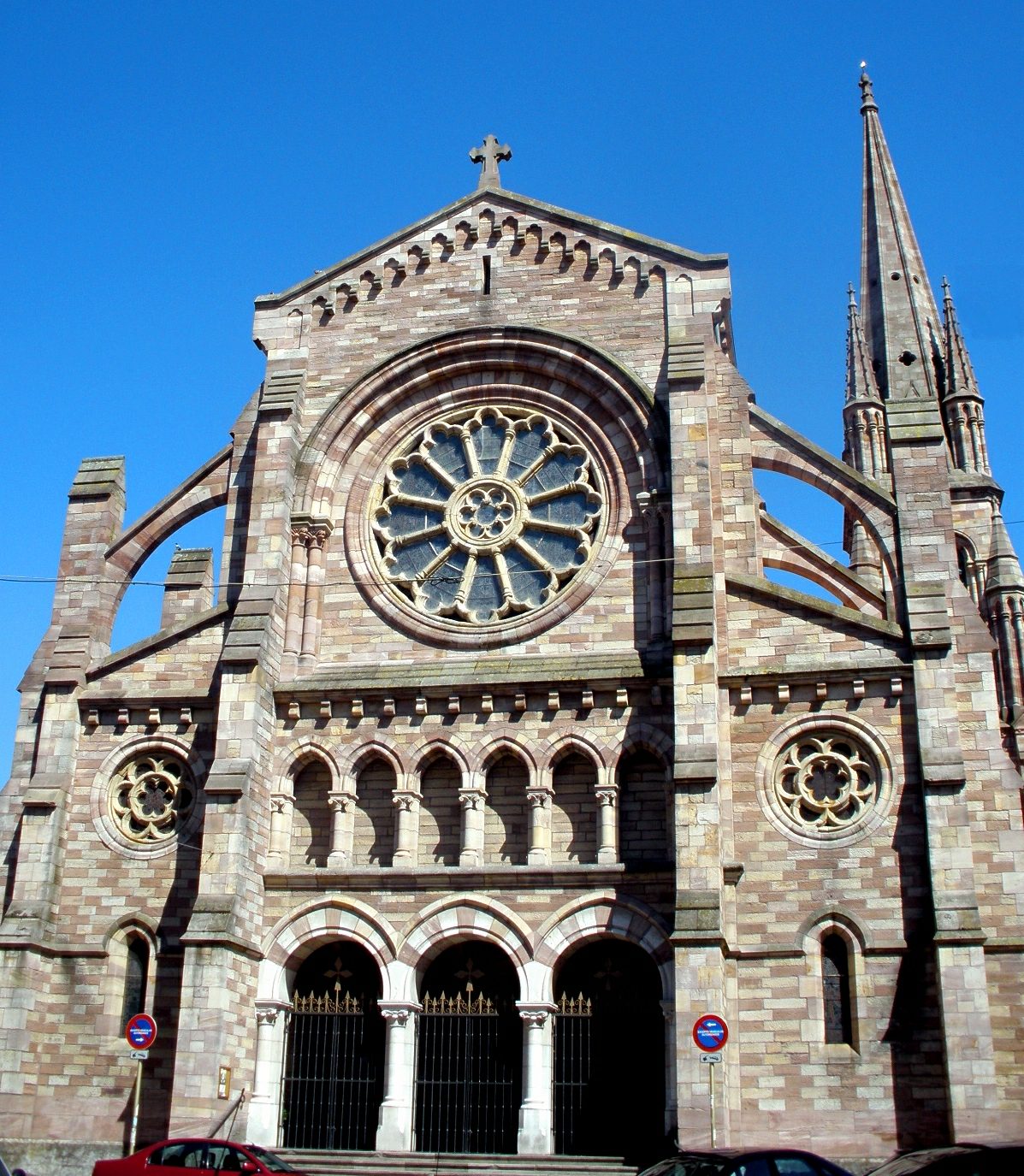
The Church of Nuestra Señora de la Asunción in Torrelavega is a monumental neo-Gothic building that has shaped the skyline of this Cantabrian city for more than a century. Built in the closing decades of the 19th century, it became a symbol of the period when Torrelavega grew from a small town into one of the region's main commercial centers.
When was the church in Torrelavega built?
The foundation stone was laid in 1892, in a ceremony that marked a major event for the whole town. Construction took nearly a decade, and the church was inaugurated on August 15, 1901, the feast day of the Assumption of the Virgin Mary, to whom the building is dedicated. Its formal consecration, however, only took place five years later, on August 17, 1906, performed by the Bishop of Salamanca, Fray Francisco Valdés y Noriega.
The design was the work of architect José María de Basterra, while construction itself was overseen by the local School of Arts and Crafts of Torrelavega, directed by Hermilio Alcalde del Río, a figure also known in Cantabria for his research into prehistoric art.
What does the architecture of the church look like?
The church was built in limestone in the neo-Gothic style, drawing on architectural models that were popular across Europe in the mid-19th century. The building follows a basilical floor plan with three staggered naves and two side chapels. The structure covers roughly 1,700 square meters, measuring 53 meters in length and 33 meters in width, with a height of 19 meters, giving the interior a notably monumental scale.
The most recognizable exterior feature is the square-plan tower, made up of four levels and topped with a spire flanked by pinnacles inspired by English Gothic architecture. Standing 50 meters tall and located on the epistle side of the nave, the tower is visible from many points across the city.
What is worth seeing inside?
The interior holds two elements of particular artistic significance. The first is the sculpture known as the Cristo de la Agonía (Christ in Agony), attributed to the Spanish Baroque sculptor Alonso Cano, one of the leading artists of Spain's Golden Age. The second is a historic Romantic-era organ, considered one of the most important instruments of its kind in the region, with 25 registers and 21 stops distributed across two keyboards and a pedalboard.
The combination of neo-Gothic architecture, the sheer scale of the interior, and these historic works of art makes the church one of the main points of reference for anyone visiting the center of Torrelavega.
Frequently Asked Questions
When did the church open to worshippers? The building was inaugurated on August 15, 1901, although its formal consecration did not take place until 1906.
Who designed the building? The design was created by architect José María de Basterra, with construction supervised by the School of Arts and Crafts of Torrelavega under Hermilio Alcalde del Río.
What architectural style does the church represent? It was built in the neo-Gothic style, with a basilical floor plan, three naves, and a tower topped with pinnacles inspired by English Gothic architecture.
What is the most valuable artwork inside the church? The most notable pieces are the sculpture of Christ in Agony attributed to Alonso Cano and the historic Romantic organ with 25 registers.
Nearby places

Earn badges for the places you visit
Download NextOnTrip, discover new places and check off your trails.