About this place
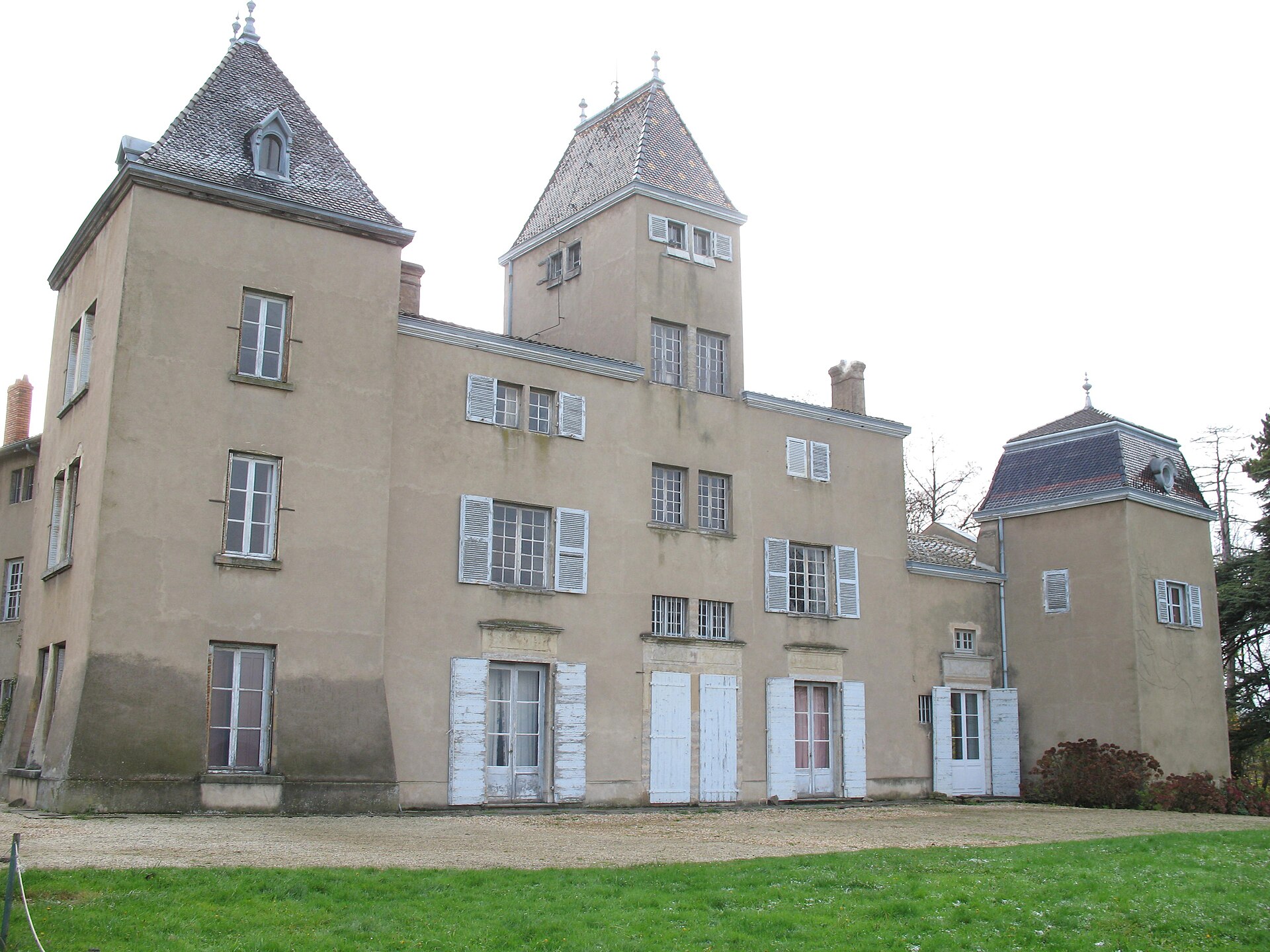
Château du Plantin is a privately owned fortified residence dating back to the 14th century, standing in Chasselay, a small village in the Rhône department just north of Lyon. Set on a gentle south-facing slope with a park and two ponds fed by the Plantin stream, the château remains in private hands and is not open to visitors.
How do you get to Chasselay?
Chasselay sits in the Beaujolais des Pierres Dorées area, an easy day trip from Lyon by car via the local roads leading north out of the city. Because château du Plantin itself is private property, the visit really means walking through the village and along the road bordering the estate, where the roofline and parkland are visible from outside the gates.
What is the history behind the château?
The name Plantin already appears in records from 1379, when the estate — an old fief of the Chasselay lordship — belonged to Henri du Plantin. Until the mid-17th century it remained a modest fortified house, and a small corbelled corner turret, known locally as a poivrière, still marks that early defensive character at the north-west corner.
The real transformation began in 1656, when the property passed to influential Lyon families, the Masso de la Ferrière and Bertrand de Polverel, who held it until 1771. In the second half of the 19th century, architect Charles Lacombe reworked the main façade, adding cornices with rosettes, medallion-framed windows and neo-Renaissance scrollwork typical of the period. Lacombe also laid out the surrounding park, installing water fountains and two ponds formed from the Plantin stream — one of which survives today on the village's Place A. Gauthier. From 1890, the estate belonged for nearly a century to the Gauthier family of Lyon.
What wartime history is tied to the château?
Château du Plantin also holds a somber place in French wartime history. On 19–20 June 1940, as German forces pushed toward Lyon, French troops made a stand at Chasselay, including soldiers of the 25th regiment of Senegalese tirailleurs and Legion fighters, aided by local residents. One group of defenders, commanded by Captain Gouzy, dug in at château du Plantin itself. The fighting at Chasselay ended tragically: dozens of soldiers, most of them of West African origin, were shot by German troops after the battle. They are honored today at the Tata Sénégalais, a national war cemetery in Chasselay that is open to visitors and stands as one of the region's most significant World War II memorials.
Can you actually visit château du Plantin?
No — the château is private property and does not offer organized tours. It can only be admired from the public road or from the nearby village square, where one of Lacombe's original ponds still remains. A visit to Chasselay is best paired with a stop at the Tata Sénégalais memorial and the village's local history museum.
Frequently Asked Questions
Is château du Plantin open to tourists? No, it is privately owned. It can only be seen from outside, from the public road or the village square.
How old is the château? The name Plantin is documented as early as 1379, though the current façade dates mainly from a 19th-century renovation.
What else is worth seeing in Chasselay? The Tata Sénégalais war cemetery, honoring soldiers killed in June 1940, and the village's local museum.
How far is Chasselay from Lyon? Chasselay lies just north of Lyon, in the Beaujolais des Pierres Dorées area, making it a popular day-trip destination from the city.
Nearby places

Earn badges for the places you visit
Download NextOnTrip, discover new places and check off your trails.