About this place
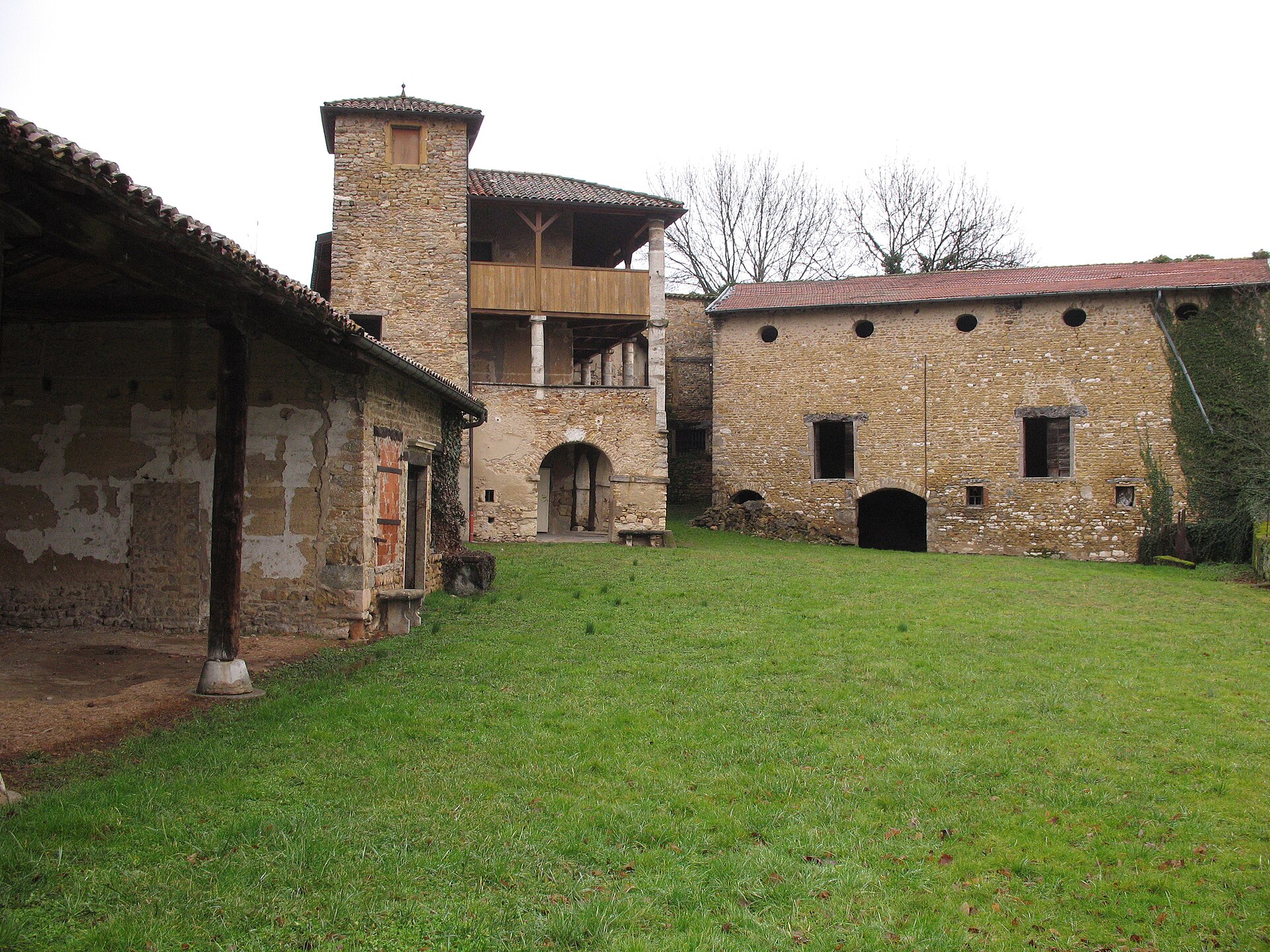
Manoir de Parsonge is a fortified 16th-century manor house in Dardilly, a commune on the western edge of the Lyon metropolitan area, tucked among fields on the northeastern fringe of the village.
How do you get to Manoir de Parsonge?
Dardilly sits only a short distance from central Lyon, but the area around the manor is distinctly rural, so a car is the most practical way to reach it — public transport options nearby are limited. The estate stands on Chemin de Parsonge, a quiet lane running between fields and orchards on the outskirts of the commune. It suits travellers who want a slower, local slice of history away from the crowds of central Lyon, and it pairs naturally with a walk through the surrounding farmland typical of this part of the Rhône region.
What will you see there?
The main building makes an impression from the first glance: the ground floor is lined with a row of arcades, above which rise two storeys of galleries decorated with columns topped by cubic capitals — a layout echoing the Tuscan-style villas being built around Lyon at the time. A square tower housing the staircase flanks the building, a feature typical of country residences of that era. Upstairs, a former chapel survives, no longer in use but still visible as a trace of the religious role the estate once played for its household.
Around the manor stand its working outbuildings — a barn, a former staff kitchen, a shed and a wash house — all protected under the same heritage listing as the main building. Together they give a sense of how an estate like this actually functioned: not a single structure, but a working cluster built for farming and daily rural life.
Near the entrance to the grounds stands the Parsonge fountain, built in the early 17th century and bearing a coat of arms that historians link to the Villars family. That coat of arms is in fact the main clue pointing to Balthazard de Villars as the likely builder of the manor in the late 16th century.
What is the history behind the manor?
Traces of a building on this site go back to the late 15th century — a document from 1493 describes an earlier house here, complete with outbuildings, a courtyard, a barn, a garden and a meadow. The manor's current form, however, is owed to the Villars family, who held the estate through the 16th century and are thought to have commissioned the grand residence in the Italian Renaissance style seen today.
From the 18th century onward, Parsonge changed character, becoming a retreat for Lyon's elite, with a succession of owners drawn from the city's bourgeoisie and municipal administration. Today the estate belongs to the commune of Dardilly, which maintains its historical character.
When is the best time to visit?
Because the manor sits in open, rural surroundings, spring and summer are the best seasons to visit, when the surrounding fields and orchards look their best and the longer daylight hours make it easy to combine a visit with an extended walk through the area.
Frequently asked questions
Is Manoir de Parsonge a protected heritage site? Yes — the manor itself, together with its barn, former staff kitchen, shed and wash house, was listed as a monument historique on 19 November 1991.
Who built the manor? Most likely Balthazard de Villars, a member of the Villars family who held Parsonge in the 16th century — a conclusion drawn from the coat of arms carved on the nearby fountain.
Who owns the estate today? Manoir de Parsonge belongs to the commune of Dardilly.
What else is there to see besides the main building? The early 17th-century Parsonge fountain standing near the entrance, facing the main building, along with the protected farm outbuildings that surround the manor.
Nearby places

Earn badges for the places you visit
Download NextOnTrip, discover new places and check off your trails.