About this place
Château de la Turmelière stands in Liré, a village within the municipality of Orée d'Anjou on the banks of the Loire, facing the town of Ancenis. The estate holds two layers of history side by side: a medieval stronghold where Renaissance poet Joachim du Bellay was born, and a grand 19th-century château built in neo-Renaissance style.
Where does Turmelière come from?
The first castle on this site dates back to the 13th century, first recorded in 1285 as the seat of the lords of Liré. It served a defensive purpose during the tense conflicts between Brittany and Anjou. In the 15th century it was restored by Perceval Chabot, an ancestor of Joachim du Bellay's mother, and in the following century the property became the main residence of the Bellay family.
It was here, around 1522–1525, that Joachim du Bellay was born — one of the leading poets of the French Renaissance and a co-founder of the literary group La Pléiade. He spent his childhood at Turmelière, and the gentle, rolling countryside of Anjou surrounding the castle is thought to have shaped the poet's later longing for his homeland, a theme he explored in verses written while far from France.
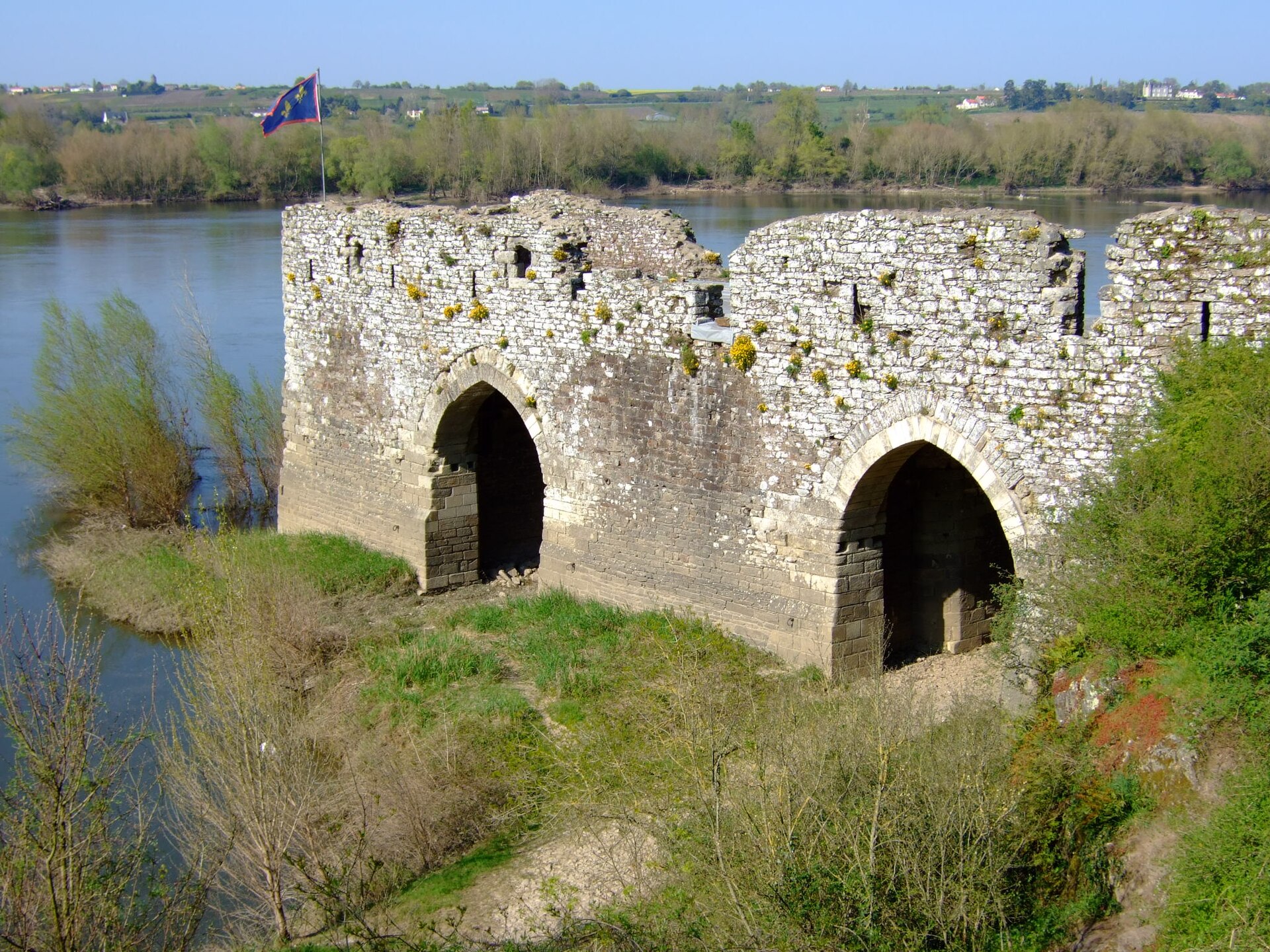
The medieval residence was largely destroyed during the Vendée Wars at the end of the 18th century. Rather than being rebuilt, the ruins were kept as a romantic feature within the park — a taste typical of 19th-century fondness for picturesque, "authentic" landscapes. The remains of the original castle — walls, moats, and a dovecote — have been listed as a French historic monument since 1941.
At the end of the 19th century, a new and imposing château in neo-Renaissance style was built on the estate at the initiative of Count Charles Thoinnet. He died before construction was completed and never lived in the residence he had commissioned.
What will you see on site?
A park of roughly 40 hectares surrounds both structures and is freely open to the public. A road crossing the estate offers a fine view of the 19th-century château, while a side path leads to the ruins of the family home where du Bellay was born. Walking through the grounds lets visitors take in both sides of Turmelière: the stately 19th-century architecture and the stone remnants of a much older building that witnessed the birth of one of France's most important poets.
How to get there and when to visit?
Turmelière lies in Liré, part of the municipality of Orée d'Anjou in the Maine-et-Loire department, right on the Loire, across from the town of Ancenis. The park is open every day, and walking its paths costs nothing — it's a popular destination for family outings and local strolls. The best time to visit runs from spring through autumn, when the greenery is at its richest, though the grounds are accessible year-round.
The site is home to the La Turmelière association, which runs an accommodation and events centre and organises activities linking literature with nature: literary walks, poetry workshops, writers' residencies, and educational programmes for school groups. The château and park also host family celebrations, weddings, and training or sports groups. Each September, during the European Heritage Days, additional guided visits and themed events take place.
Frequently asked questions
Is Château de la Turmelière free to visit? Yes, the park is open to everyone free of charge — you can walk its paths, admire the 19th-century château from the outside, and reach the ruins of the medieval residence.
Why is this site significant for French literature? It is the birthplace of Joachim du Bellay, a Renaissance poet and co-founder of La Pléiade, who spent his childhood here before leaving to study and write abroad.
Can you go inside the château? The newer 19th-century building functions as an accommodation and events centre run by a local association, and is mainly accessible through organised events, group stays, and residencies rather than as a permanent museum exhibit.
What exactly will I see at the ruins? The remains of the original 13th- to 15th-century castle — sections of wall, the former moats, and a dovecote — protected as a historic monument since 1941 and set within the park's greenery.
Nearby places

Earn badges for the places you visit
Download NextOnTrip, discover new places and check off your trails.