About this place
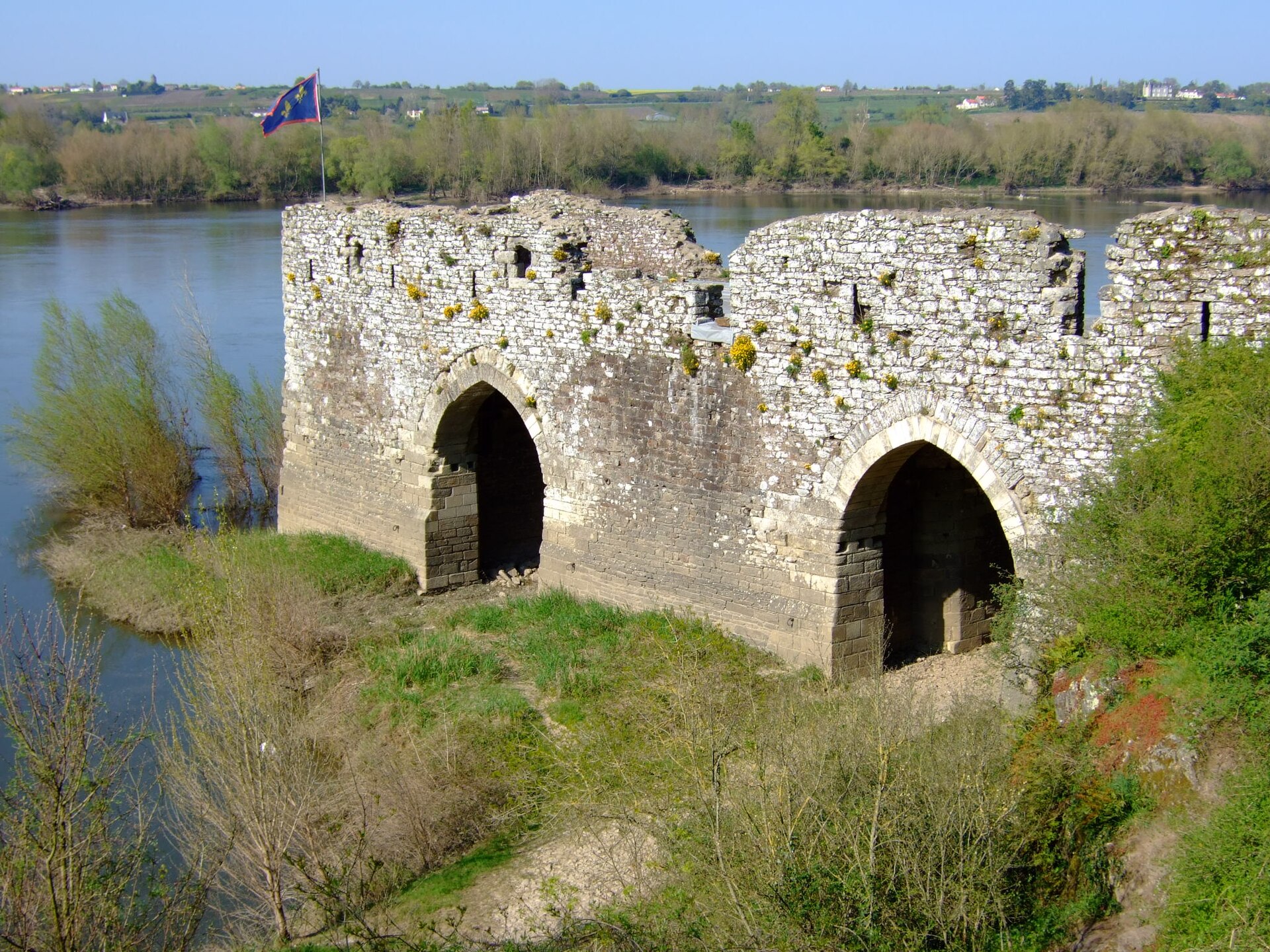
The old lime kiln (ancien four à chaux) stands in Saint-Herblon, a small locality in the Loire-Atlantique department near the town of Ancenis, in western France.
Where exactly is it?
The kiln sits in the hamlet of Le Bernardeau, between the Loire riverbank and the former Juigné estate, just off the road that bears the same name. It's visible straight from the roadside, though reaching it up close means stepping into a field. The ruin also catches the eye from trains running the Angers-Nantes line, which follows the river closely at this point.
What will you actually see?
What remains is a stone structure crowned by a collapsed tower - the remnant of what was once the kiln's loading shaft. There's no visitor center, no restoration work, no signage: just a raw industrial ruin from the 19th century, left standing much as the river trade abandoned it.
What's the history behind it?
Nobody knows the exact construction date. The Napoleonic land survey of 1812 doesn't show any kiln at this spot, which points to a build sometime after that date, likely in the first half of the 19th century. Limestone was barged across the Loire from Liré, on the opposite bank, then burned here to produce quicklime. That lime went straight to the fields of the Comte de Juigné's farms, used to correct soil acidity - a routine practice in Loire Valley agriculture at the time.
The kiln's working life ended around 1850, when a new railway line was laid along the Loire. The tracks cut across the river-barge route that had supplied the stone, and without it the operation had no reason to continue. The structure was simply left standing, a stranded piece of a transport system that had disappeared.
Which commune does it belong to today?
Saint-Herblon was an independent commune until 2016, when it merged with neighboring Anetz to form the new commune of Vair-sur-Loire. The name Saint-Herblon still identifies the locality on the ground, and the kiln is listed in the regional inventory of industrial lime-kiln heritage for the Pays de la Loire region.
How to get there and when to go?
Ancenis makes the best starting point - Le Bernardeau is a short drive away along the riverside road. Because the kiln stands on farmland, viewing from the road is the practical option; stepping into the field for a closer look calls for respecting the crop and the land's private status. Spring and autumn give the clearest view, before or after the growing season, since summer vegetation can partly hide the ruin from sight.
It works best as a short stop on a longer Loire Valley drive between Ancenis and Nantes. Other traces of the region's lime industry, including the kiln at Saint-Méen further along the river, make a natural pairing with this stop.
Frequently asked questions
Can you go inside the kiln? No - it's a ruin on farmland, so visits are limited to viewing it from the road or the field edge, not entering the structure.
Is there an entrance fee? No, there's no ticket, gate, or set opening hours; it's an unguarded piece of industrial heritage visible from a public road.
How long does a visit take? About 10 to 15 minutes - this is a stop along a route, not a destination for a full outing.
Is there anything else worth seeing nearby? Yes - the Ancenis area and the Loire riverbanks hold other lime-industry remains, and the Juigné estate, historically tied to this kiln, is also close by.
Nearby places

Earn badges for the places you visit
Download NextOnTrip, discover new places and check off your trails.