About this place
Cementerio Sur is one of Madrid's historic cemeteries, tracing its origins back to the early 19th century, and today it lives on as a working municipal cemetery in the Carabanchel district.
How did Cementerio Sur come to exist?
The original Cementerio General del Sur was established by order of King Joseph Bonaparte in 1810. Its purpose was to relieve pressure on the overcrowded Cementerio General del Norte and to provide burial space for victims of the Peninsular War. The cemetery was laid out beyond the Puerta de Toledo gate, in the area known as Alto de Opañel, across the Manzanares River between the old roads leading to Carabanchel and Getafe — territory that today forms part of Carabanchel Bajo.
What did the original cemetery look like?
The grounds were divided into seven sections, each assigned to one of the parishes under its jurisdiction, plus an eighth section reserved for patients of the royal hospitals. At its center stood a cross designed by architect Ventura Rodríguez back in 1773, relocated to the cemetery from an earlier site.
For much of its early history the cemetery suffered from poor upkeep. Historical accounts describe recently buried remains falling prey to dogs and birds, a situation that only improved in 1818, when the fencing was repaired and a chapel was built on site.
Why was it known as the "cemetery of the executed"?
Cementerio General del Sur earned the grim nickname of the "cemetery of the executed" because it served as the burial ground for convicts put to death by judicial sentence. Among those interred there, historians point to Luis Candelas, one of the most notorious bandits of Madrid's early 19th-century underworld.
What happened to the original cemetery?
The cemetery was formally closed in 1884 and stopped functioning as a burial site altogether by 1905. The grounds were eventually demolished in 1942, with the remains transferred to Cementerio de La Almudena. A sports complex, the Centro Deportivo San Miguel, along with residential buildings, now stands where the old cemetery once was.
What is Cementerio Sur today?
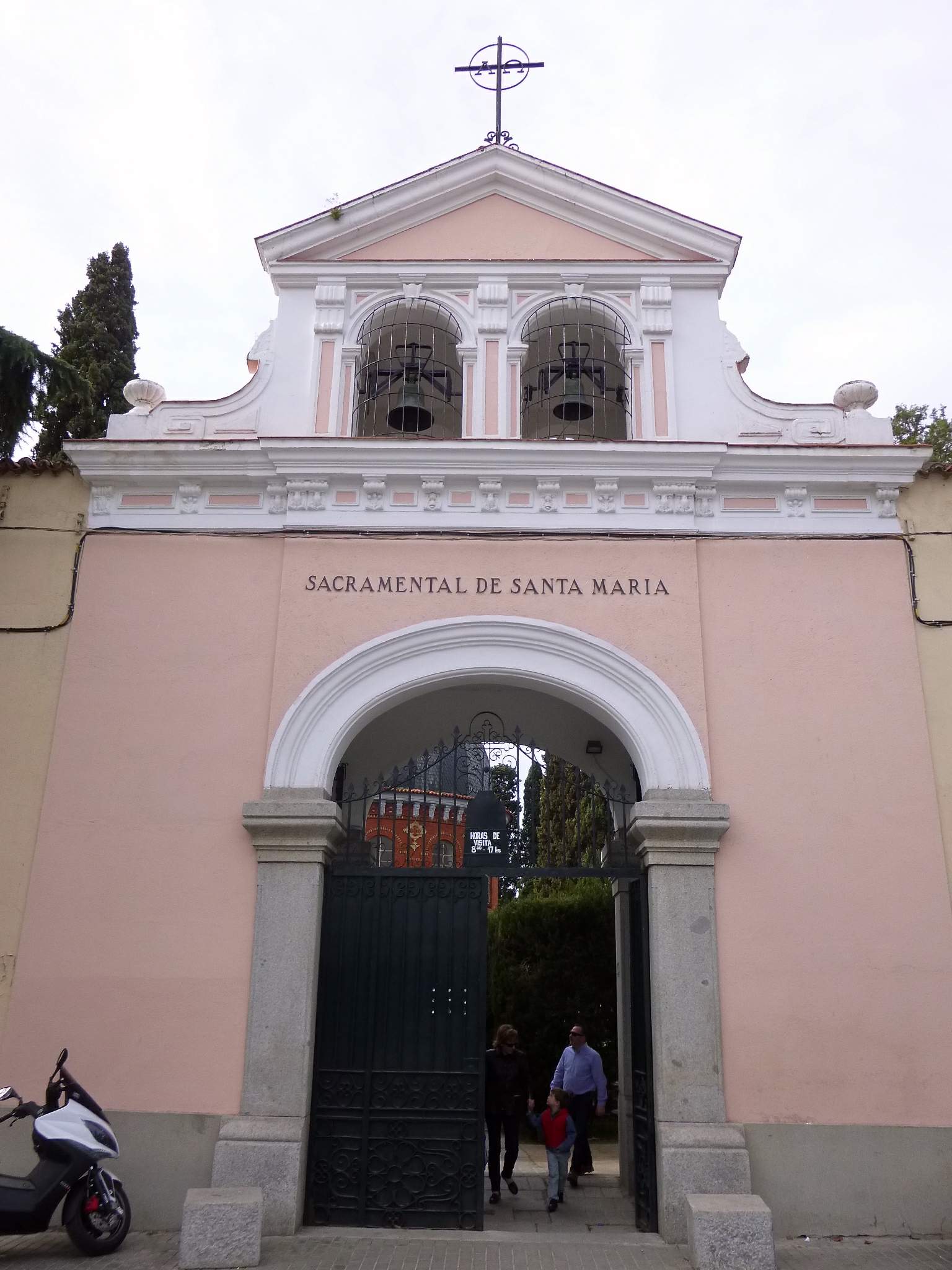
The name Cementerio Sur survives in a different form: it now designates the municipal cemetery located in the Carabanchel district, at Calle Ildefonso González Valencia 1. It is one of fourteen municipal cemeteries managed by Madrid's public funeral services company, which also oversees two crematoriums across the city. The site is home to the South Crematory, and it also hosts a dedicated Hebrew Cemetery within its grounds.
The cemetery handles burials, exhumations, transfers of remains, and administration of burial plots. Its main pathways are accessible to people with reduced mobility, though the narrower routes between individual graves can be more difficult to navigate.
When can you visit Cementerio Sur?
The information office and exhumation services operate on Tuesdays and Thursdays from 8:15 AM to 5:15 PM, with reduced hours on other weekdays and further seasonal adjustments during summer and winter.
Frequently asked questions
Is today's Cementerio Sur the same physical site as the 19th-century cemetery? No — the original Cementerio General del Sur was demolished in 1942, and its former grounds are now occupied by sports facilities and housing. The name and tradition, however, continue through the present-day municipal cemetery in Carabanchel.
Who was buried at the original Cementerio General del Sur? Among those buried there was Luis Candelas, a well-known Madrid bandit executed in the first half of the 19th century, since the cemetery served as the burial ground for those condemned to death.
What services does the current Cementerio Sur offer? The site provides burials, exhumations, transfers of remains, and administrative management of burial plots, and it also operates an on-site crematory.
Nearby places

Earn badges for the places you visit
Download NextOnTrip, discover new places and check off your trails.