About this place
Caverna Pocala is a paleontological cave in the municipality of Duino Aurisina (Devin-Nabrežina), on the Italian Trieste Karst, a short drive from Trieste itself. In Slovenian sources it also appears under the name Pod Kalom. It ranks among the most important cave bear fossil sites in northeastern Italy.
What makes this cave scientifically important?
Pocala holds an exceptionally large deposit of fossilized bones belonging to the cave bear (Ursus spelaeus), likely the largest bear species that ever walked the earth. A full-grown male could weigh up to a thousand kilograms and stand roughly 2.5 meters tall on its hind legs. Some bone samples from the deepest excavation layers have been dated at over 45,000 years old, while one layer returned a date of roughly 38,000 to 36,500 years. Taphonomic studies of material recovered from Pocala also produced the first documented evidence, anywhere on the Trieste Karst, of direct interaction between Neanderthals and cave bears — comparable traces were previously known only from the Rio Secco and Fumane caves on the other side of the Adriatic.
Who discovered the cave and excavated it?
The cave was first explored in 1893 by Ludwig Karl Moser, a teacher at Trieste's German-language state grammar school, together with his student Giovanni Andrea Perko, who later became director of the Postojna Caves. Systematic excavation of the Pleistocene bone deposit began with Moser in 1903-1904 and continued under Carlo Marchesetti, then director of Trieste's Civic Museum of Natural History, in 1904-1905. Further campaigns went on until 1929, and the trenches they left behind are still visible in the cave's main chamber today. Most of the recovered fossils are now held by the Trieste Natural History Museum, which displays a dedicated exhibit on the cave bears of Pocala.
How do you get to Caverna Pocala?
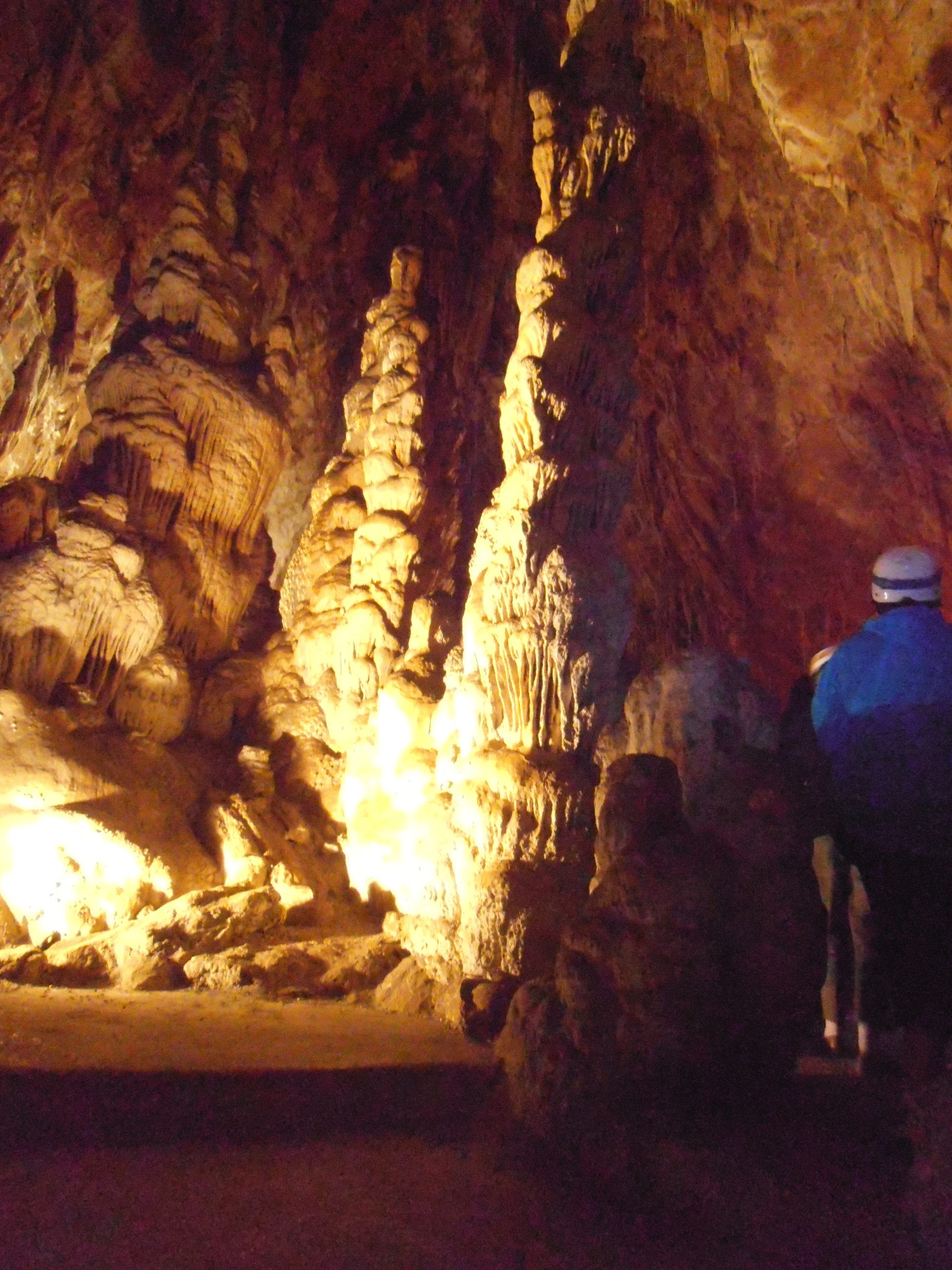
The cave lies near the village of Aurisina; a car is the most practical way to reach it, with the cemetery parking area in Aurisina serving as the usual meeting point. Because Pocala is a natural karst cave with no tourist infrastructure, it can only be visited on organized excursions run by local caving associations — notably the ONC group of the Società Alpina delle Giulie, affiliated with the Italian Alpine Club (CAI). Guided routes descend into the cave's central chamber, past the visible remains of the historic excavations.
What should you bring on a visit?
Participants need a headlamp and rubber boots, and a spare change of clothes is worth packing since the cave interior tends to be damp and muddy. Tours are typically led by museum conservators or experienced cavers, who guide visitors safely to the spots where the most significant fossils were unearthed.
When is the best time to visit?
Excursions into the cave are held only occasionally, most often during the cooler months, when the temperature difference between the outside air and the cave's naturally stable interior is smallest. Because access is restricted and requires advance booking, it's worth checking the event calendars of Trieste-area caving and alpine clubs before planning a trip.
Frequently asked questions
Can you visit Caverna Pocala on your own? Independent visits aren't recommended. It's an unlit, unequipped natural karst cave, realistically accessible only through organized speleological excursions.
Why is the cave scientifically significant? Because of its unusually rich deposit of cave bear bones, some dated to over 45,000 years, and evidence of direct contact between Neanderthals and these animals.
Where can you see the Pocala finds without entering the cave? Most of the fossil material is displayed at the Trieste Natural History Museum, which dedicates a specific exhibit to the cave bears of Pocala.
How long does a typical guided visit last? Organized trips usually start in the morning, around 9:30, and include the descent into the central chamber with a guide; the full outing takes a few hours.
Nearby places

Earn badges for the places you visit
Download NextOnTrip, discover new places and check off your trails.