About this place
Grotta dell'Acqua (Jama Vodnica) is a natural karst cave in Duino Aurisina / Devin-Nabrežina, on the Italian side of the Trieste Karst, right next to the border with Slovenia. It is one of many caves scattered along this limestone borderland and is also known locally as Grotta dei Partigiani.
Where does the name come from?
The Slovenian name "Vodnica" comes from "voda" (water), and it is not a coincidence. Inside the cave there are basins of clear water fed by a permanent spring. According to local tradition, during periods of drought people from nearby villages would come here to collect drinking water — in a karst landscape where surface water quickly disappears into cracks in the rock, a steady underground source like this one mattered a great deal.
What will you see inside?
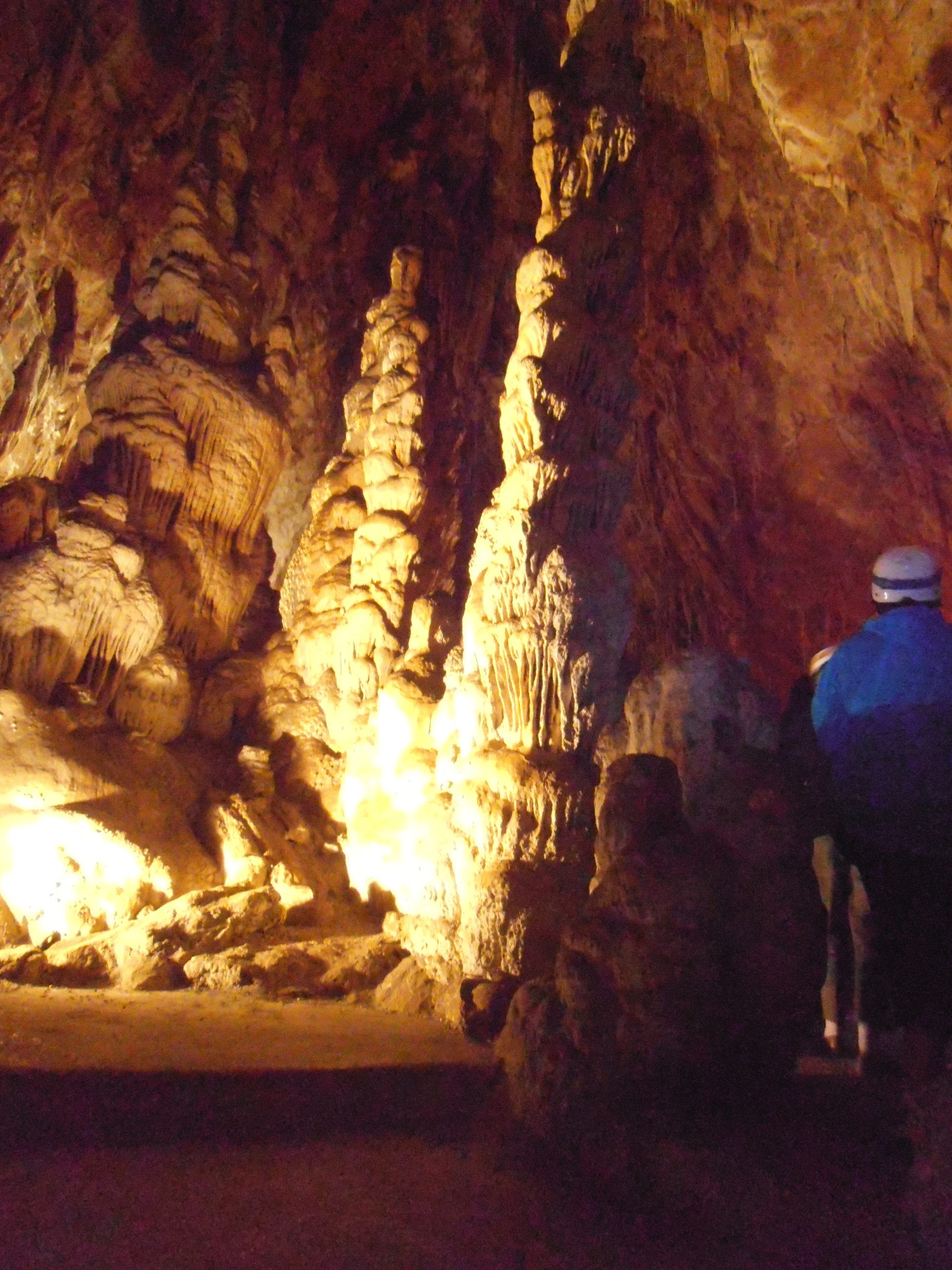
The cave is essentially a subhorizontal passage roughly 200 metres long, with its entrance located close to the Italian-Slovenian border. The main chamber is the highlight: on the right side, numerous imposing columnar and stalagmitic formations rise up and slope gently down toward the south wall. The contrast between the plain, level corridor and the richly decorated chamber is what draws speleology enthusiasts and karst lovers to this spot.
What is the history behind it?
Grotta dell'Acqua also carries a wartime chapter. During the First World War, between 1914 and 1917, Austrian troops explored the cave and considered adapting it as a shelter, much as they did with the nearby Grotta di Ternovizza. Signatures and dates left by soldiers stationed in the area can still be found on the walls.
The cave's fate was also tied to the shifting borders of the region. After the Italian-Yugoslav border was redrawn following the Second World War, there was uncertainty for a time about which side the cave belonged to. It was only in 1959 that it was confirmed the entrance remained on Italian territory — by a margin of just a few metres. It's a small but telling example of how finely detailed the border demarcation on the Karst plateau could be.
How do you get there, and what should you bring?
Grotta dell'Acqua sits within a network of karst trails between Duino Aurisina and the Slovenian border, in terrain typical of the Trieste Karst: rocky ground covered in scrubland and woods, dotted with cave entrances and dolines. This is a wild, unlit cave with no tourist infrastructure, so exploring the interior requires basic caving gear (helmet, headlamp) and ideally the company of an experienced caver or a local speleological club — the Friuli-Venezia Giulia region has several active caving associations that organise outings into the Karst's caves. The surrounding area, thanks to its network of footpaths and proximity to the border, is also worth a walk even without going underground.
When is the best time to visit?
Since the cave lies underground, its internal temperature stays fairly constant year-round, but reaching the entrance and exploring the surrounding karst is more pleasant in spring and autumn, when temperatures on the plateau are milder than in summer. It's best to avoid visiting right after heavy rainfall, when water levels inside karst cave systems can rise.
Frequently asked questions
Can you visit Grotta dell'Acqua without any preparation? No — it's a wild cave with no lighting or tourist infrastructure. Going inside requires basic caving equipment and, ideally, experience or the assistance of a local speleological club.
Where does the name "Vodnica" come from? From the Slovenian word for "water" — the cave contains basins of clear water fed by a permanent spring, historically used by nearby villagers during droughts.
What is the cave's connection to the First World War? Between 1914 and 1917, Austrian troops explored it and considered using it as a shelter, leaving signatures and dates on the walls.
Has the cave always belonged to Italy? Formally yes, but after the border changes following the Second World War there was a period of uncertainty. It was only confirmed in 1959 that the entrance lies on the Italian side.
Nearby places

Earn badges for the places you visit
Download NextOnTrip, discover new places and check off your trails.