About this place
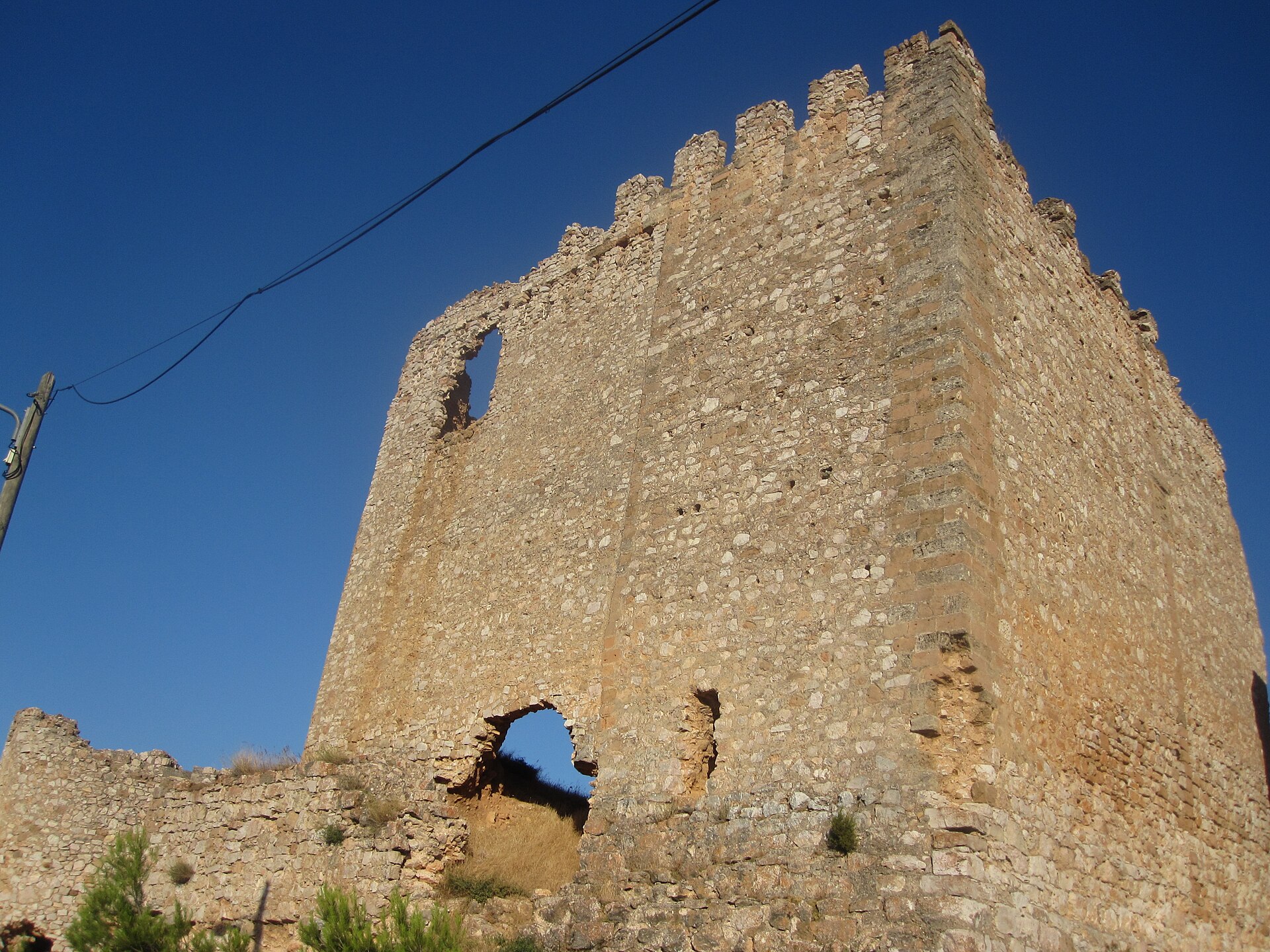
Castillo de Sisamón is a medieval castle ruin in the village of Sisamón, in the province of Zaragoza, Aragón, Spain.
Where is Sisamón and why does it matter?
Sisamón sits on a hilltop at 1,051 meters above sea level, right on the boundary between the provinces of Guadalajara and Zaragoza, making it one of the highest villages in Zaragoza province. The Moncayo massif forms a dramatic backdrop to the village, which belongs to the Comunidad de Calatayud district. That frontier position — close to the old border between the kingdoms of Aragón and Castile — is exactly what made the local castle strategically important for centuries.
What is the history behind the castle?
According to the town's founding charter of 1147, Sisamón belonged to the Señorío de Molina, a lordship only two kilometers from the border with Castile. Molina had functioned for a time as an independent territory sitting between the crowns of Aragón and Castile. In 1321, Molina was permanently absorbed into Castile, while Sisamón remained part of Aragón — right in a stretch of frontier running from Tarazona to Torralba de los Frailes that stayed fiercely contested for generations.
The castle rose to prominence in the 14th century during the War of the Two Pedros between Castile and Aragón. In 1357, with war looming, its garrison was reinforced and an attempted assault was successfully repelled. Soon after, King Pedro IV granted the castle as a lordship to the family of Sancho González de Heredia, relatives of Juan Fernández de Heredia, Grand Master of the Order of the Hospital.
Chronicler Jerónimo Zurita recorded that in 1452 a duel broke out between the lord of Sisamón, Juan Fernández de Heredia, and the lord of Cetina, Alfonso de Liñán — a dispute serious enough to require royal intervention. Armed rivalry between the two noble houses continued until March 10, 1509, when Juan Fernández de Heredia, then lord of Sisamón, married Jerónima de Liñán, heiress to the lordships of Cetina and Contamina. The marriage united both houses, pacified the region, and laid the groundwork for the future County of Contamina.
What will you actually see there?
Of the 14th-century structure, only two walls survive, meeting at a right angle. The original building had a square floor plan roughly 12 meters to a side. Castillo de Sisamón is listed among the castles recognized as Bienes de Interés Cultural (Assets of Cultural Interest) under Aragón's regional heritage law 3/1999, a list published in the Official Gazette of Aragón on May 22, 2006.
Right in front of the castle, remnants of an older Roman wall are still visible, pointing to much earlier settlement on the site. It's worth extending the visit to the nearby Church of San Martín (15th–16th century), whose architecture blends Gothic, Renaissance, Baroque, and Mudéjar elements. On the village outskirts stands the Torre del Moro, a defensive tower of Muslim origin. For the best panoramic view of Sisamón, climb up to the hermitage of the Virgen de la Carrasca, and don't miss the Renaissance-style fountain at the village entrance.
How do you get there and when should you go?
Sisamón is a small village with little in the way of public transport, so the easiest way in is by car via the local roads of the Comunidad de Calatayud. The surrounding countryside — grain fields, holm oak groves, and ravines — offers hiking and cycling routes into the neighboring hills. Clear weather is best for taking in the Moncayo views from the village's lookout points. There's no restaurant in Sisamón, so bring your own food and water. Local patronal festivals fall in August (San Pascual Bailón) and September (San Pedro Arbués and the Virgen de la Carrasca) — a good time to pair a castle visit with the village's local traditions.
Frequently asked questions
How much of the castle in Sisamón still stands? Only two walls remain, meeting at a right angle, from what was originally a square structure roughly 12 meters per side.
Can you go inside the castle ruins? The ruins are open and unfenced but have no visitor infrastructure — you view them from the outside, and should take care given the state of the remaining walls.
What else is there to see in Sisamón besides the castle? The nearby Roman wall remains, the Church of San Martín, the Torre del Moro, the hermitage of the Virgen de la Carrasca with its village panorama, and a Renaissance fountain at the entrance to the village.
Is there anywhere to eat in Sisamón? No, the village has no restaurant, so it's best to bring provisions before you arrive.
Nearby places

Earn badges for the places you visit
Download NextOnTrip, discover new places and check off your trails.