About this place
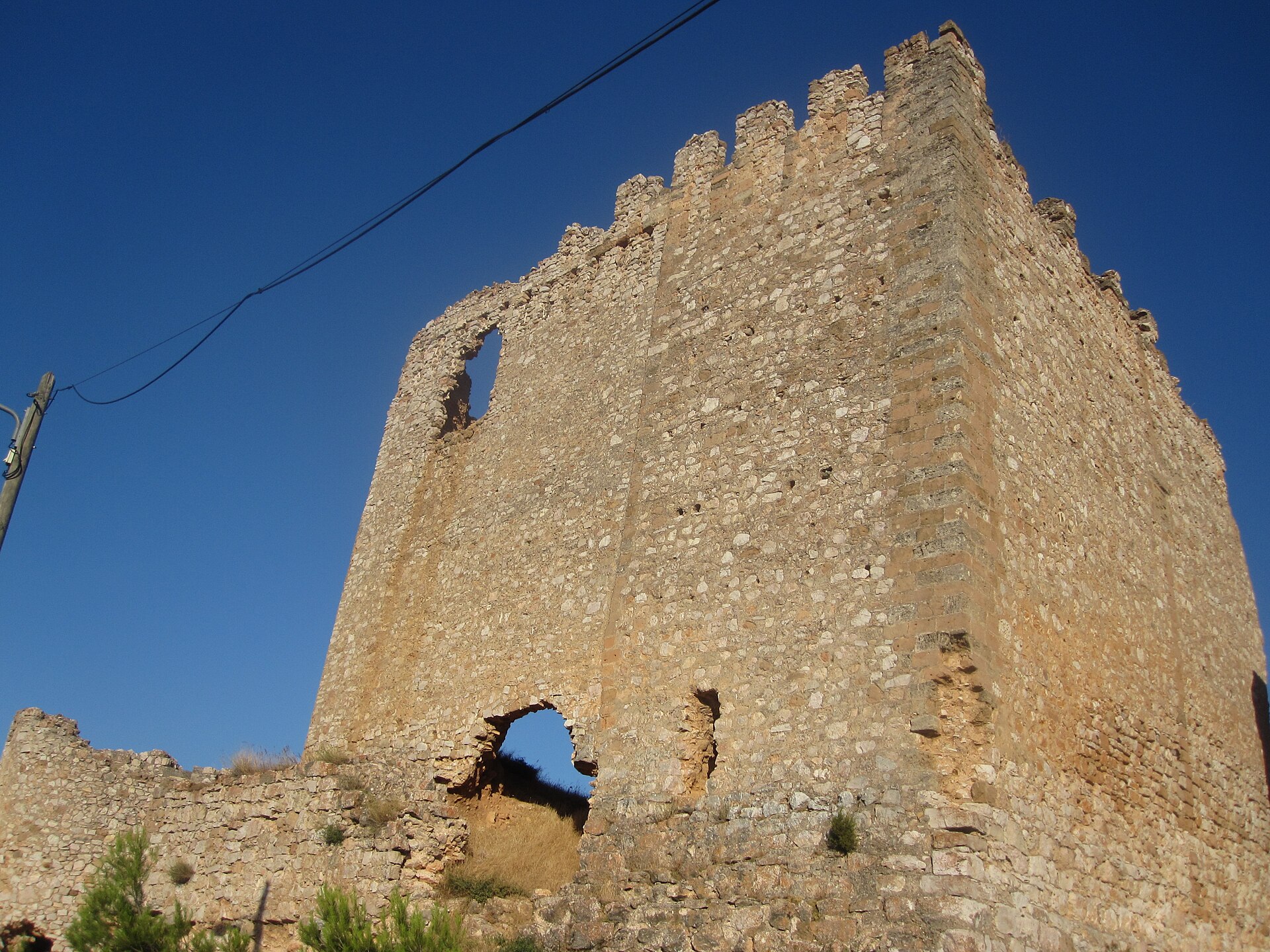
Castillo de Alhama de Aragón is a medieval fortress perched on a rocky spur above Alhama de Aragón, a small town in the province of Zaragoza best known for its hot springs. The castle overlooks the Jalón river valley and for centuries served as a strategic watchpoint on the shifting frontier between Christian and Muslim Spain.
What is the history behind the castle?
The fortification was most likely built in the 11th century under Muslim rule, taking advantage of a naturally defensible ridge above the river. The stronghold even features in the Cantar del Mio Cid, said to have been captured by Rodrigo Díaz de Vivar himself in 1071, before falling back into Muslim hands. It was finally taken in 1120 by the forces of Alfonso I of Aragón, becoming part of the kingdom's western frontier line.
The following decades brought turbulent changes of ownership. In 1135, after an invasion led by Alfonso VII, the fortress passed to Castilian control, administered by the archbishop of Sigüenza until 1139, when it was recovered by Ramón Berenguer IV. The first written records of the structure itself, however, date only from the 14th century, during the War of the Two Peters. In 1357, local residents took refuge inside the castle to escape an invasion, and the stronghold changed hands again — captured by Castilian forces and retaken by the Aragonese in 1362.
Border disputes continued through much of the 15th century. Between 1421 and 1454 the castle repeatedly switched allegiance, until a definitive peace treaty in 1454 between Aragón, Castile and Navarre settled the matter, leaving the fortress under the Crown of Aragón for good.
What can you see today?
Of the original, much larger fortification, mainly the keep (torre del homenaje) survives — built later than the rest of the castle, likely from 1366 onwards. This massive stone tower is now the most recognizable part of the ruins, visible from a distance above the town. Walking up to the castle walls rewards visitors with a sweeping view over the Jalón valley, the rooftops of Alhama de Aragón and the surrounding hills, making it a popular spot for sunset views.
How do you get there?
Alhama de Aragón sits in the Jalón valley along the route linking Madrid and Zaragoza, making it easy to reach by car or by train — the town has its own railway station on the Madrid–Zaragoza line. From the town center, a short but steep footpath climbs to the base of the castle hill; comfortable footwear is recommended, as the ground is rocky and uneven.
When is the best time to visit?
Since the site offers no shade or shelter, spring and autumn are the most comfortable seasons for a visit. In summer, it's best to go early in the morning or late in the afternoon to avoid the hottest hours. The castle pairs naturally with a stop at the town's famous thermal springs, which gave Alhama de Aragón its Arabic-derived name.
Frequently asked questions
Is there an entrance fee for the castle? The ruins sit in an open, outdoor area and can usually be visited free of charge, though access and preservation conditions can change — it's worth checking locally at the tourist information office.
How long does a visit take? Walking up to the castle and exploring the ruins typically takes 30 to 60 minutes, depending on pace and time spent enjoying the views.
Is the site suitable for children or visitors with reduced mobility? The steep, rocky terrain and lack of visitor infrastructure make the climb challenging for young children and anyone with limited mobility.
What else is worth seeing nearby? Beyond the castle, the town is known for its hot-spring spas and the scenic Jalón river valley, making it a worthwhile stop on the route between Madrid and Zaragoza.
Nearby places

Earn badges for the places you visit
Download NextOnTrip, discover new places and check off your trails.