About this place
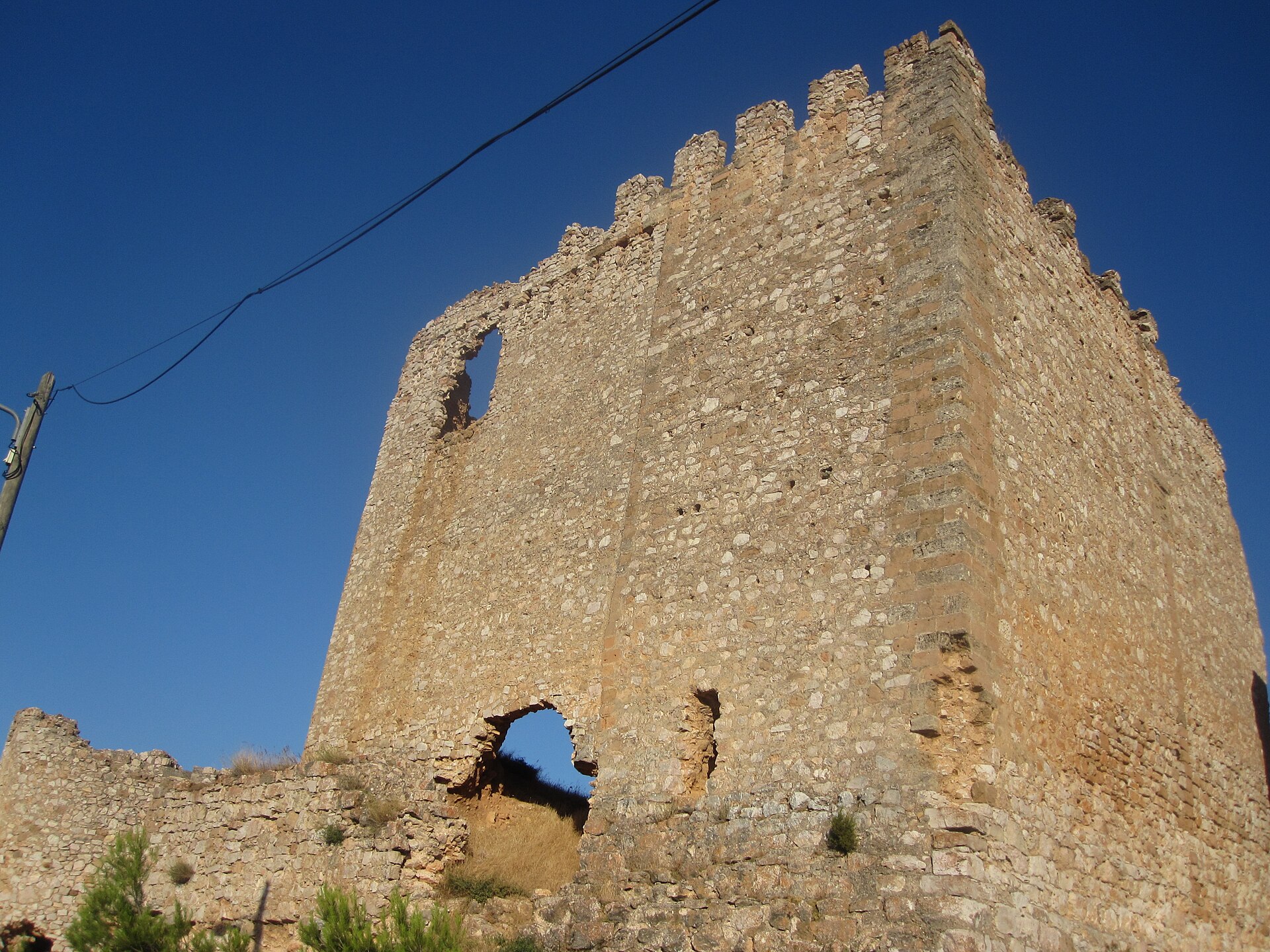
Castillo palacio de Cetina is a medieval castle-palace overlooking the town of Cetina, in the province of Zaragoza, in the Aragon region of Spain.
How do you get there?
Cetina lies in the Calatayud comarca, in the valley of the river Jalón, in northeastern Spain — a region that historically bordered the Kingdom of Castile, which explains the building's defensive character. Travelers coming from Zaragoza or Madrid typically pass through Calatayud, the comarca's largest town, and continue on local roads to Cetina. The surrounding countryside is agricultural and sparsely populated, so driving is by far the most practical way to reach the site.
What is the history behind the castle-palace?
Construction began in the late 13th century under King Pedro III of Aragon, as part of a defensive line facing Castile. Through the 14th and 15th centuries the property belonged to the Liñán family. In 1410, King Martín I sold the castle to Mosén González de Liñán, lord of the town, who enlarged the fortress and turned it into a residential palace. Further work in the 15th century, along with 20th-century restoration, gave the building its current mixed character — a defensive keep tower combined with later palatial additions.
In February 1634, the castle hosted the wedding of Esperanza López de Mendoza to Francisco de Quevedo, one of the leading writers of the Spanish Golden Age. That event gave rise to the building's alternative name, Palacio de Quevedo.
In 1931, a decree from Spain's Ministry of Public Instruction and Fine Arts declared the castle-palace a Bien de Interés Cultural, placing it under national heritage protection.
What should you look out for?
The oldest surviving part of the complex is the medieval keep tower together with its chapel. The chapel, built in Isabelline style, retains a richly decorated 16th-century Mudéjar coffered ceiling and an altar with paintings by Salvador Roig and Juan Ríus. The contrast between the austere, defensive tower and the ornately decorated chapel interior captures the building's shift from a military stronghold to a noble residence.
When is the best time to visit?
The Calatayud comarca has a continental climate, with hot summers and cold winters, so spring and autumn offer the most comfortable conditions for visiting. Because Cetina itself is small, it's worth pairing a visit with a stop in nearby Calatayud and other sites from the region's broader Mudéjar heritage.
Frequently asked questions
Where is Castillo palacio de Cetina located? In the town of Cetina, in the Calatayud comarca, Zaragoza province, Aragon.
Why is the castle also known as Palacio de Quevedo? Because in 1634 it hosted the wedding of Esperanza López de Mendoza to the writer Francisco de Quevedo.
What heritage protection status does the building have? It has been listed as a Bien de Interés Cultural — a site of cultural interest — since 1931.
What is the most valuable feature inside? The Isabelline-style chapel, with its 16th-century Mudéjar coffered ceiling and an altar painted by Salvador Roig and Juan Ríus.
Nearby places

Earn badges for the places you visit
Download NextOnTrip, discover new places and check off your trails.