About this place
Castillo de Belimbre is a ruined medieval fortress about two kilometers south of Santa María de Huerta, a small town in the province of Soria, Castilla y León, Spain. Perched on a hill above the stream that gave it its name, the castle once formed part of the defensive line guarding the Jalón river valley.
What will you see on site?
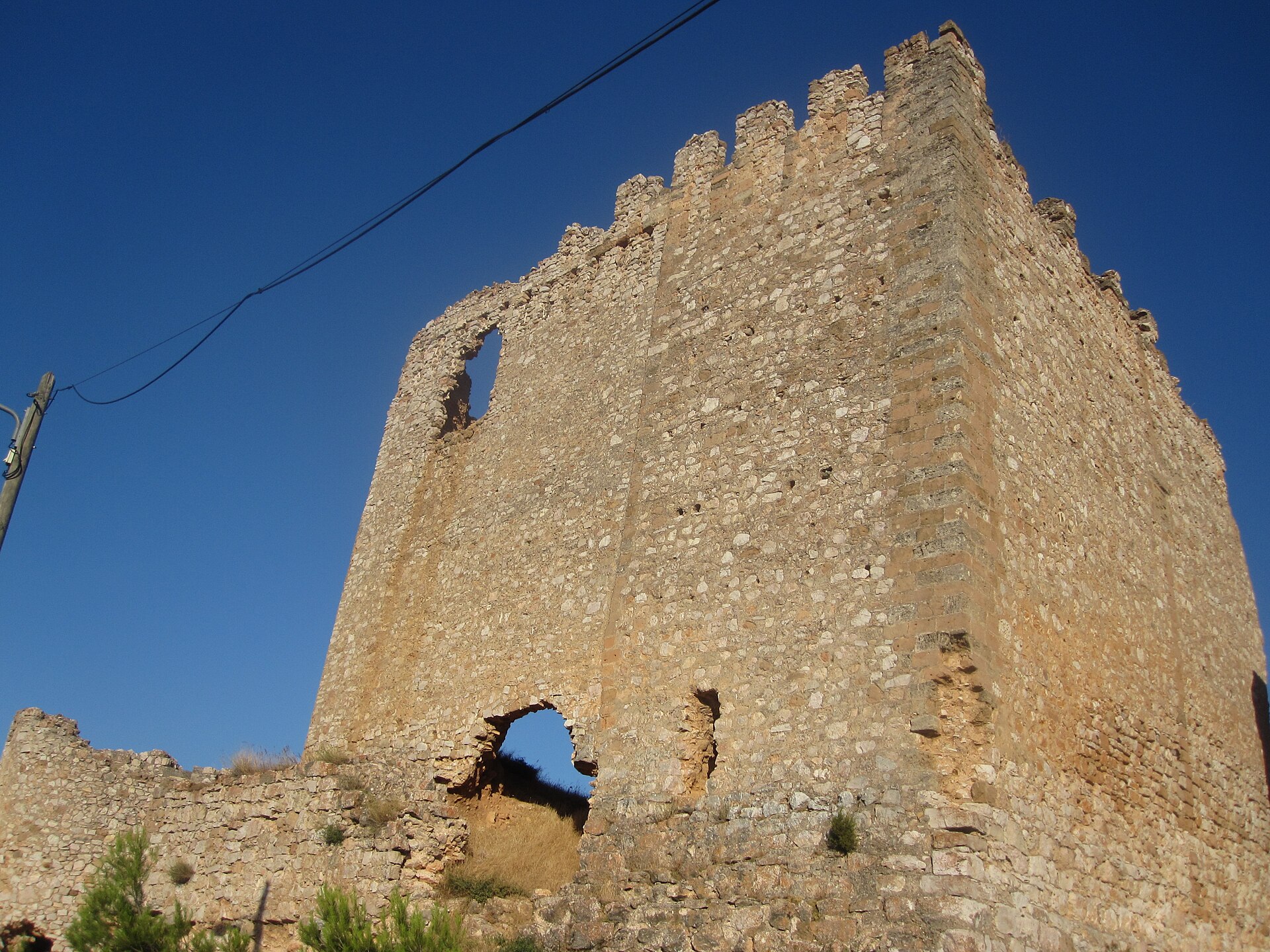
Visitors find sections of thick stone walls and several round towers built on square bases, scattered across the hilltop. A third tower, detached from the main structure, sits lower down on the eastern slope and has a rectangular base instead. Inside the perimeter, a cistern carved directly into the rock is still visible — a common feature in hilltop strongholds that needed to store water during a siege. The site is freely accessible at any time, with no entrance fee, making it more of a quiet historical viewpoint than a fully restored monument.
What is the history behind it?
Excavations carried out in the early 20th century by the Marquis of Cerralbo and archaeologist Blas Taracena revealed that the hill had been occupied long before the medieval castle was built: they uncovered the remains of a Celtiberian hilltop settlement with cyclopean-style stonework. The fortress in its current form is believed to date from the 9th or 10th century. The area around Belimbre is considered the original site of Santa María de Huerta itself — the settlement later moved to its present location, where the town's well-known Cistercian monastery now stands. From its hilltop position, the castle kept visual contact with the nearby Castillo de Montuenga de Soria, roughly three kilometers to the southwest, allowing the two strongholds to signal each other in case of danger.
Belimbre is also the setting of a local legend known as "La Hermosa de la Mancha Roja" (The Beauty with the Red Stain), centered on Zulima, daughter of the Almohad commander Aben-Zaide, who is said to have held the castle. According to the story, the knight Don Suero del Valle captured the fortress and killed her father, taking the orphaned Zulima under his protection; her spirit, marked by a stain of blood, was said to linger afterward near the stream below the hill.
How do you get there?
The starting point is Santa María de Huerta, a town in the Jalón valley best known for its large Cistercian monastery. From the town center, a walking or off-road track heads south, following the Belimbre stream up to the hill where the castle ruins stand. Since there is no visitor infrastructure on site, sturdy footwear and water are worth bringing along.
When should you visit?
Because the castle is an open-air ruin on a hillside with no roofed buildings or fixed opening hours, spring and autumn are the most comfortable seasons for the walk, avoiding the harsher summer heat typical of this part of Castilla y León.
Frequently Asked Questions
Is there an entrance fee for the castle? No, the ruins are open to the public with no ticket or admission charge.
Are any complete structures still standing? Not in full form — what remains are sections of defensive wall, several towers on stone bases, and a rock-cut water cistern.
Where does the name Belimbre come from? It comes from the stream that runs at the foot of the hill on which the fortress was built.
Is it worth combining the visit with another nearby site? Yes, Santa María de Huerta is known for its Cistercian monastery, built after the original settlement tied to Castillo de Belimbre relocated to the town's current site.
Nearby places

Earn badges for the places you visit
Download NextOnTrip, discover new places and check off your trails.