About this place
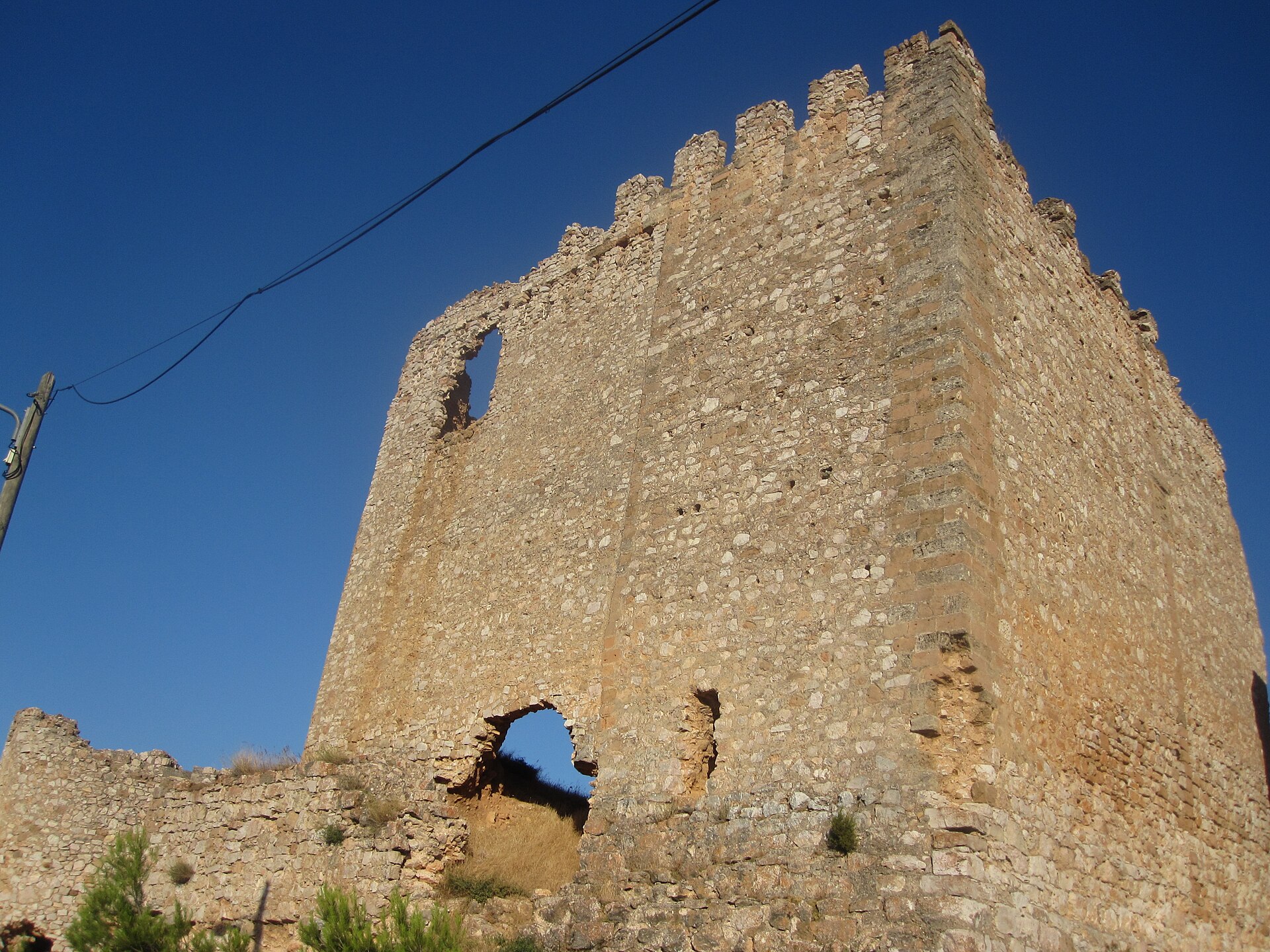
Montuenga Castle stands above Montuenga de Soria, a small village administratively part of Arcos de Jalón, in Spain's Soria province. Its ruins crown a hill overlooking the Jalón river valley, at a point that for centuries controlled the natural corridor linking the central Spanish plateau with the Ebro basin.
Where exactly is the castle?
Montuenga de Soria sits about 105 km from the city of Soria and is grouped under the municipality of Arcos de Jalón. The castle rises directly above the village, forming part of a defensive line that followed the Jalón river — a waterway that since the Middle Ages has marked both a natural border and a key travel route between the Castilian plateau and the Ebro lowlands.
What is the history behind it?
Fortifications first appeared here in the 11th century, when the area sat on the frontier between the Christian kingdom of Castile and the Muslim taifa of Zaragoza. As the frontier shifted, this same ground later divided two rival Christian kingdoms instead — Castile and Aragon. It was the border conflicts between these two crowns during the 14th century that gave the castle the shape still visible today; the fighting forced repeated reinforcement of the structure.
For centuries the castle belonged administratively to the villa of Medinaceli, a major seat of regional power. It is also sometimes referred to as the Padilla castle, after the noble family associated with its ownership in later periods.
What can visitors see today?
Only fragments of the original fortress survive: two polygonal towers at opposite ends, linked by stretches of curtain wall. Builders used rubble masonry, reinforcing the corners with dressed stone blocks — a technique typical of Castilian border fortresses of the period. The structure follows the shape of the hill closely, a design that made the site harder to storm.
Conservation work in 2015 stabilized the remaining walls and towers, protecting them from further deterioration. The castle remains private property, so in practice visits are limited to viewing the ruins from outside and from the surrounding paths.
How do you get there?
The easiest way is by car — Montuenga de Soria sits right next to Arcos de Jalón, a town on the main routes connecting Madrid with Zaragoza and Aragon. A local road runs from Arcos de Jalón to the ruins, and the final stretch up the hill is best done on foot; the climb is short, and the view over the Jalón valley makes it worthwhile.
When is the best time to visit?
Because the site sits exposed on an open hilltop, spring and autumn are the most comfortable seasons, when temperatures in Soria province are milder than in the height of summer. Morning or late afternoon visits are best, since the hill offers little shade and the ground around the ruins is uneven.
Frequently asked questions
Can you go inside Montuenga Castle? No — the site is private property, and only fragments of the walls and two towers remain standing. Visits are limited to viewing the ruins from the outside.
Why is it also called the "Padilla castle"? That name refers to the Padilla family, historically associated with ownership of the fortress.
Why was the castle built in this exact spot? The hill above the Jalón valley controlled a natural passage between the central Spanish plateau and the Ebro basin — a strategic corridor defended since the 11th century, first on the frontier with the taifa of Zaragoza, later between Castile and Aragon.
Are there other nearby sights worth combining with a visit? The town of Arcos de Jalón itself, along with the historic villa of Medinaceli — administratively linked to the castle for centuries — make natural additions to a visit in the area.
Nearby places

Earn badges for the places you visit
Download NextOnTrip, discover new places and check off your trails.