About this place
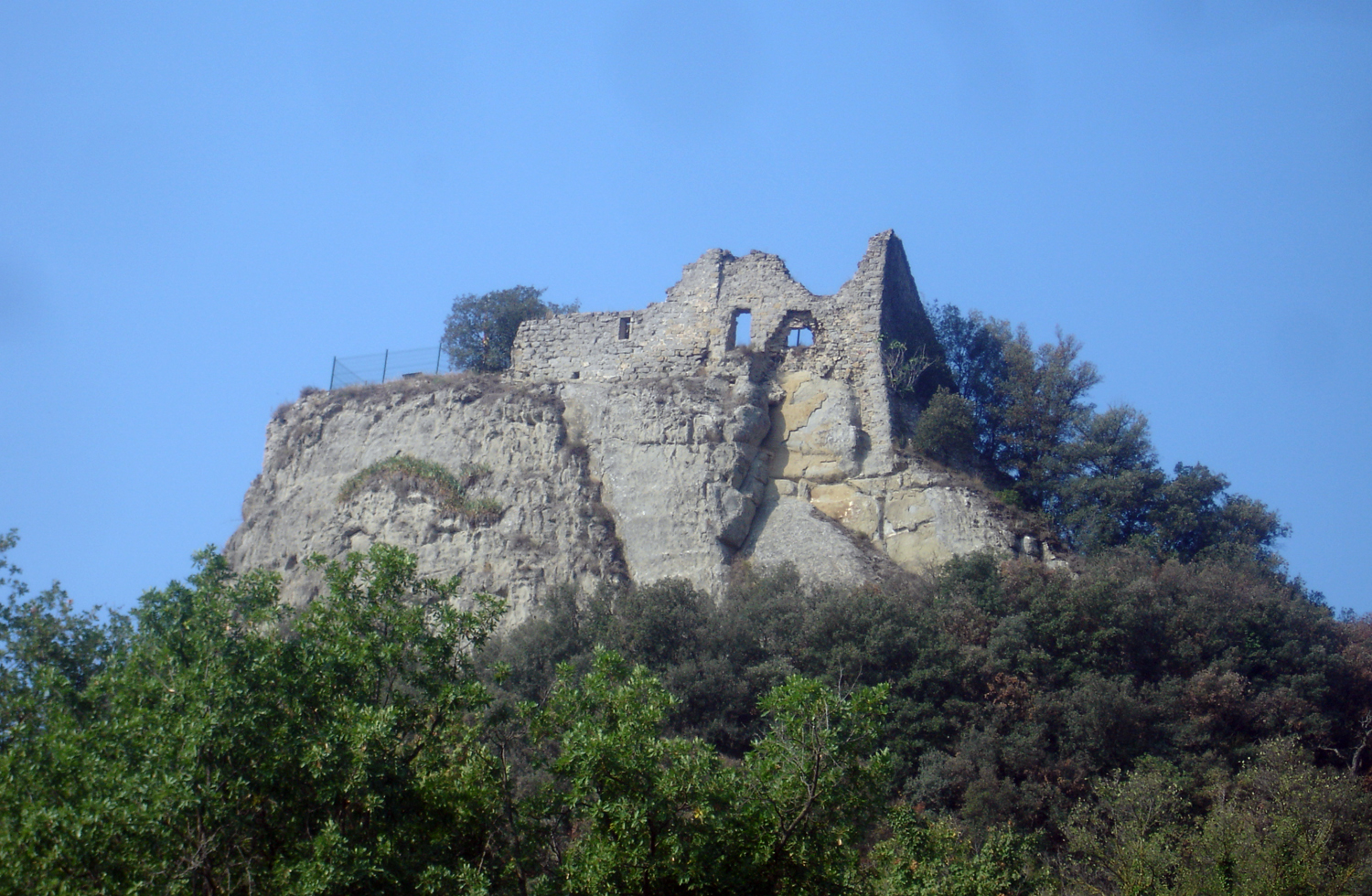
Castell d'Orís is a ruined medieval castle standing on a hill right beside the village of Orís, in the Catalan comarca of Osona. For centuries the site has overlooked the Ter river valley and the Vic plain, making it both a fine viewpoint and a tangible piece of the region's turbulent past.
Where exactly is the castle located?
The ruins sit on a rise directly above Orís, overlooking the Ter valley, along the route linking the Vic area with the Bisaura district. The site's coordinates are approximately 42.0586°N, 2.2225°E. Access is on foot, following paths and tracks that climb from the village center, and the summit rewards visitors with a wide panorama over the valley and surrounding hills.
How old is this site?
The first documented references to the castle at Orís date back to the year 914, making it one of the older recorded defensive structures in this part of Catalonia. Over the following centuries the stronghold served as a strategic lookout over the valley, part of the network of fortified hilltop sites typical of the early medieval frontier between the Christian Catalan counties.
What can be seen among the ruins today?
The surviving remains clearly show at least four distinct building phases, which makes the site especially interesting for anyone curious about defensive architecture. In the southwest corner, wall fragments and the floor plan of the chapel of Sant Pere are still visible — a Romanesque structure probably dating from the 12th century, though the church itself is not documented before 1116, and by 1198 it already appears as having been rebuilt.
Toward the east there is a large underground chamber covered by a pointed vault of early Gothic type, protected by a later Gothic-period wall. The tallest and best-preserved wall, on the northern side, combines construction work from between the 15th and 17th centuries, showing that the castle was repeatedly rebuilt and reinforced over the centuries.
Why did the castle fall into ruin?
The fate of Castell d'Orís is tied to some of the defining conflicts in Catalan history. The stronghold suffered damage during the Remença War — the peasant uprising against feudal serfdom — which ended in 1472, and it was further damaged during the First Carlist War in the 19th century. These two periods of fighting are what left the castle in the ruined state visitors find today.
What protection status does the site have?
In recognition of its historical and architectural value, the castle ruins were declared a Historical-Artistic Monument in 1949. This designation underlines the site's importance to the heritage of the Osona region and of Catalonia as a whole, even though the structure itself was never rebuilt.
What should visitors know before going?
This is not a restored tourist attraction with visitor infrastructure, but an authentic open-air archaeological and historical site. Sturdy footwear is worth bringing, since the approach is uphill and the ruins sit on uneven ground. The view from the hilltop over the Ter valley and the Vic plain is reason enough for the climb, regardless of one's interest in medieval Catalan history.
Frequently Asked Questions
Since when has Castell d'Orís existed? The earliest documented mentions of the castle date from 914, making it one of the oldest recorded defensive sites in the Osona region.
Has a chapel survived on the site? Yes, the southwest corner of the ruins preserves the foundations and wall fragments of the Romanesque chapel of Sant Pere, documented from 1116 onward.
Why is the castle in ruins today? Two historical conflicts caused the damage: the Remença War, which ended in 1472, and the First Carlist War in the 19th century.
Is the site protected as a heritage monument? Yes, it was declared a Historical-Artistic Monument in 1949, confirming its value as part of Catalonia's cultural heritage.
Nearby places

Earn badges for the places you visit
Download NextOnTrip, discover new places and check off your trails.