About this place
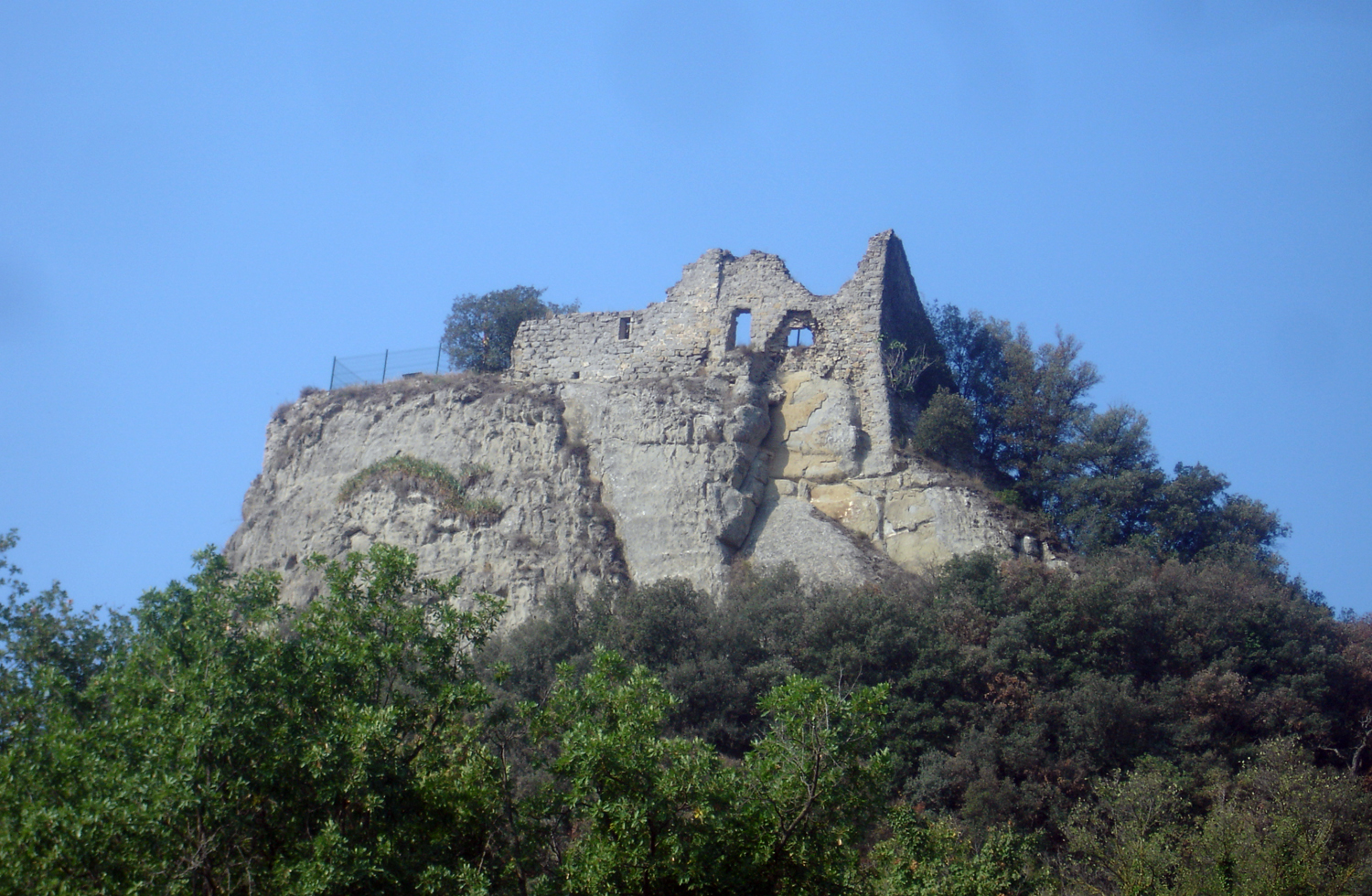
Castell de Besora is a ruined medieval castle perched above the village of Santa Maria de Besora, in the Osona region of Catalonia. Built on a rocky spur more than a thousand meters above sea level, it is first mentioned in written records as early as 895, making it one of the older fortified sites in this stretch of the Pyrenean foothills.
How do you get to Castell de Besora?
Santa Maria de Besora sits deep in Osona, among the hills that separate the Barcelona plain from the Pyrenees. The easiest way to reach it is by car along local roads toward Sant Quirze de Besora and Montesquiu; the ruins themselves sit at the top of the spur, reached via a signposted walking trail from the nearest access point. The final approach is steep, so comfortable footwear and a visit outside the hottest hours are worth planning for.
What will you find on site?
Little remains of the original fortress beyond fragments of walls, best preserved around the former castle church. The castle was held in sovereignty by the Counts of Barcelona, who granted it as a fief to the Besora family — local viscounts who administered it on their behalf. The best-known member of this lineage was Gombau de Besora, who acted alongside Count Ramon Borrell of Barcelona.
The attached church served as the parish church until 1759, after which it was converted into a Marian sanctuary. The turning point for the whole complex came during the Carlist Wars: in 1839, troops stationed at the site caused the destruction of both the fortifications and the church of Santa Maria. From then on, the site remained in ruins.
Archaeological excavations carried out between 2006 and 2010 uncovered more of the original layout, and in 2017 a private foundation was established to consolidate the remaining walls and restore the church. Today the site holds the status of an asset of national cultural interest (Bé Cultural d'Interès Nacional), confirming its historical weight despite the modest scale of what physically survives.
When is the best time to visit?
Given the elevation and the lack of any sheltered facilities, spring and early autumn are the most comfortable seasons, offering milder temperatures and the clearest views over the surrounding hills of Osona. In summer, an early-morning visit is advisable, while winter can bring stronger wind and cold on the exposed ridge.
Why is this place worth a visit?
Castell de Besora is not a site built around visitor infrastructure — it is an authentic, low-key destination for anyone interested in medieval Catalan history and hiking with a view. The panorama from the spur where the castle once stood is reward enough for the climb, and knowing that the site was first recorded at the end of the 9th century gives the visit real historical weight.
Frequently asked questions
How much of the castle still stands? Not much — after the destruction of 1839, only fragments of walls remain, most visible around the former castle church.
Who ruled the castle in the Middle Ages? The Counts of Barcelona were the formal overlords, while the Besora family, acting as viscounts, administered the castle directly; the most notable of them was Gombau de Besora.
Why did the castle fall into ruin? In 1839, during the Carlist Wars, troops stationed at the site caused the destruction of both the castle and the adjoining church of Santa Maria.
Is the site protected today? Yes, Castell de Besora holds the status of Bé Cultural d'Interès Nacional, and since 2017 a private foundation has carried out conservation work on the walls and church.
Nearby places

Earn badges for the places you visit
Download NextOnTrip, discover new places and check off your trails.