About this place
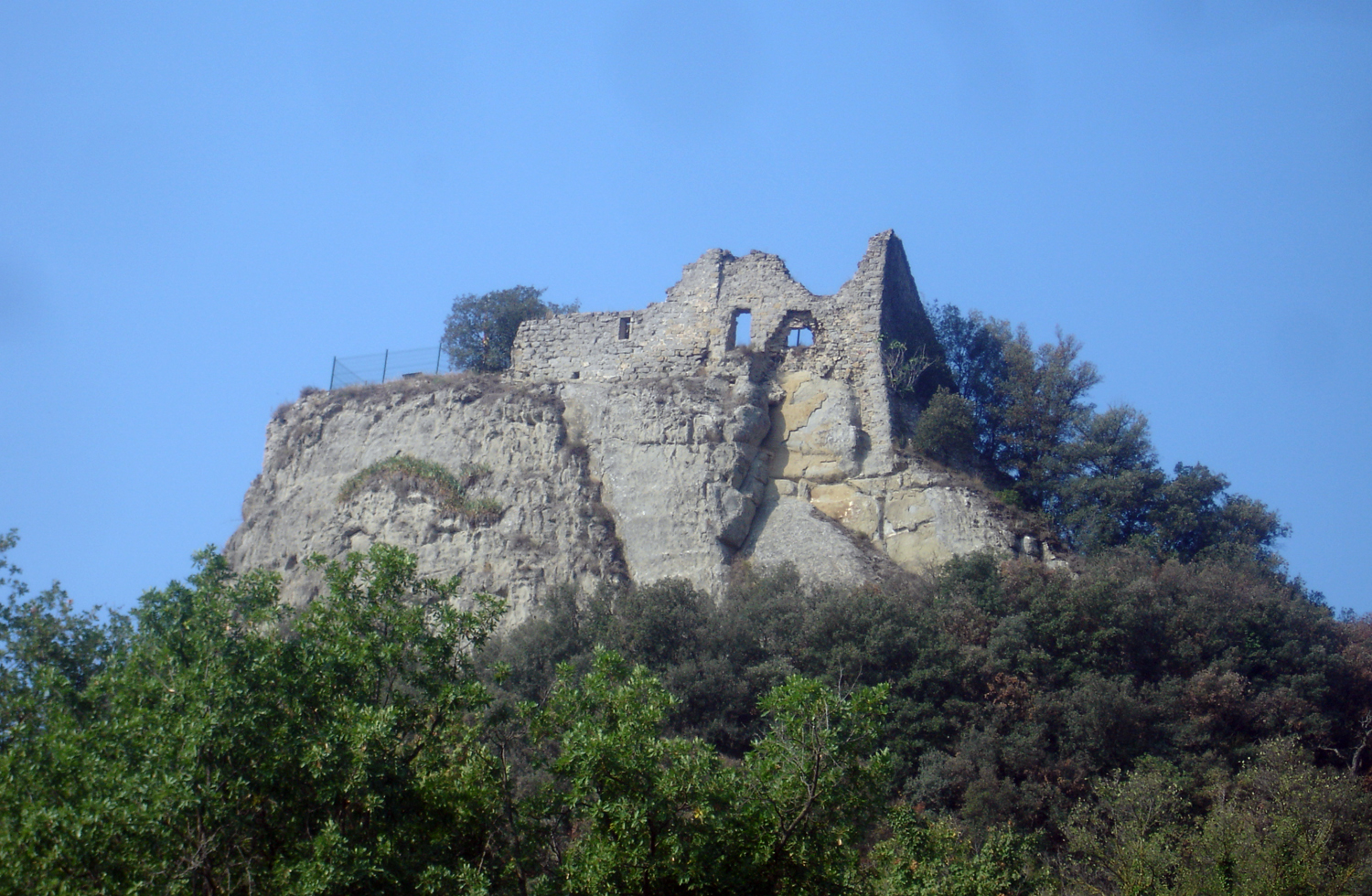
Castell de Voltregà is a ruined medieval castle in the municipality of les Masies de Voltregà, in the Osona region of Catalonia. It stands at roughly 906 metres above sea level, at the southern end of the Sant Martí mountain ridge, right next to the small church of Sant Martí Xic. The site is protected as a cultural property of national interest and its ruins are one of the most recognisable landmarks in the local landscape.
The story behind the ruins
The earliest written record of the castle dates back to the year 902, making it one of the older documented fortifications in the Osona area. During the medieval period, it served as the seat of a large jurisdictional territory that covered what are today the municipalities of les Masies de Voltregà (where the main building stood), Sant Hipòlit de Voltregà, Santa Cecília de Voltregà and Sobremunt.
Overall lordship of the castle rested with the Counts of Barcelona. Count Ramon Borrell granted it to his wife, Ermessenda of Carcassonne, who later pledged the property to their son, Berenguer Ramon I, in 1023. Its history took another turn in 1370, when the bishops of Vic purchased the castle of Voltregà, becoming patrons of the neighbouring church at the same time. Today the building stands in complete ruin, its remaining walls a physical trace of centuries in which the site held both secular and ecclesiastical power over the surrounding territory.
How do you get there?
Les Masies de Voltregà sits in Osona, close to Sant Hipòlit de Voltregà and a short distance from Vic, the region's main town. Driving is the easiest option: local roads from Vic lead toward the Ter river valley, from where you continue uphill toward the Sant Martí ridge. The final stretch to the ruins and the church of Sant Martí Xic has to be covered on foot, along a hillside path — sturdy footwear is recommended, as the terrain is hilly.
What will you see on site?
What remains are sections of defensive walls and foundations, heavily worn by time but still tracing the outline of the castle on top of the ridge. Right beside the ruins stands the small church of Sant Martí Xic, and together the two make up one of the most notable historical and scenic stops on the network of hillside trails in the area. From the viewpoint next to the ruins, there's a wide panorama over the Ter river valley and the surrounding hills of Osona — one of the main reasons the spot is popular with hikers.
When is the best time to visit?
Because the site sits on a hilltop and requires a walk to reach, spring and autumn are the best seasons, offering mild temperatures and generally the clearest views over the Ter valley. Summer visits can get hot along a mostly shadeless path, while in winter the trail may turn slippery after rain or frost.
Frequently asked questions
Is there an entrance fee for the ruins? No. The ruins sit in the open countryside and are freely accessible, with no ticket booth or visitor centre on site.
Can you drive right up to the castle? You can drive close to the base of the ridge, but the final part of the route to the castle and the church of Sant Martí Xic must be walked.
How far back does the castle's history go? Over a thousand years — from the first written mention in 902, through the Counts of Barcelona and Ermessenda's family, to the bishops of Vic, who bought it in 1370.
Are there other things to see nearby in Osona? Yes. Nearby Vic has its cathedral and Roman bridge, and the municipality of les Masies de Voltregà itself has further scenic trails running along the Ter river valley.
Nearby places

Earn badges for the places you visit
Download NextOnTrip, discover new places and check off your trails.