About this place
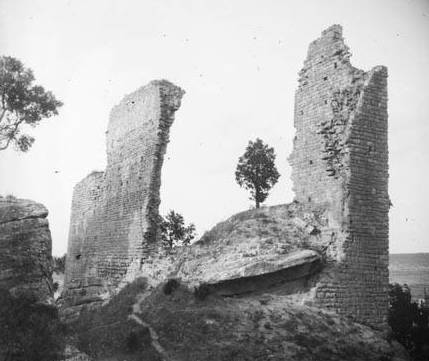
Castell dels Montcada is a medieval stronghold in the upper part of Vic, built in the 11th century by one of the most powerful feudal families of medieval Catalonia, the Montcadas. Almost nothing of the castle survives today, but its story is tied to one of the region's most remarkable archaeological discoveries: a Roman temple that lay hidden under its walls for centuries.
Where did the castle come from?
The Montcada lineage traces back to Guillem de Montcada, also known as Guillem de Vacarisses or Guillem de Muntanyola, active in the early 11th century (between 1002 and 1033). He became the founding figure of what would grow into the great Montcada dynasty, a family whose influence eventually extended well beyond Vic into Aragon and other parts of the Crown of Aragon. The earliest written mention of the castle itself dates to 1088, when Bishop Berenguer de Llussà recognized the rights of Guillem Ramon de Montcada over the property, suggesting the building had passed into the family's hands around that time.
During the 11th century the site went by several names: Palau or Torre Comtal de Vic, and simply Castell de Vic. Construction is dated to the second half of the 11th century — the building's layout already shows features that would later become typical of Gothic urban palaces. The castle itself took the form of a three-storey structure, rebuilt again toward the end of the 11th century.
What can you see on site today?
The castle stood in Vic's upper town, right next to the spot where the Roman Temple of Vic (Temple Romà) now rises — one of the city's most important landmarks. For centuries, the castle's walls literally concealed the remains of the ancient temple. It was only during the demolition of the building in 1882 that Roman columns and foundations came to light, leading to the temple's full exposure — the very temple that draws visitors from across Catalonia today. Most attention now goes to the temple rather than the castle, but standing beside it means standing exactly where the Montcada residence once stood.
How did the castle decline?
Throughout the 12th and 13th centuries, the castle's history was shaped by jurisdictional disputes between the Montcada lords and the bishops of Vic, who shared authority over the city. These long-running conflicts gradually eroded the building's role as a center of power. Over time it lost its defensive and administrative function, and by 1860 it stood abandoned. In 1882 it was sold and partially demolished — and it was precisely during that demolition work that the Roman temple beneath it was discovered.
How to get there and when to visit?
The site sits in the historic center of Vic, a Catalan city easiest reached by train or car from Barcelona, roughly an hour away. The upper town, where the castle once stood and where the Temple Romà now stands, is easy to explore on foot, close to the cathedral and the main square. Spring and autumn are the best times to visit, offering pleasant temperatures without the summer crowds that fill Vic in peak season.
Frequently asked questions
Are there any ruins left of the Montcada castle? Barely any — the building was largely demolished in 1882. What remains today is mostly historical context and the location itself, now dominated by the Roman temple uncovered during that demolition.
Why does the castle matter if nothing of it survives? Because its demolition led to the discovery of one of the best-preserved Roman temples on the Iberian Peninsula — without the castle coming down, the temple might never have been found.
Who were the Montcadas? One of the most important noble families of medieval Catalonia, tracing their roots to the early 11th century, with influence stretching far beyond Vic into Aragon and other territories of the Crown of Aragon.
What else is worth seeing nearby? Besides the Temple Romà, Vic's upper town is home to the city cathedral and its historic main square, all within a compact, walkable area of the old town.
Nearby places

Earn badges for the places you visit
Download NextOnTrip, discover new places and check off your trails.