About this place
Casal de Bellpuig is the ruin of a medieval fortified manor house in Sant Julià de Vilatorta, a small town in the Osona comarca, right in the middle of Catalonia's Plana de Vic. Only fragments of its walls survive today, but the site still draws visitors interested in the region's feudal past and in the view from its hilltop position.
Where are the ruins located?
Casal de Bellpuig sits on a small hill (puig in Catalan) overlooking the Noguera stream, close to the Park of the Seven Springs (Parc de les 7 Fonts). From here the view stretches across Sant Julià de Vilatorta and the whole Vic plain, which explains why medieval builders picked this exact spot — it let them watch over the surrounding land and spot any threat from a distance. A gentle walking path leads up to the ruins, and the full round trip covers a little over 2 kilometers, so a visit doesn't require any special hiking gear or fitness.
What is the history behind the site?
The oldest surviving document mentioning Bellpuig dates to 1147 and describes it as a fortified residence dependent on the nearby castle of Sameda (Meda). Since no earlier record of a castle at this spot survives from the 11th or 12th century, historians place the construction of the building at the turn of the 12th and 13th centuries. Its first known owners were knights bearing the surname Bellpuig, who served as castellans of Meda castle and answered to the bishops of Vic as their feudal lords. By the mid-13th century, the family had merged through marriage with the powerful Centelles lineage, a link confirmed in a 1327 document issued under King James II, which names Eimeric, son of Elisenda, as holding authority over the house of Centelles, the castle of Meda, and Bellpuig together. It is from this period that the earliest records appear linking the name of the town, Vilatorta, with Bellpuig — recorded at the time as "Pulcho Podio."
Why is only a ruin left today?
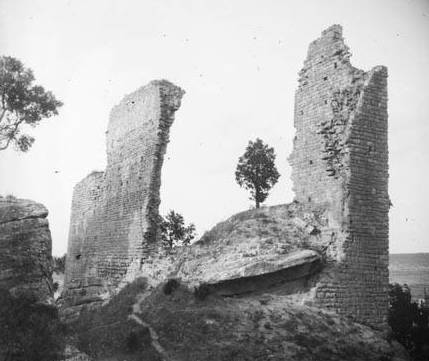
The building's fate was sealed by the Catalan Civil War (1462–1472): around 1470, Casal de Bellpuig was destroyed and it was never rebuilt afterward. Only two sections of wall from the original Romanesque manor have survived to the present day, though they remain substantial enough to give a sense of the scale of the original structure. The rest of the building gradually crumbled over the following centuries, leaving behind a stone skeleton now folded into the hillside landscape.
Is it worth planning a visit?
Casal de Bellpuig is listed as a cultural asset of national interest, a status that reflects its historical value despite the modest amount of masonry that remains standing. The site appeals most to visitors who enjoy combining a short walk with a rewarding view — the brief climb up the hill is repaid with a panorama over the Plana de Vic and the quiet green surroundings of the Seven Springs Park. It pairs well with a visit to Sant Julià de Vilatorta itself, a town known for its Modernista architecture and long-standing craft traditions.
Frequently asked questions
What was Casal de Bellpuig originally? It was a medieval fortified manor house whose first owners served as castellans of the nearby Meda castle and answered to the bishops of Vic.
When was it built and when was it destroyed? The earliest record dates to 1147, and the structure itself is generally dated to the turn of the 12th and 13th centuries. It was destroyed around 1470 during the Catalan Civil War and was never rebuilt.
What can visitors see on site today? Only two sections of wall from the original Romanesque manor house survive, set on a hilltop with views over the surrounding countryside.
How do you get to the ruins? An easy, well-marked walking path near the Park of the Seven Springs leads to the site, with a round trip of about 2 kilometers.
Nearby places

Earn badges for the places you visit
Download NextOnTrip, discover new places and check off your trails.