About this place
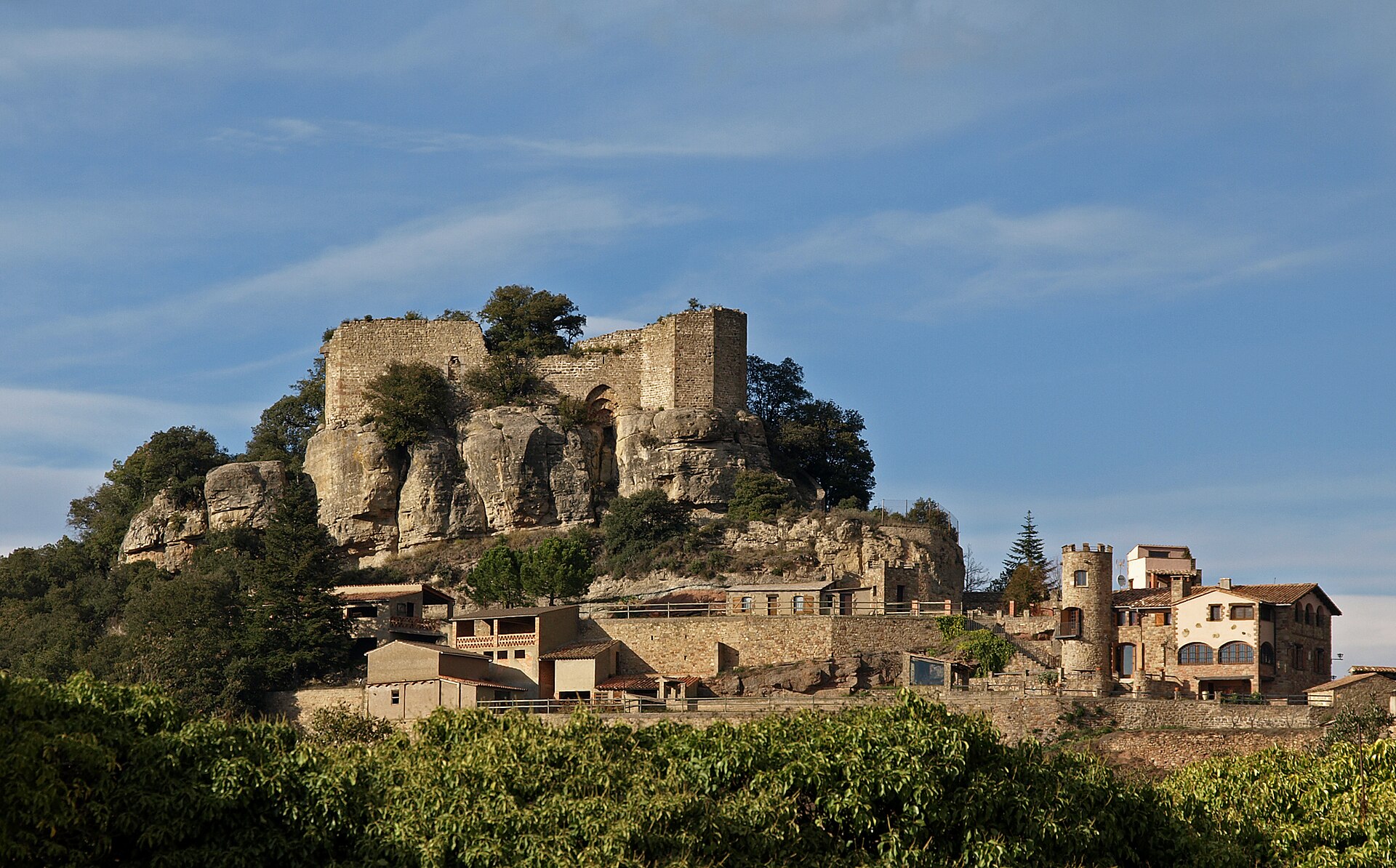
Castell de Pera is a ruined medieval castle overlooking the town of Sant Llorenç Savall, in the Vallès Occidental region of Catalonia.
Where exactly is the castle located?
The ruins sit on a hilltop at roughly 743 meters above sea level, within the municipality of Sant Llorenç Savall. The site was historically chosen as a lookout controlling the surrounding valleys, and it still offers wide views across Vallès Occidental. Its approximate coordinates are 41.690459, 2.028741.
What is the history behind Castell de Pera?
The castle first appears in written records at the start of the 11th century, though some references suggest the site may have already been known as early as the 10th century. Ownership shifted repeatedly over the following centuries: various feudal families held it between the 11th and 13th centuries, and in 1287 it passed to Pere Marquès. From 1378, when a monastery sold the estate, until well into the 19th century, it belonged to the Sentmenat family. By the 17th century the castle had already been abandoned as a residence and began falling into ruin, even though the family retained formal ownership for much longer.
What remains can visitors see today?
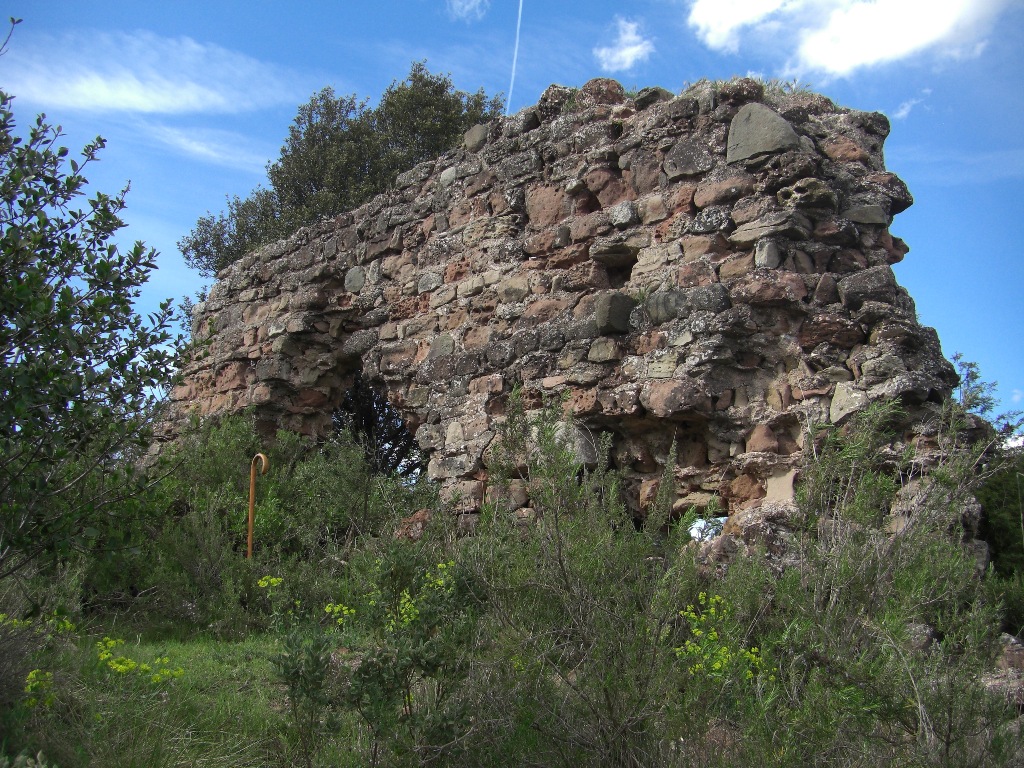
The castle has an elongated layout running north to south, following the shape of the hill. It originally had two entrances — one on the north side and another to the east, where the outline of a staircase is still visible. The best-preserved section is the western defensive wall, which features two rows of arrow slits set at different heights, a clear sign of the fortress's layered defenses. To the north, the base of a tower known as Vernet has survived, while the eastern side holds the oldest sections of wall along with the castle's main domestic quarters.
The complex also includes the chapel of Santa Maria, standing on the eastern flank of the hill. It is a small, single-nave building closed by a semicircular apse narrower than the nave, facing east. The chapel walls double as part of the castle's defensive perimeter, illustrating how closely religious and military functions were intertwined in this kind of hilltop settlement.
What protection status does the site have?
Castell de Pera is listed as a Cultural Asset of National Interest and appears in Catalonia's inventory of architectural heritage. Given the fragile state of the ruins, archaeological work continues on site — in recent years research campaigns have uncovered further sections of the old structure. These digs are helping researchers piece together the castle's original layout, but the newly exposed walls are also more exposed to weather damage, which is why consolidation and protective measures are regularly discussed for the site.
How do you get to Castell de Pera?
The ruins are reached on foot, via a hiking trail that starts near Sant Llorenç Savall and is popular with visitors looking for a short but scenic outing in Vallès Occidental. Since the terrain is uneven and there is no visitor infrastructure at the site itself, sturdy footwear and a supply of water are worth bringing, particularly in summer.
Frequently asked questions
Is Castell de Pera a well-preserved castle or a ruin? It is a ruin. Sections of the defensive walls, the base of one tower, and traces of the chapel survive, but there is no complete, roofed structure left standing.
How old is the castle? The earliest written mentions date to the start of the 11th century, though some sources point to a possible earlier origin for the site, going back to the 10th century.
Who owned the castle over the centuries? Ownership passed through several hands: local feudal families first, then Pere Marquès from 1287, and finally the Sentmenat family, who held it from 1378 until the 19th century.
Can the castle be reached without a car? Yes, the usual way to get there is on foot, following a hiking trail that starts from Sant Llorenç Savall — a popular trekking route in the region.
Nearby places

Earn badges for the places you visit
Download NextOnTrip, discover new places and check off your trails.