About this place
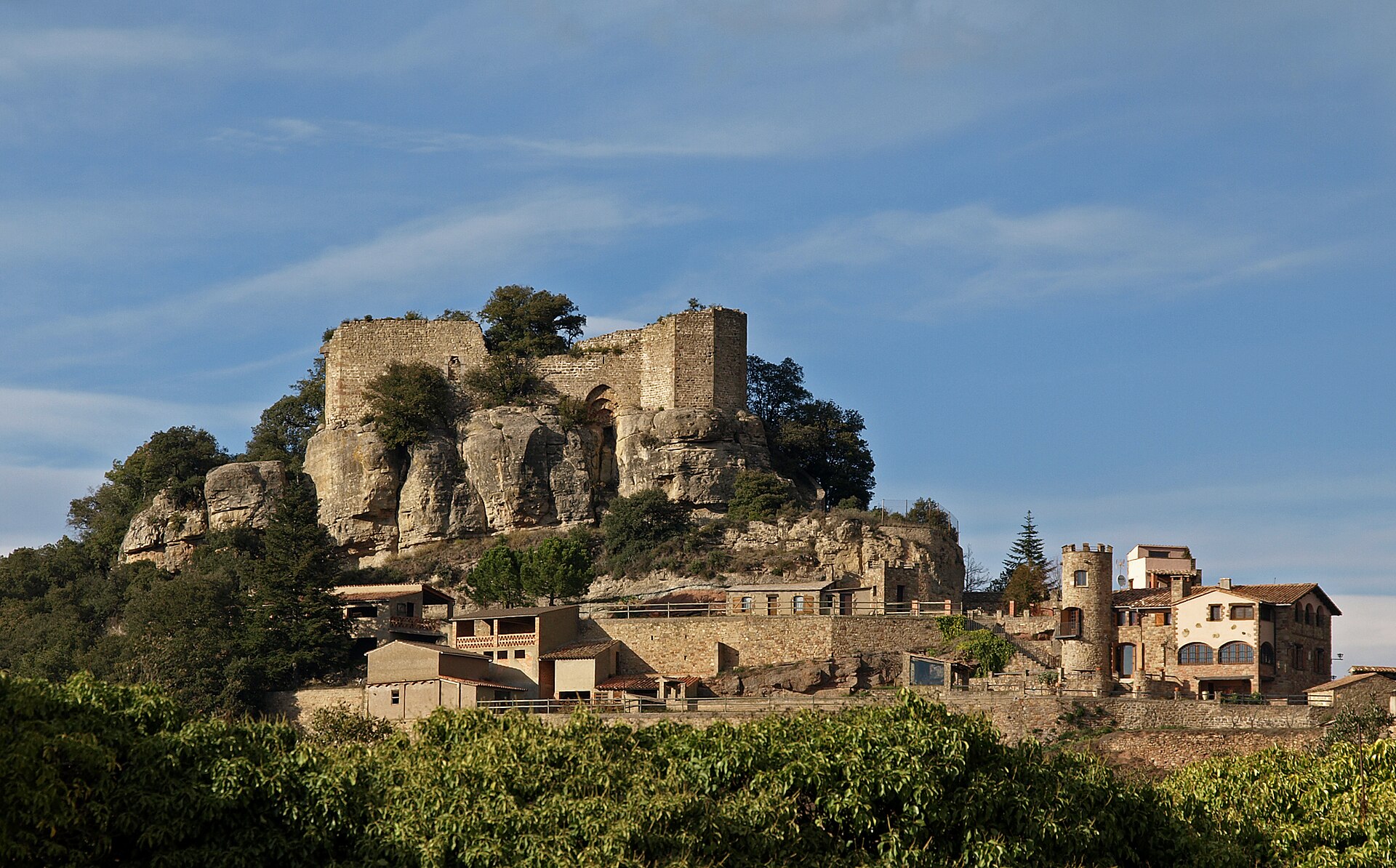
Castell de Granera is a medieval castle guarding the small village of Granera, built on a rocky spur at 824 metres above sea level, right at the edge of the Moianès plateau in the Vallès Oriental region of Catalonia.
How do you get there?
Granera sits deep in Catalonia's rural hinterland, well off the main tourist routes - which is part of its charm for travellers looking for a quiet, uncrowded stop. The easiest approach is by car along local roads from Moià or Sant Feliu de Codines, followed by a short uphill walk to the castle hill itself. The ruins tower over the village, so the silhouette of the walls is already visible from the centre of Granera, making it a natural landmark to orient any exploration of the surrounding area.
What's the history behind the castle?
The name Granera first appears in written records in 958, in the oldest surviving documents of the monastery of Sant Benet de Bages. The stronghold itself, recorded in Latin as "castrum de Granaria," is first mentioned in 971. From that point on it functioned as part of the county of Manresa, forming part of the defensive network that protected this frontier region during the early Middle Ages.
Over the following centuries, ownership passed through several hands. The castle belonged to the Planella family, who also held the nearby castles of Clarà, Castellnou de la Plana, and Castellcir, and who were related by marriage to the Planella lines of Talamanca and Calders. By the late 16th century the estate had passed to the Despalau family. A turning point came in 1642, when Maria de Despalau sold the castle and its jurisdiction to Jacint Sala i Cervera, who was named Baron of Granera the following year by King Felipe IV of Castile.
What does the architecture look like?
Most of the surviving stonework dates from the 11th century, though art historians point to earlier fragments typical of the so-called "castell roquer" style, which used the natural rock formation itself as part of the defensive design. The fairly uniform structure visible today is largely the result of a 14th-century rebuild that incorporated older Romanesque elements into the new construction - still visible on the northeastern side of the hill. This layered building history is what makes Castell de Granera a rewarding stop for anyone interested in medieval defensive architecture.
What happened to the castle in modern times?
In the 1970s, the Barcelona Provincial Council (Diputació de Barcelona) carried out a cleaning and consolidation campaign at the site, overseen by Camil Pallàs, and the ruins were enclosed to protect them from further deterioration. In 1994 the site suffered a fire, after which further consolidation work was carried out on the surviving walls. The castle now holds protected cultural heritage status.
When is the best time to visit?
Given its altitude and exposed, rocky setting, spring and autumn are the best seasons to visit, offering comfortable conditions for the uphill approach and clear views over the surrounding hills of Moianès and Vallès Oriental from the ramparts. In summer, an early-morning visit is recommended to avoid the midday heat.
Frequently asked questions
Can you visit Castell de Granera? Yes - the castle is a ruin with protected heritage status, open to view from outside and within the perimeter walls, though it has no staff on site or fixed opening hours.
How old is the castle? The earliest mentions of the stronghold date back to 971, while the surviving structure is mostly the product of 11th- and 14th-century construction phases.
How high up is the castle located? The castle hill stands at 824 metres above sea level, right on the edge of the Moianès plateau.
What else is worth seeing near Granera? It's worth combining the visit with a short walk through the village of Granera itself and the surrounding hills of Vallès Oriental, which offer views over the neighbouring valleys and mountain ranges of the region.
Nearby places

Earn badges for the places you visit
Download NextOnTrip, discover new places and check off your trails.