About this place
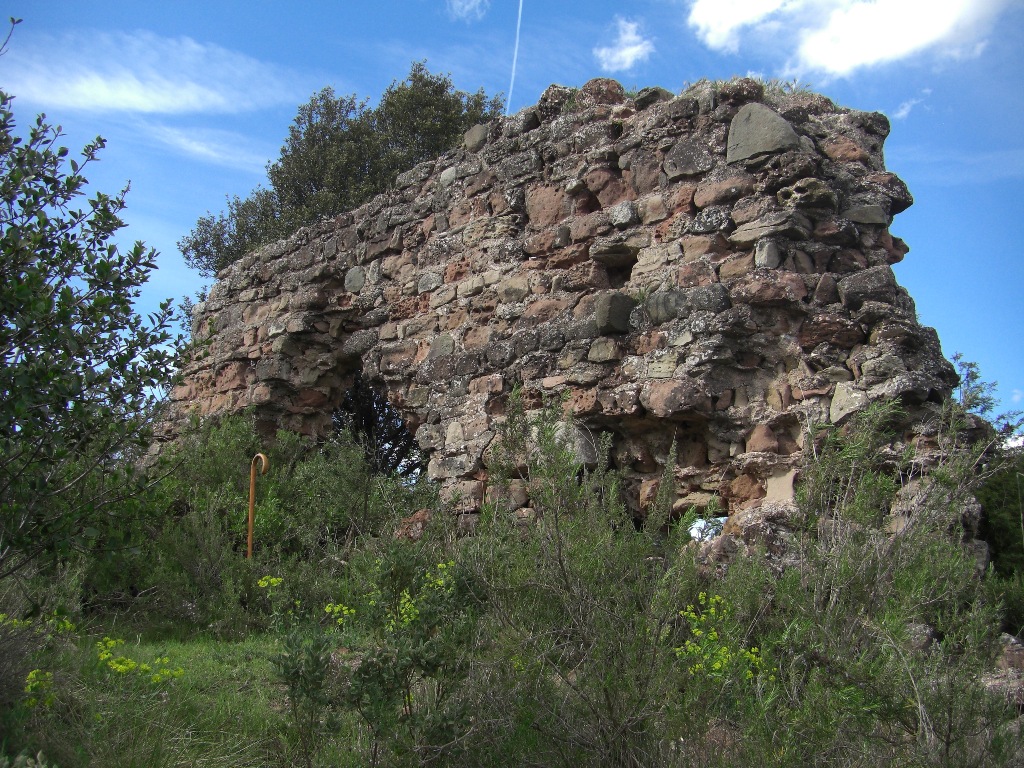
Molí de l'Agell is an old water mill on the Ripoll river, located in the municipality of Sant Llorenç Savall, in the Vallès Occidental region of Catalonia, not far from Barcelona. The stone building stands right where the Torrent de Mascarell stream, flowing down from the Sant Jaume de Vallverd area, meets the Ripoll, and it is listed in Catalonia's inventory of architectural heritage.
What is this place?
The mill belongs to a network of old hydraulic structures that made use of the Ripoll's water within Sant Llorenç Savall for centuries. The name "Agell" appears in records from the 16th century onward, when a family bearing that surname, originally from the Mas Reixac farmhouse in Calders, settled at the site. The building itself, though, predates that date. It most likely operated primarily as a flour mill, but given the strong tradition of cloth-making and weaving in Sant Llorenç Savall, some researchers don't rule out that it may also have functioned at some point as a fulling mill, used to felt woven cloth. Today Molí de l'Agell is one of several mill sites promoted as part of an industrial heritage route along the Ripoll river.
How do you get there?
The mill sits outside the town center of Sant Llorenç Savall, roughly a 20-minute walk away, following the course of the Ripoll river. The approach is on foot along a riverside path — the simplest option is to park in Sant Llorenç Savall itself and continue on foot from there, since a car isn't needed for the final stretch. The path connects to a well-known loop that continues on to the Bassa de Sant Jaume pool and the Sant Jaume de Vallverd hermitage, making it easy to turn the visit into a longer countryside walk.
What will you see there?
The main draw is the stone mill building itself, set at the confluence of two watercourses, the Ripoll and the Torrent de Mascarell. The surroundings have a distinctly rural, wooded character typical of the foothills of Sant Llorenç del Munt i l'Obac: a rocky riverbed, riverside greenery, and quiet, well away from the crowds of the bigger towns nearby. From the paths around the mill, the La Mola massif is visible, a landmark that orients the whole region. This spot appeals less to sightseers chasing dramatic views and more to visitors curious about the region's pre-industrial water-powered crafts — the building itself is enough to picture how Catalonia's rural water economy once worked.
When should you visit?
Spring and autumn are the best seasons to come, when temperatures are mild and water levels in the Ripoll tend to be higher than during the dry summer months, making the setting look its best. The loop connecting the mill with the Bassa de Sant Jaume and the Sant Jaume de Vallverd hermitage takes a few hours to walk and is moderately demanding — suitable for anyone in reasonable shape rather than requiring serious hiking experience, and better suited to those after a quiet nature-and-history outing than an athletic challenge.
Frequently Asked Questions
What was Molí de l'Agell used for? It was a historic water mill, most likely used mainly for grinding grain, though some sources suggest it may also have worked as a fulling mill for processing woven cloth, in line with the strong weaving tradition in Sant Llorenç Savall.
Where does the name "Agell" come from? It dates back to the 16th century, when a family with that surname, from the Mas Reixac farmhouse in Calders, settled at the mill. The building itself is older than that.
How long does it take to walk to the mill? About 20 minutes from the center of Sant Llorenç Savall, following the Ripoll river. The full loop that also takes in the Bassa de Sant Jaume and the Sant Jaume de Vallverd hermitage typically takes a few hours.
Is the route difficult? No, it's a moderate trail suitable for anyone in average physical condition — no specialized mountain hiking experience is required.
Nearby places

Earn badges for the places you visit
Download NextOnTrip, discover new places and check off your trails.