About this place
Castell de Rocamur is a small but historically significant ruined castle in the municipality of Sant Llorenç Savall, in the Vallès Occidental region of Catalonia. Recognized as a cultural property of national interest, it sits on a rocky ridge within the Sant Llorenç del Munt mountain range, near the outcrop known as Dalmau, at an elevation close to 800 meters.
Where exactly is Castell de Rocamur?
The ruins occupy a steep, hard-to-reach rocky spur inside the Sant Llorenç del Munt i l'Obac park, within the boundaries of Sant Llorenç Savall. The site sits at coordinates 41.668555, 2.024654. The distinctive rock outcrop that once carried the fortification is now a well-known landmark for hikers on the range's trails, with the summit itself often cited as a viewpoint at around 792 meters.
What is the history behind it?
The earliest references to the castle date back to the 12th century. Rocamur fell under the overlordship of the counts of Barcelona, though in practice it was administered by the lords of the neighboring Castell de Pera, who held it as their fief. In 1157, Arbert de Sa Pera swore an oath of loyalty to Count Ramon Berenguer IV specifically regarding the stronghold of Rocamur — one of the few concretely documented episodes from its early history. From that point on, the castle's fate remained closely tied to Castell de Pera, under whose administrative and military authority it operated.
What was the castle's purpose?
Rocamur was never a large, independent fortress. It functioned instead as an advanced watch post, tasked with monitoring the Mur valley — an area that lay some distance from the main Castell de Pera but was nonetheless fairly densely settled during the medieval period. Perched on a high rock, the position offered clear sightlines over the surrounding terrain and allowed a quick response to threats approaching from the valley below.
What remains of the castle today?
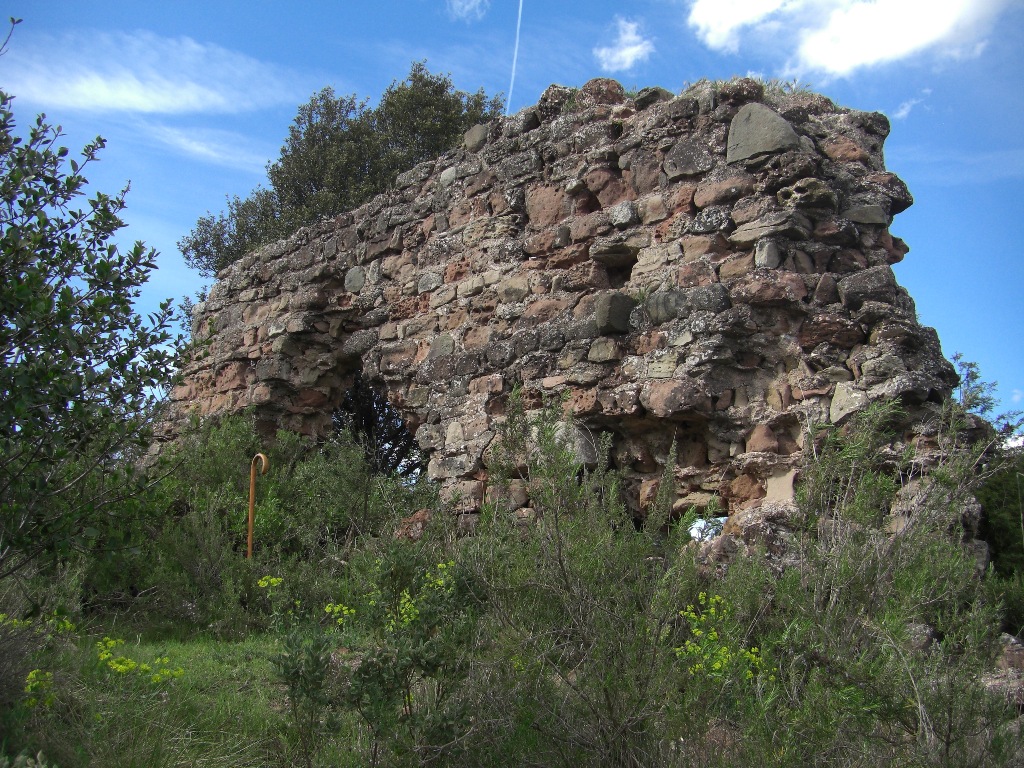
Once its military role faded, the ruins were forgotten for a long stretch of time and were only rediscovered in 1983. Today, only fragments of walls survive on the eastern and western sides of the rock, along with several holes carved directly into the stone on the northern slope — traces of structural elements that once rested against the natural rock face rather than freestanding masonry. There are no intact high walls of the kind found at larger regional castles; what remains carries mostly archaeological and scenic value rather than architectural grandeur.
Is it worth the visit?
For anyone interested in medieval Catalan history, or hikers exploring Sant Llorenç del Munt i l'Obac, the site makes for a rewarding stop that pairs sweeping views with a genuine, if modest, trace of the past. Access runs along the range's mountain trails, and reaching the rocky spur rewards the climb with wide views over the surrounding valleys.
Frequently asked questions
How old is Castell de Rocamur? The earliest confirmed references date from the 12th century, and the best-documented event tied to its history — Arbert de Sa Pera's oath of fealty to Count Ramon Berenguer IV over the stronghold — is dated to 1157.
Who controlled the castle? Formal overlordship rested with the counts of Barcelona, but day-to-day control belonged to the lords of the neighboring Castell de Pera, who held Rocamur as their fief.
Can the ruins be visited today? Yes, though only fragments remain: wall sections on the rock's eastern and western sides and holes cut into the stone on the northern slope. The site was lost to memory for a long time and only rediscovered in 1983.
How do you get to Castell de Rocamur? The ruins sit on a rocky ridge inside the Sant Llorenç del Munt i l'Obac park, within Sant Llorenç Savall, reached via the hiking trails that cross the range — a popular route for trekkers in the Vallès Occidental area.
Nearby places

Earn badges for the places you visit
Download NextOnTrip, discover new places and check off your trails.