About this place
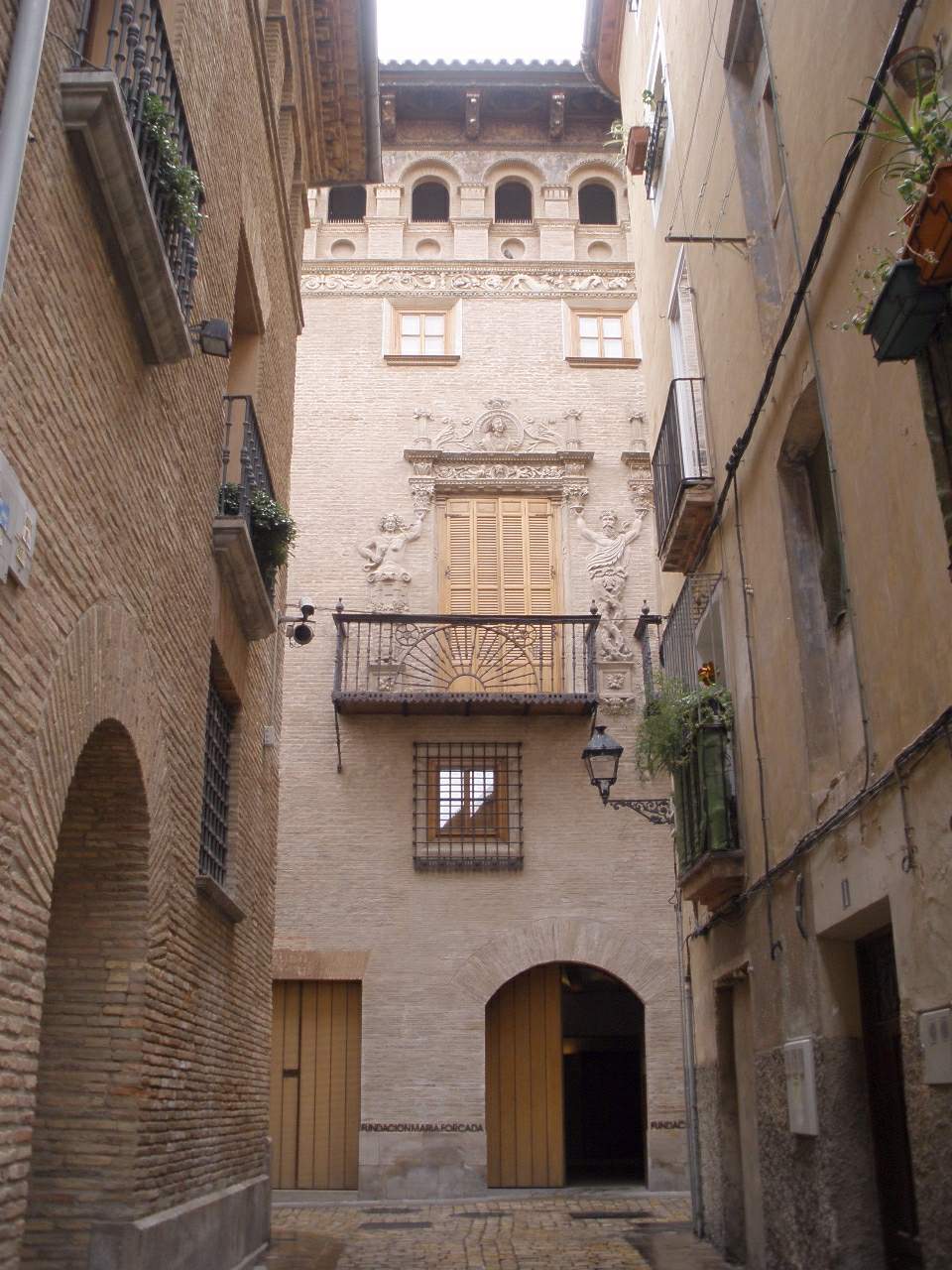
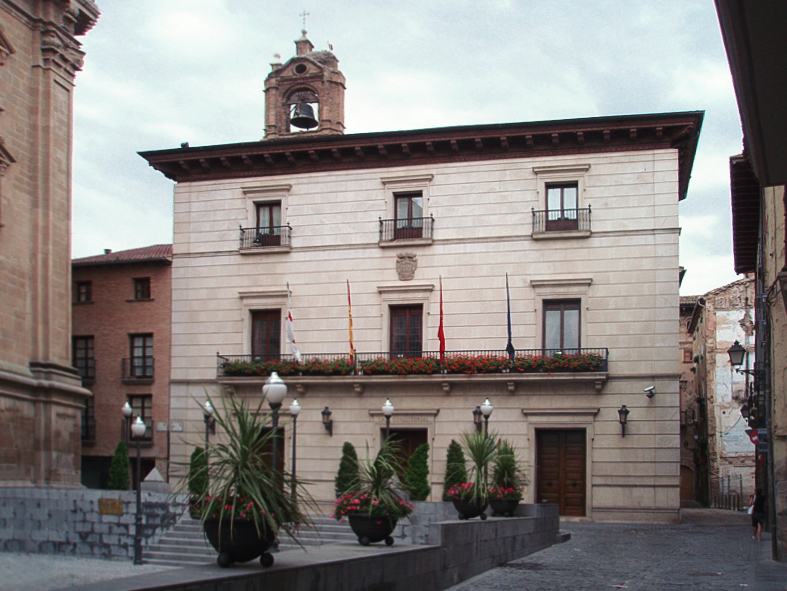
Casa del Almirante is a Renaissance palace in the historic centre of Tudela, Navarre, considered one of the finest examples of civil architecture from mid-16th-century Spain. The building stands on Calle Rúa, right behind the town hall, and today serves as a cultural centre.
How do you get there?
Tudela sits in southern Navarre, in the Ebro valley, and is well connected by rail and by road to the rest of the region, including Pamplona and Zaragoza. The historic quarter where Casa del Almirante stands is compact and best explored on foot. The building is located on Calle Rúa, one of the old town's main streets, directly behind the town hall, so it's easy to come across while wandering through the historic centre.
What will you see?
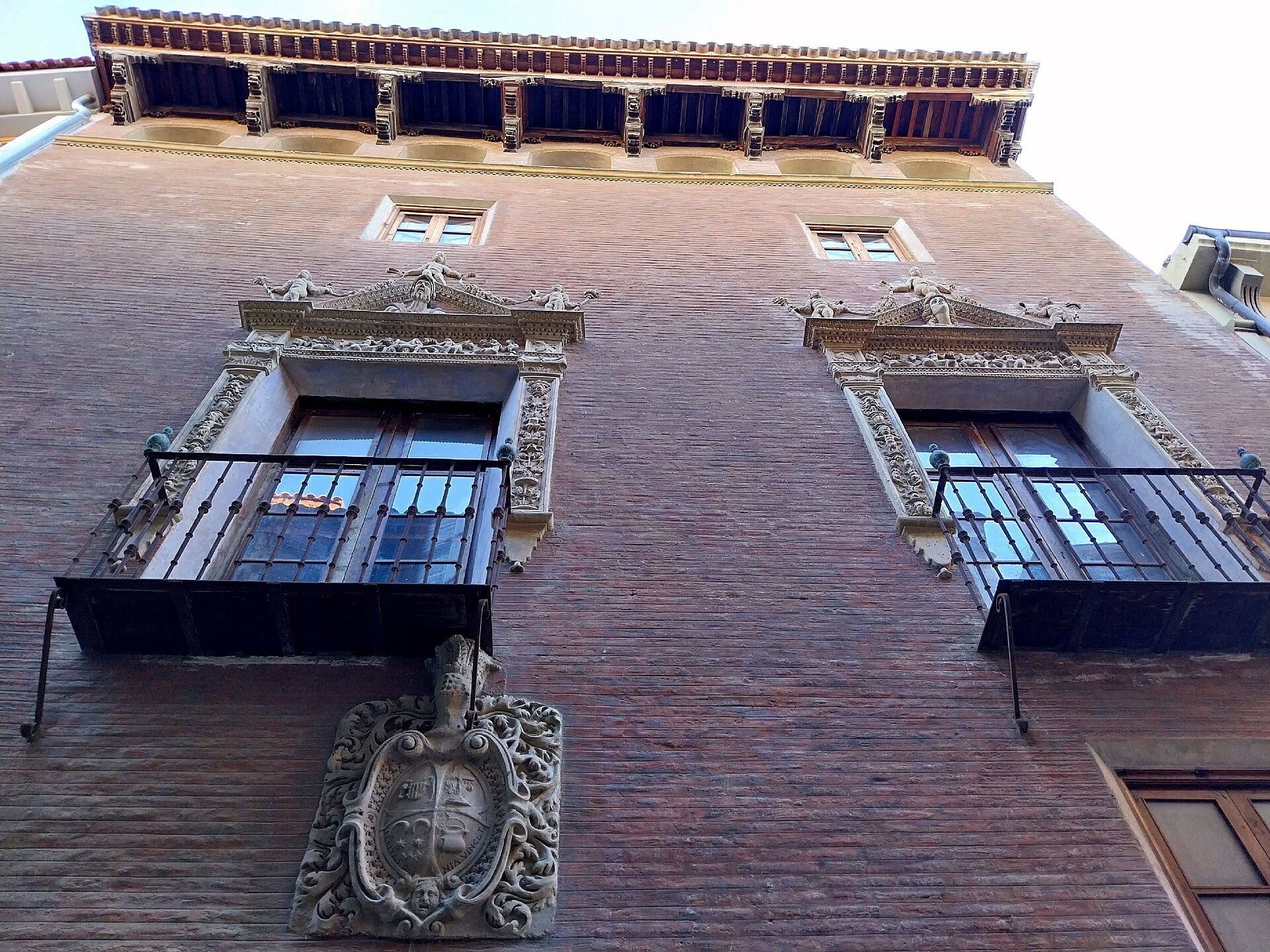
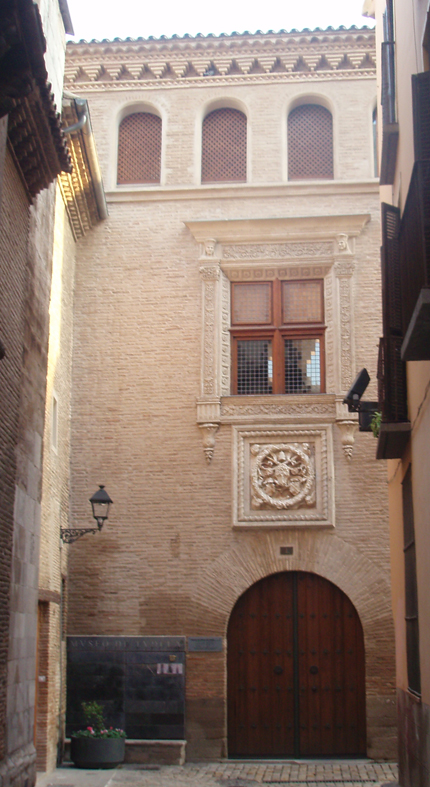
The facade is a showcase of Plateresque art, a style that blended late-Gothic proportions with dense, delicate ornamentation drawn from classical antiquity. The building rises three storeys in brick and is crowned by a gallery of small twin arches with oculi, topped by a wide, carved wooden eave. The real highlight, though, is the first floor, where two large balconies are framed by Plateresque decoration built around anthropomorphic figures carved in high relief — faces, silhouettes and ornamental motifs that reveal more detail the closer you look.
The building's history dates back to 1520–1555, when the Cabanillas Berrozpe family raised the palace on the foundations of an earlier mansion, part of whose original staircase still survives inside. The origin of the name "House of the Admiral" isn't entirely certain, though it's known that Joaquín María de Ezquerra y Bayo, son of Admiral José Javier Ezquerra, died in the house in 1859 — a link likely behind the name it carries today.
Since 2007, Casa del Almirante has been municipal property, donated to the city by María Forcada. It now houses the headquarters of the Fundación María Forcada and the Tudela-Cultura association. Exhibitions, cultural gatherings and artistic events take place inside, so visitors have a chance to see the interior during local cultural programming rather than only admiring the facade from the street.
When should you visit?
Spring (April–June) and early autumn (September–October) are the most comfortable seasons to visit Tudela, since summer heat in the Ebro valley can be intense. It's worth checking the Fundación María Forcada's event calendar before travelling — if an exhibition or open visit is scheduled, that's the best opportunity to see the palace interior rather than just its facade. A stroll along Calle Rúa and the surrounding old-town streets works well at any time of year, though, since the facade's architectural details are best appreciated in daylight regardless of season.
Frequently Asked Questions
Can you go inside Casa del Almirante? Yes, though access depends on the current programme run by the Fundación María Forcada and Tudela-Cultura — the building functions as a cultural centre and opens up around exhibitions and events.
How much does admission cost? That depends on the specific event being held inside — viewing the facade from the street is free at any time.
What's the most distinctive architectural feature? The two large first-floor balconies with Plateresque decoration featuring anthropomorphic figures in high relief, along with the gallery of small arches and carved eave crowning the facade.
How long does a visit take? Viewing the facade and surrounding area takes about 15–20 minutes; if there's an open exhibition inside, allow an extra half hour.
Nearby places

Earn badges for the places you visit
Download NextOnTrip, discover new places and check off your trails.