About this place
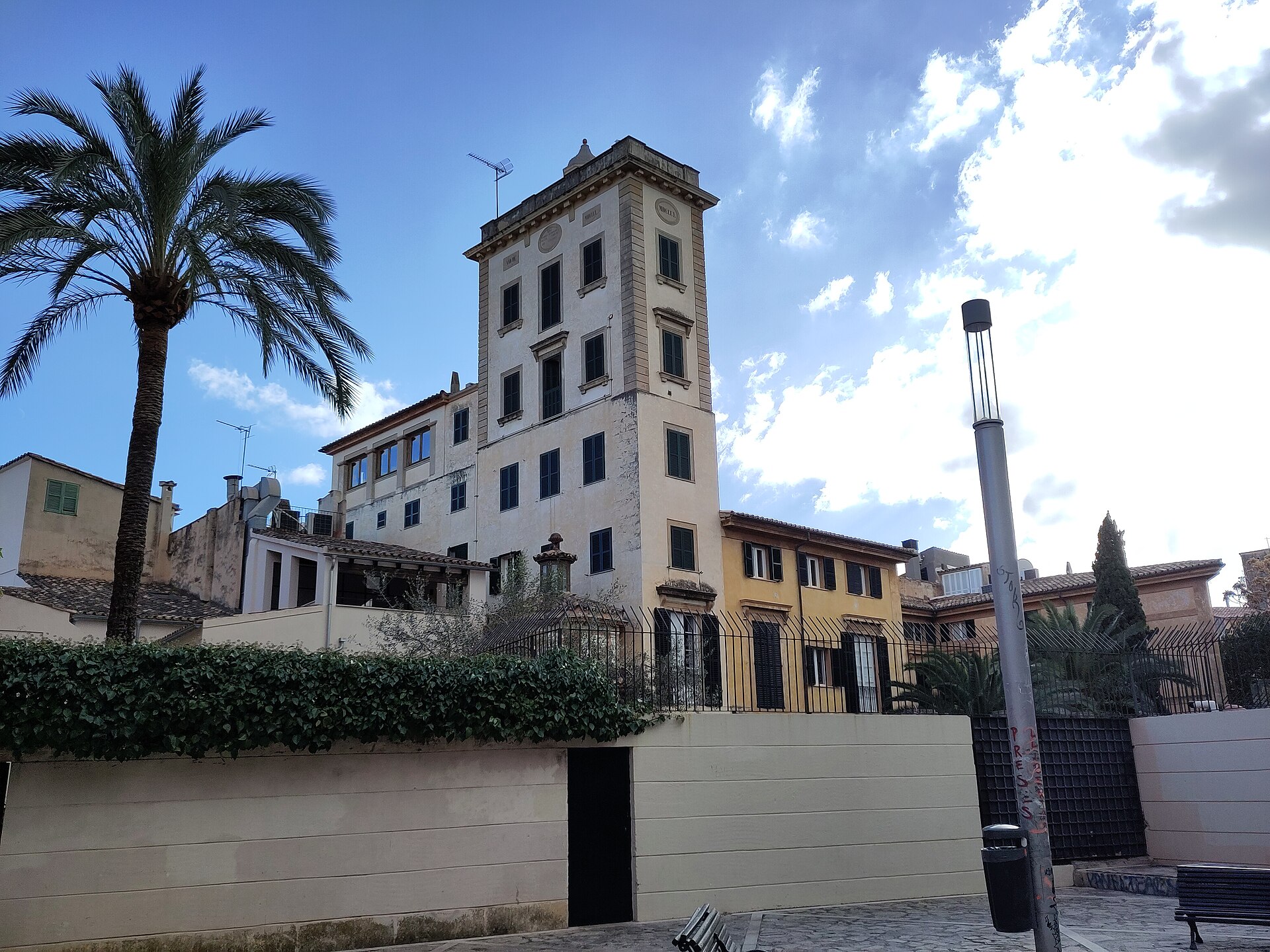
Can San Simon is a historic palace-style townhouse in Palma, Mallorca, standing among the noble residences that give the old town its aristocratic character. The building sits in the heart of Palma's historic quarter and remains one of the city's notable examples of 19th-century residential architecture.
Where does the name come from and who owned the property?
The estate's story starts in the 17th century, when it belonged to the Morrelles family. Early in the 18th century it passed by inheritance to María Sisternes d'Oblites Mora-Mulet, wife of Pere d'Orlandis Orlandis. The Orlandis family originally came from Pisa — they took refuge in Mallorca at the end of the 15th century after fleeing the Florentines, and over time became part of the island's nobility.
The "San Simon" name entered the family later. In 1803, Josepa Orlandis de Cornelles married Louis de Saint-Simon, a French count who had settled in Mallorca in 1795 after leaving revolutionary France behind. That marriage, and the San Simon countship it brought into the family, is where the building's current name comes from.
Who built the current structure, and in what style?
The building visitors see today dates from long after the estate itself was founded. It was raised between 1854 and 1856 on the initiative of Lluís de San Simón Orlandis, son of the first count of San Simón to settle on the island. The design came from architect Miquel Ferrà Font (1815-1887), one of the significant figures of 19th-century Mallorcan architecture.
Ferrà Font gave the building a neo-Renaissance treatment drawing on Italian palace models — a fitting choice given the Orlandis family's Pisan roots. The facade rises four stories and is topped by a rectangular tower visible from the street below.
What details are worth noticing on the facade?
The ground floor has a rustic, austere character, emphasized by blind arches — decorative arched recesses with no actual openings behind them. Above it, on the piano nobile and the floor that follows, the eye is drawn to a row of four pilasters set on plinths, with fluted shafts and Corinthian capitals — a hallmark of the neo-Palladian style, which borrows from classical antiquity and Renaissance precedent alike.
Behind the building lies a garden with a notable architectural feature of its own: a classical exedra, a semicircular recessed bench traditionally used in gardens as both a resting spot and a compositional focal point.
How do you get to Can San Simon?
The building stands within Palma's historic center, within easy walking distance of major landmarks such as La Seu cathedral and the Passeig des Born. Walking through the old town is the most practical way to reach it, and the city's EMT bus network also serves the center. Driving is impractical given the narrow streets of the old quarter — it's best to park on the edges of the historic center and continue on foot.
When is the best time to visit?
The facade shows best in daylight, when direct sun brings out the texture of the stonework — the pilasters, capitals, and rusticated ground floor. Spring and autumn are the most comfortable seasons for exploring the old town on foot, avoiding the peak heat of a Mallorcan summer.
Frequently Asked Questions
Can you go inside Can San Simon? The building serves a private or institutional function and isn't open as a public museum — visits are generally limited to viewing the facade and garden from outside.
Where does the name "San Simon" come from? From the San Simon countship, which entered the Orlandis family through the 1803 marriage of Josepa Orlandis de Cornelles to French count Louis de Saint-Simon.
What architectural style is the building? Neo-Renaissance with neo-Palladian details, most visible in the pilasters and Corinthian capitals along the facade.
Who designed the building? Architect Miquel Ferrà Font (1815-1887), who designed the structure built between 1854 and 1856.
Nearby places

Earn badges for the places you visit
Download NextOnTrip, discover new places and check off your trails.