About this place
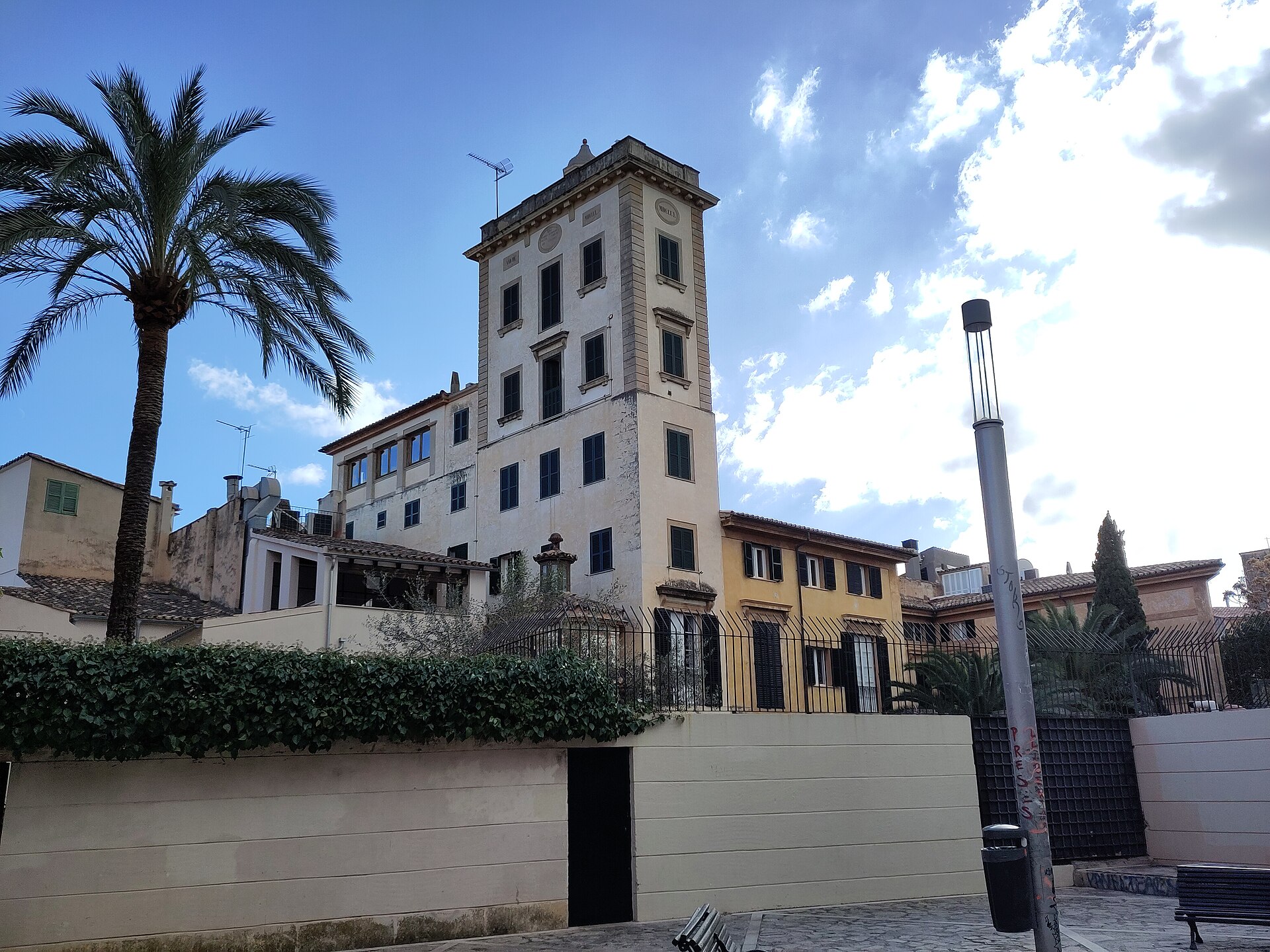
Can Tacón is a historic townhouse on Carrer de Sant Jaume in the old center of Palma, Mallorca. It is easy to walk past without a second glance, yet behind its facade lies several centuries of urban aristocratic history and one of the more distinctive courtyards in this part of the city.
How do you get there?
Can Tacón stands at Carrer de Sant Jaume 11, right in the heart of old Palma, in a district known for its dense web of narrow lanes and mansions dating back to the city's heyday as a trading port. This is an area best explored on foot — from Palma Cathedral (La Seu) it's roughly a ten-minute walk through the surrounding streets. Bus stops and taxi ranks are within a few minutes' walk, and Carrer de Sant Jaume itself forms part of a route linking several other historic townhouses and palaces in central Palma, making it easy to fold into a single walking itinerary.
What will you see?
The building rises across four floors, with a facade distinguished by a triple-arched coronella window resting on small columns on the right-hand side. The entrance opens onto an interesting stone staircase, running alongside a second one with a metal railing — the pairing of two staircases with such different characters is itself a small architectural curiosity. The real highlight, though, is the interior courtyard, where you can count no fewer than seven coronella windows: some trace back to the Gothic period, others were added during nineteenth-century renovations. This mix of styles from different eras makes Can Tacón a good example of Palma's layered architectural history.
The house's story goes back to the 16th century, when it served as the residence of the Gual-Desmur family. In 1800 the property passed to the Montaner de Cervera family. Its current name, however, comes from a later owner: Miguel Tacón y Rosique, who served as Captain General of the Balearic Islands from 1843 to 1847 — the top representative of Spanish authority on the islands at the time. Palma residents began calling the house "Can Tacón" after him, though it also carries a lesser-used second name, Ca'l Duc de la Unió de Cuba.
In 1975 the building underwent a thorough renovation directed by architect Lluís Garcia-Ruiz Guasp, which preserved the original character of the facade and courtyard while adapting the interior to modern needs. By 1985 the property belonged to the Delgado Roses family.
When is the best time to visit?
Since Can Tacón is primarily an architectural landmark viewed from the street and courtyard, it can be visited year-round. Walking through old Palma is most pleasant in spring (March to May) and autumn (September to November), when temperatures are milder than in summer and the lanes are less crowded than during peak season. Morning hours are best for photographing the facade, when the light hits the stone coronella window details at an angle.
Frequently Asked Questions
What is Can Tacón? It's a historic four-story townhouse in the old center of Palma, known for its coronella-window facade and a courtyard featuring seven such windows, some of Gothic origin.
Where does the building's name come from? It's named after Miguel Tacón y Rosique, Captain General of the Balearic Islands from 1843 to 1847, who owned the property.
Who lived in the house before that? From the 16th century it belonged to the Gual-Desmur family, and in 1800 it passed to the Montaner de Cervera family.
Can you visit the building today? Can Tacón is mainly a landmark to admire from outside — you can view the facade and, in part, the courtyard while walking along Carrer de Sant Jaume in central Palma.
Nearby places

Earn badges for the places you visit
Download NextOnTrip, discover new places and check off your trails.