About this place
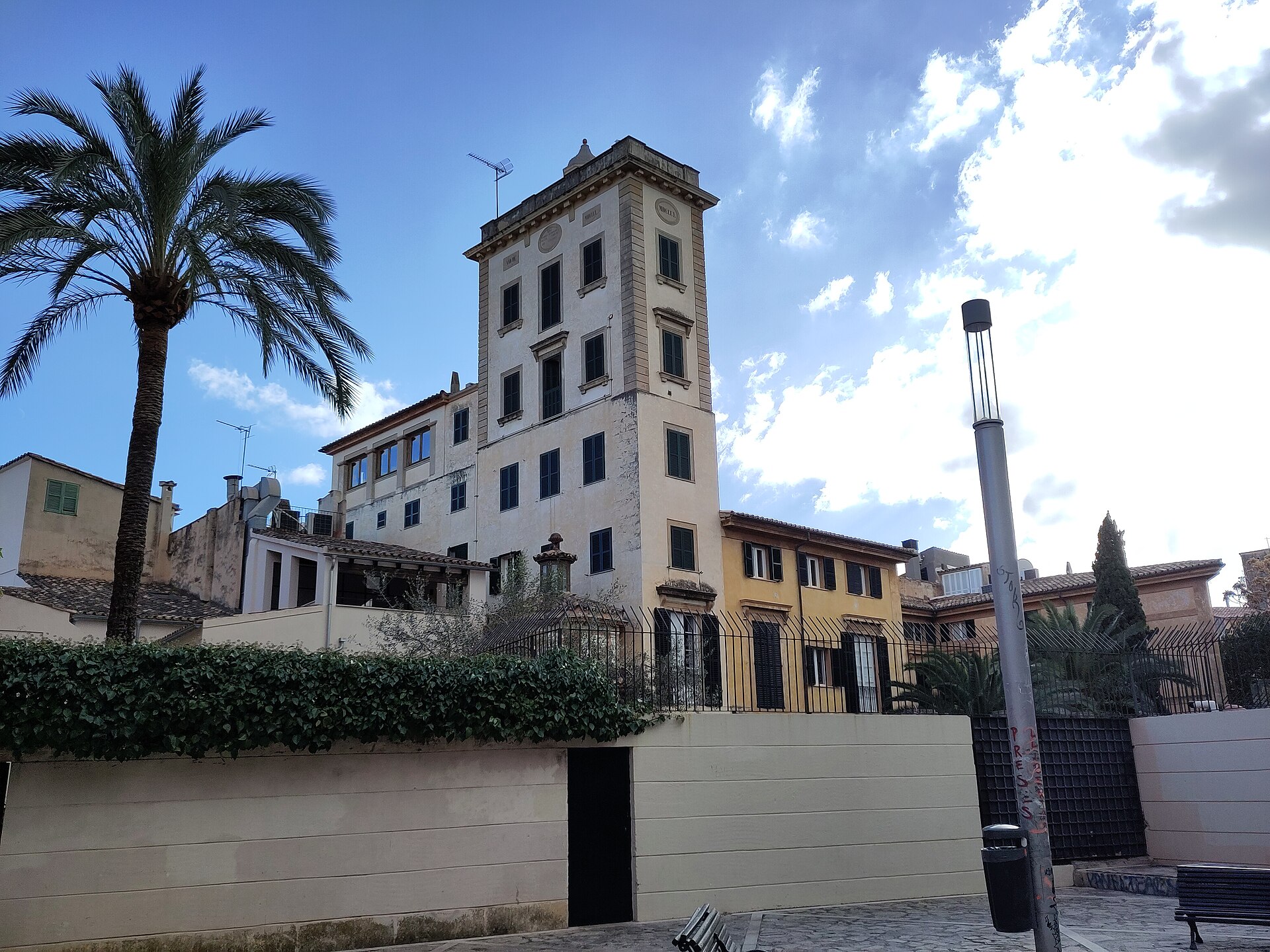
Can Ferrandell is a historic stately house in the old town of Palma de Mallorca, standing at Carrer de Sant Jaume 3 — one of the many noble courtyard houses that give the Mallorcan capital its distinctive character.
How do you get there?
The house sits right in the heart of Palma's historic centre, on Carrer de Sant Jaume, just a short walk from La Seu cathedral and the main squares of the old town. The easiest way to reach it is on foot: Palma's old quarter is compact, and most of its landmark courtyard houses, Can Ferrandell included, lie along the walking routes that connect the church of Santa Eulàlia with the area around Passeig des Born. Visitors arriving from the airport or other parts of the city can take a city bus or taxi into the centre and continue exploring on foot from there.
What will you see?
The building's history stretches back before the 18th century, when it belonged to the Gual-Moix family. In 1790 ownership passed to Josep Ferrandell Gual-Moix, who was named Marquis of La Cova that same year. After his death in 1804, the estate passed to his niece, Francesca de Villalonga i Ferrandell, wife of the military officer Ramon Maroto González. In 1805 she renamed the marquisate Casa Ferrandell, giving the house the name it still carries today.
The interior impresses from the entrance: a spacious vestibule lined with reddish marble columns in the Ionic order, topped with depressed arches and a groin-vaulted ceiling. At the heart of the building lies a square inner courtyard, typical of the grand town houses of old Palma. Above the entrance, a carved shield displays the Ferrandell family's horseshoe emblem alongside the date 1723, marking an earlier phase of building work. One of the interior rooms still preserves mural paintings by Guillem Mesquida, a noted Baroque painter active in Mallorca.
In 1954 the building underwent major renovation to adapt it for use as a hotel — one of many examples in Palma of a former noble town house repurposed for hospitality while its historic façade and reception rooms were kept intact.
When should you visit?
Spring (April to June) and early autumn (September–October) are the best times to walk Palma's old town and take in houses like Can Ferrandell, with mild temperatures and quieter streets than in peak summer. In summer, aim for the shaded, narrow lanes of the old quarter around midday, where buildings such as Can Ferrandell offer natural relief from the heat. Morning hours are ideal for viewing courtyard interiors, when light falls nicely across the columns and inner patios.
Frequently Asked Questions
Can you go inside Can Ferrandell? The building has operated as a hotel since the 1950s, so access to the interior may be limited to guests or occasional open days as part of Palma's courtyard trail — it's worth checking current conditions locally before visiting.
Where does the name Can Ferrandell come from? The name comes from the Ferrandell family, specifically Josep Ferrandell Gual-Moix, Marquis of La Cova, whose niece renamed the family title Casa Ferrandell in 1805.
What is the most notable architectural feature? The Ionic-columned vestibule with its groin-vaulted ceiling stands out, along with the square courtyard bearing the Ferrandell family's horseshoe emblem and the date 1723 above the entrance.
Have any original decorations survived? Yes — one of the rooms still holds Baroque mural paintings by Guillem Mesquida, a valuable trace of the original decor of Mallorca's noble residences.
Nearby places

Earn badges for the places you visit
Download NextOnTrip, discover new places and check off your trails.