About this place
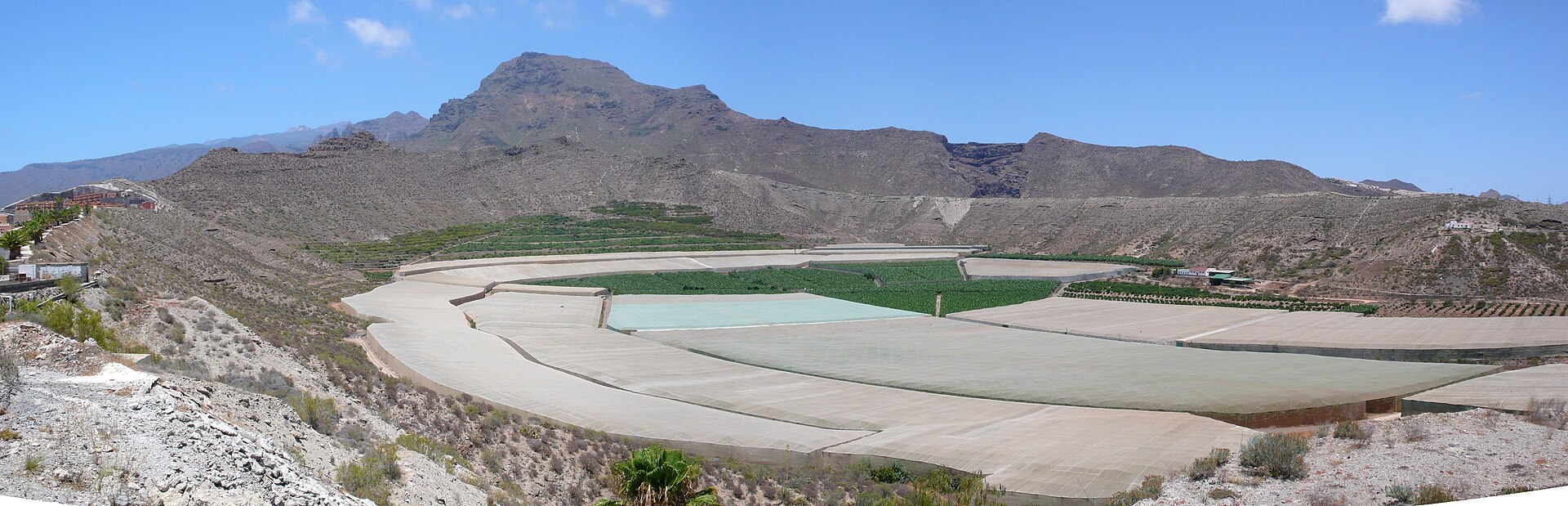
Caldera del Rey is a striking volcanic landform in the municipality of Adeje, in southern Tenerife, considered one of the three finest examples of phreatomagmatic explosive volcanism found on the island. Covering nearly 109 hectares, it has been designated a Natural Monument, protecting a landscape shaped by a violent chapter of the island's volcanic past.
How did Caldera del Rey form?
The crater was created when rising magma came into contact with underground or seawater. That contact triggered a sudden release of steam and gases, dramatically increasing the explosiveness of the eruption — a process known as phreatomagmatic volcanism. The result is a wide, steep-walled basin quite different in shape from the classic cone-shaped volcanoes most visitors associate with Tenerife.
Why does it have a figure-of-eight shape?
Caldera del Rey is actually made up of two connected semi-calderas, giving it the distinctive figure-of-eight outline that is especially visible from above. The southern section is older, formed during a more explosive eruptive phase that left behind steeper, deeper walls. The northern section, which is larger, formed later, accumulating more volcanic material and developing gentler slopes. This two-phase eruptive history makes the site a valuable reference point for geologists studying Tenerife's volcanic evolution.
What is inside the crater today?
Thanks to fertile volcanic soil and a distinctive microclimate, the floor of the caldera has long been used for agriculture. Banana, tomato, avocado, mango and orange crops are grown here. One particularly interesting feature is a thermal inversion effect: temperatures inside the crater can actually be lower than in the surrounding area, as the basin's shape traps cooler air near the ground.
Where is Caldera del Rey and how do you get there?
The site sits in the southern part of Tenerife, within the municipality of Adeje, close to some of the island's most popular tourist resorts. It is reached via the TF-1 motorway, exiting at San Eugenio in the Las Américas area and continuing along local roads that lead toward the island's interior.
Frequently asked questions
Is Caldera del Rey an active volcano? No — it is an extinct volcanic formation, the remnant of a past phreatomagmatic eruption. There is no seismic or magma-related thermal activity there today.
How is it different from a typical volcanic crater? Classic craters usually form a single, symmetrical cone. Caldera del Rey developed in two separate eruptive phases, giving it an unusual double, figure-of-eight shape with two clearly distinct sections.
Can you visit the inside of the caldera? The area is partly used for agriculture and protected as a natural monument, so any visit should take local access rules into account and respect the private crops growing on the crater floor.
Why is it sometimes cooler inside the crater than outside? This is the result of a thermal inversion effect — the shape of the terrain causes cooler, heavier air to settle at the bottom of the caldera while warmer air remains higher up on the outer slopes.
Nearby places

Earn badges for the places you visit
Download NextOnTrip, discover new places and check off your trails.