About this place
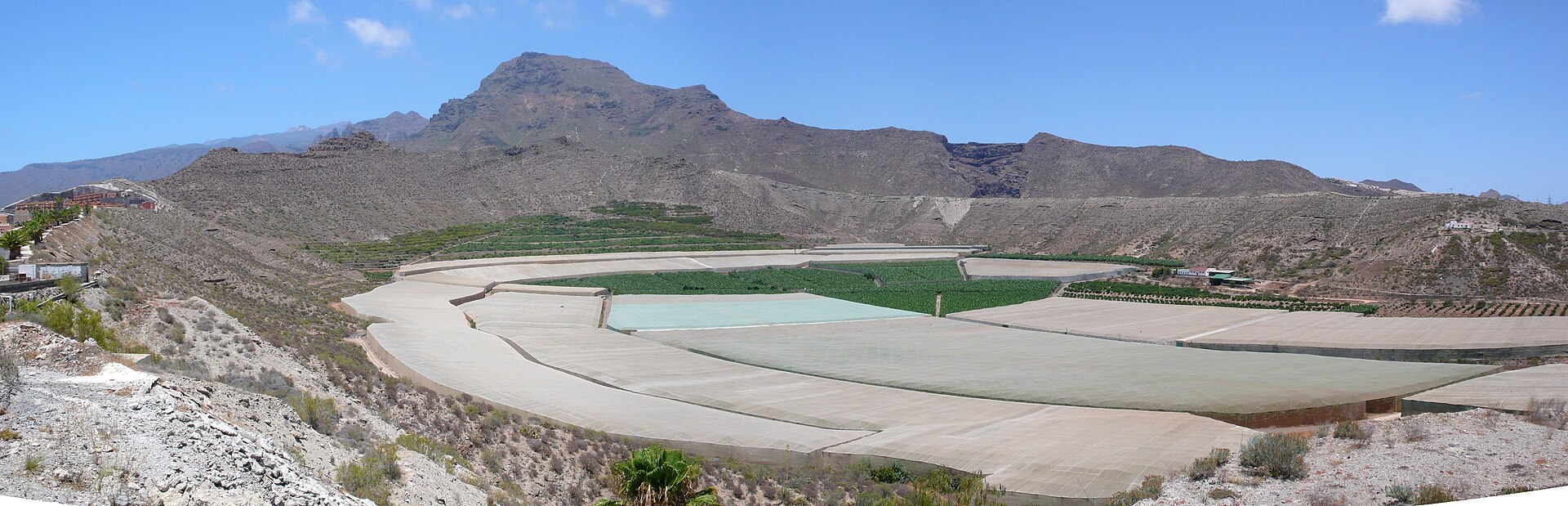
Monumento Natural del Roque de Jama is one of the most distinctive rock formations in southern Tenerife — a towering volcanic outcrop rising on the boundary between the municipalities of Arona and San Miguel de Abona, near the village of Valle de San Lorenzo. The roque reaches an elevation of 781 metres above sea level and stands out from a considerable distance as a solitary, steep-sided landmark dominating the dry southern landscape of the island.
What exactly is the Roque de Jama?
The formation is roughly 11 million years old and ranks among the oldest surviving remnants of the Adeje Massif, one of the three original volcanic centres that gave rise to Tenerife, alongside the Teno and Anaga massifs. The roque itself is a phonolitic plug — a rock body formed during the final stage of an ancient volcano's activity, when magma cooled rapidly under high pressure inside the volcanic conduit. The resulting rock is exceptionally resistant to erosion, which is why, over millions of years, as the softer surrounding material gradually wore away, this hard core remained standing, producing the near-vertical tower visible today. The southern flank of the formation is covered by a layer of pyroclastic material ejected during past eruptions.
Why is the site protected?
Because of its geomorphological uniqueness and scenic value, Roque de Jama was declared a natural monument and an area of special ecological sensitivity under Canary Islands Law 12/1994. That protected status was later maintained and consolidated through the Consolidated Text of the Canary Islands Land Management Laws (Legislative Decree 1/2000). The protection covers both the rock formation itself and the surrounding landscape, characteristic of Tenerife's arid south.
How to get to Roque de Jama?
The natural monument can be reached from the centre of Arona by following the road toward Valle de San Lorenzo. The formation lies around 500 metres from the centre of that village, making it a relatively accessible landmark for visitors exploring the island's southern interior, away from the busier coastal resorts.
Frequently asked questions
How old is the Roque de Jama? The formation is around 11 million years old, making it one of the oldest surviving geological structures on Tenerife.
What is a phonolitic plug? It is a hard type of volcanic rock that solidified under high pressure inside a volcanic conduit during the final stage of eruptive activity. Its exceptional hardness allowed it to survive erosion long after the softer surrounding rock had been worn away.
Where exactly is Roque de Jama located? In southern Tenerife, on the boundary between the municipalities of Arona and San Miguel de Abona, near Valle de San Lorenzo.
How tall is the formation? The roque rises to 781 metres above sea level.
Is the site legally protected? Yes — it has been protected as a natural monument since 1994, a status upheld under Canary Islands land-management law since 2000.
Nearby places

Earn badges for the places you visit
Download NextOnTrip, discover new places and check off your trails.