About this place
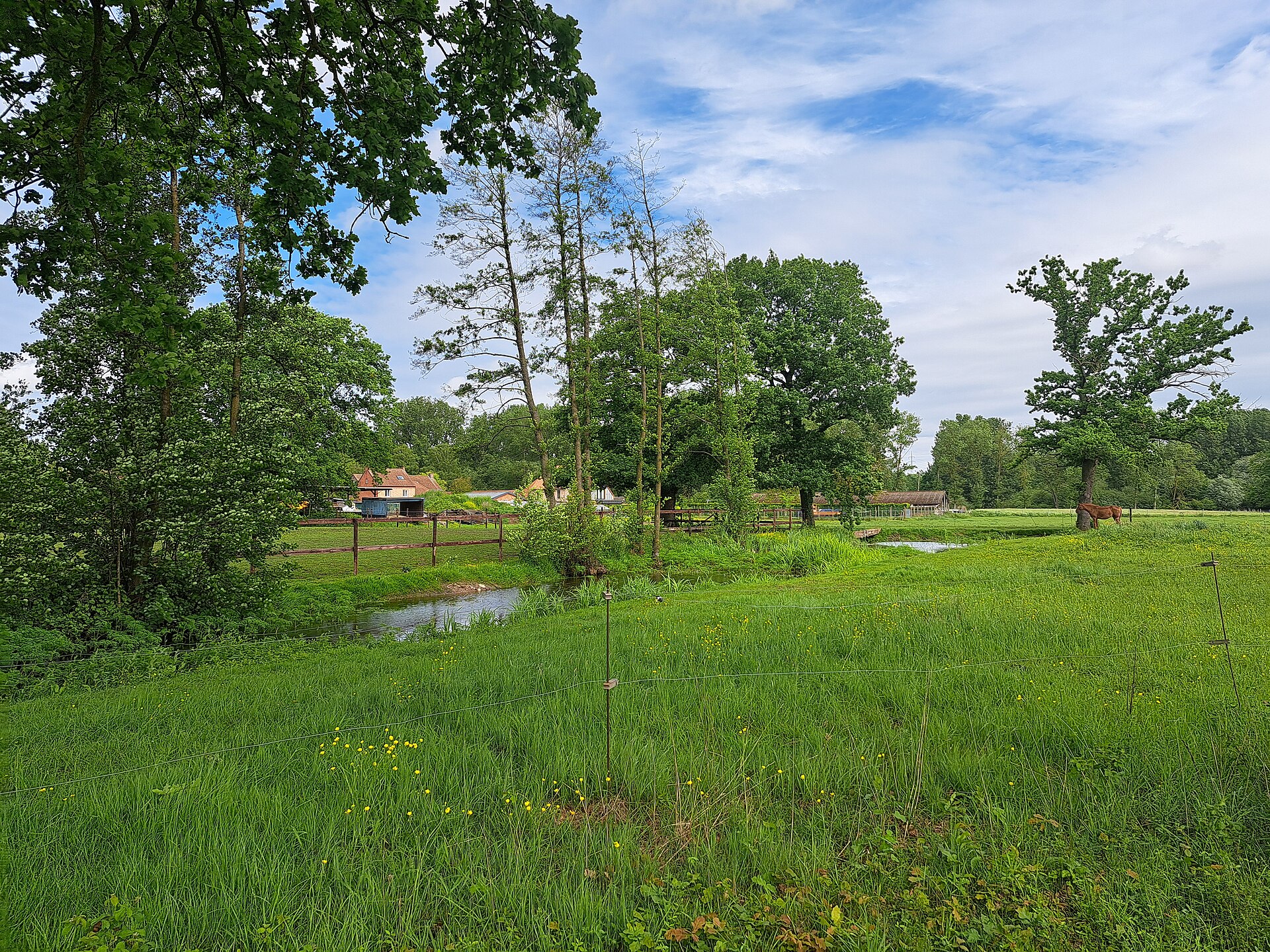
Caetsweyers is a nature reserve straddling the border of Diepenbeek, Genk and Bilzen in the Belgian province of Limburg. At its heart lies a chain of interconnected historical ponds, surrounded by wet meadows and green buffers that separate the reserve from the Genk-Zuid industrial zone to the north and residential neighbourhoods of Diepenbeek to the south.
Where did the ponds come from?
The ponds that now form the backbone of the reserve were dug in 1948. They were originally used for fish farming, including carp, a common form of pond management in the low-lying areas of Flanders. Over time, as commercial fish farming declined in importance, the site gradually shifted towards a more natural, conservation-oriented character.
Who manages Caetsweyers today?
A turning point came on 15 October 2013, when Limburgs Landschap vzw, a regional nature conservation organisation, became the owner of roughly 22 hectares of wetland known as "De Caetsweyers". In the years that followed, the organisation acquired additional adjoining land, expanding the protected area to its current size of 48 hectares.
What did the restoration work involve?
The historical chain of ponds underwent a comprehensive restoration, supported by a contribution of 1.7 million euros from the Flemish Blue Deal programme, an initiative aimed at tackling drought and water scarcity. As a result, the area now also functions as an additional climate buffer, able to retain rainwater in quantities of around 95,000 cubic metres — a benefit both for local wildlife and for reducing flood risk in the surrounding area. The works also delivered clear ecological gains, improving the quality of aquatic and marshland habitats.
What did visitors gain from the project?
Alongside the ecological restoration, new infrastructure was built for residents and visitors: a wooden boardwalk running over the water and two viewing points from which people can observe birdlife and the pond landscape without disturbing this sensitive ecosystem. As a result, a site that for decades served purely economic purposes has become a place open to walking and nature watching.
What wildlife can be found here?
The mosaic of ponds, reed beds and wet meadows attracts birds tied to aquatic habitats. Species recorded at Caetsweyers include the teal, the bittern and the kingfisher — birds typical of well-preserved, undisturbed wetlands. The presence of such demanding species is a good indicator of the habitat quality achieved through years of conservation work.
Frequently asked questions
Where exactly is Caetsweyers located? The reserve lies at the meeting point of the municipalities of Diepenbeek, Genk and Bilzen, between the Genk-Zuid industrial zone and residential areas of Diepenbeek.
How large is the reserve? It currently covers about 48 hectares, though it was only around 22 hectares when Limburgs Landschap vzw took ownership in 2013.
Where did the ponds at Caetsweyers come from? They were dug in 1948 for fish farming, including carp, and were only later converted into a protected nature area.
What can visitors see there? A chain of ponds, wetland areas, a wooden boardwalk and two viewing points, with a chance of spotting water birds such as the kingfisher or the bittern.
Does the restoration of Caetsweyers matter beyond nature conservation? Yes — the restored pond system also acts as a climate buffer, retaining rainwater and helping mitigate the effects of drought in the region.
Nearby places

Earn badges for the places you visit
Download NextOnTrip, discover new places and check off your trails.